Is It Your House or the Whole Street?
Everything goes quiet at once. The fridge stops humming, the TV dies mid-sentence and the house goes dark. Your first instinct is to call someone, but who? Your power company? An electrician? The answer comes down to one simple question: is it just your house, or the whole street? Getting that right in the first few minutes of awhole house power outagesaves you time, money and a lot of waiting on hold.
Look outside first Streetlights out and neighbours dark usually means a network outage.
Check the switchboard If the street still has power, a tripped main switch or safety switch is the usual suspect.
Call the network, not your retailer Network outages go to your distributor, like Ausgrid on 13 13 88, not the company that sends your bill.
- Stay 8 metres clear Treat any fallen powerline as live and keep at least two car lengths away.
Half the house out? A partial loss of power can be a supply fault too, so it's worth reporting.
Most whole-house outages are either a network fault that gets fixed from the street, or a tripped switch you can reset in seconds. The tricky ones sit somewhere in between. Whether you're in a Hornsby unit or a house on a quiet street, here's how to work out which one you've got.
Your House, the Street, or Somewhere In Between?
Start by looking out the window. If the streetlights are out and your neighbours' houses are dark, it's very likely a network outage, and nothing at your switchboard will fix it. If the street is lit and your house is dark, the problem is more likely on your side: a tripped switch, a faulty appliance or something in your wiring. And if only part of your house has power, don't assume it's your fault. A partial loss of power can come from a problem with the supply, which is why Ausgrid asks you to report it.
The whole street is dark
That's a network outage. Check Ausgrid's outage map or SMS updates, report it if it isn't listed, and leave the switchboard alone. Leave one light switched on so you know the moment power is back.
Only your house is out
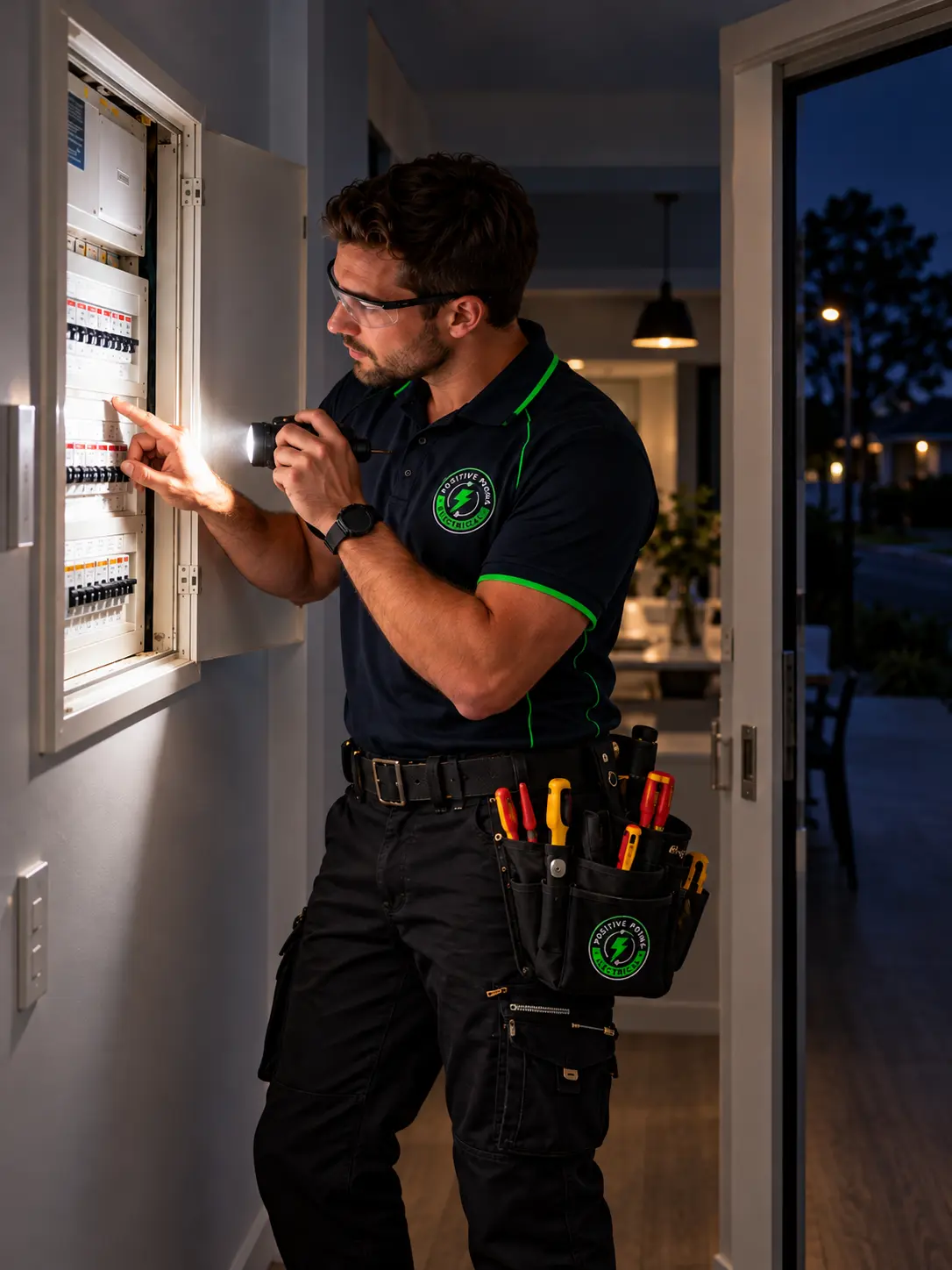
Check your switchboard for a main switch or safety switch that's flicked down. If it resets and stays on, keep an eye on it. If it won't stay on, call an electrician.
Fallen wires, sparks or a shock
Call 000 if anyone is hurt or there's fire. Stay at least 8 metres away from fallen lines, keep others back, and report the hazard to Ausgrid on 13 13 88.
Signs the Problem Is Inside Your Home
If any of these line up with your outage, the fault is most likely on your side of the meter.
Neighbours Have Power
If the houses around you are lit and yours isn't, check your own switchboard and Ausgrid's outage map before anything else.
A Switch Has Flicked Down
A main switch or safety switch in the off position points to something inside the house that tripped it.
It Trips Again Straight Away
A switch that won't stay up when you reset it is protecting you from a fault. Leave it off and call an electrician.
It Happens When One Thing Runs
If the power drops every time the oven, heater or dryer starts, that appliance or its circuit is the likely cause.
Ausgrid or Endeavour?
What Knocks Out Power to a Whole House
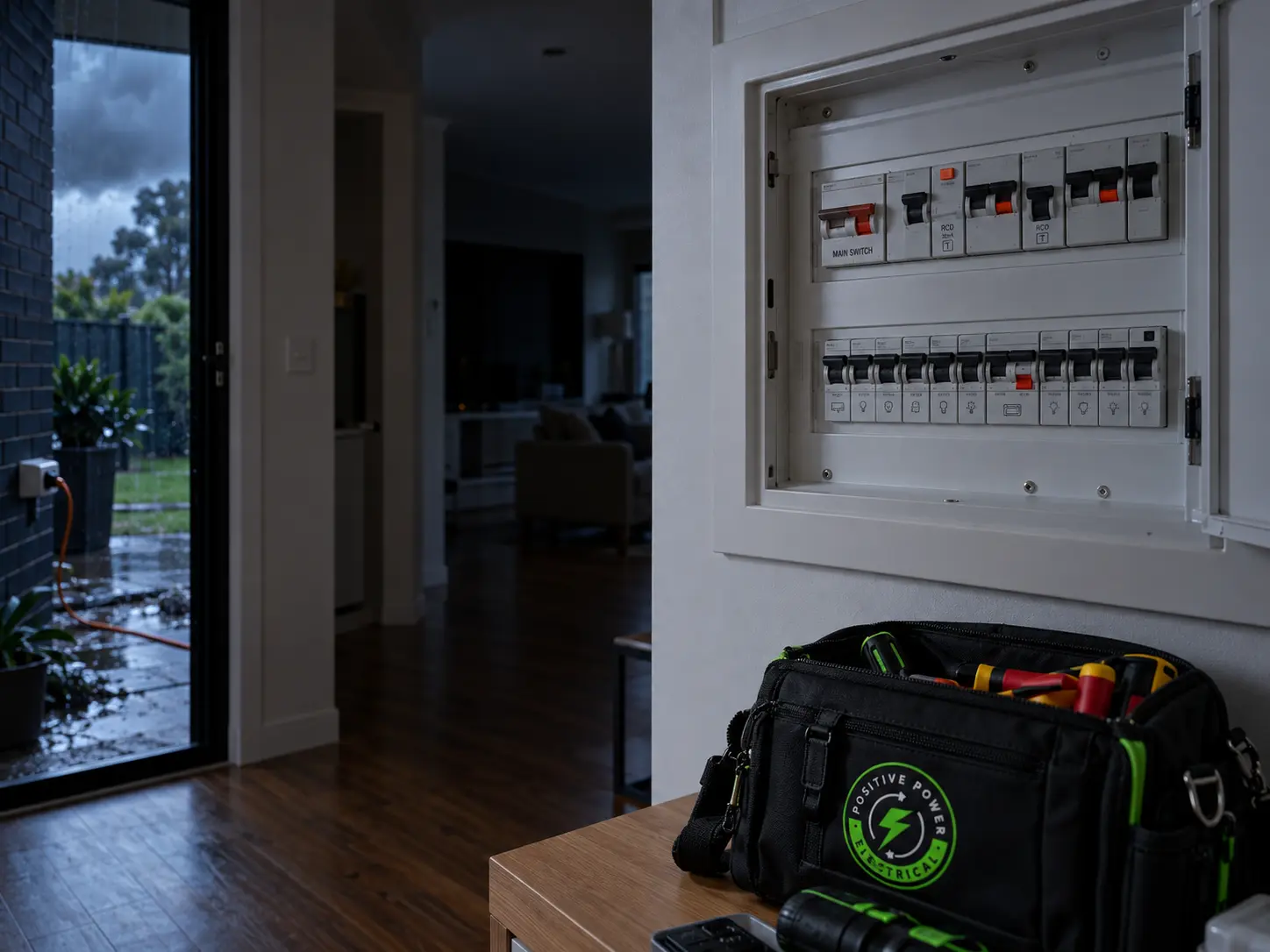
A whole-house outage comes from two very different families of causes. On the network side, storms, fallen trees, car accidents, animals and equipment faults can cut power to a street or a whole suburb, and only the distributor can fix that. On your side, the usual culprit is protection doing its job: a main switch or safety switch tripping because an appliance, a wet outdoor powerpoint or a wiring fault leaked current or overloaded a circuit. Less often, it's a failed main switch or a problem in the cables feeding your switchboard. The trick is working out which side you're on before you spend time or money on the wrong fix.
1
Network outage
Storms, trees or equipment faults cut power to the street, and the distributor restores it.
2
Tripped safety switch
Electricity leaking through a faulty appliance or a wet outlet trips the switch.
3
Overloaded main switch
Too much running at once can trip the main switch on some boards.
4
Faulty appliance
One faulty appliance can take the whole house out the moment it starts.
5
Wiring or supply fault
Damaged cable, a failed connection or a supply problem needs testing to find.
How We Track Down a Whole-House Outage
Once the network has been ruled out and your power still won't come back, we work from the meter inward until we find exactly where the power stops.
Step 01
Confirm It's Not the Network
We check whether power is reaching your meter and switchboard at all. If it isn't, it's a supply fault, and we'll tell you to report it to your distributor with the details they need.
What we look for
What We Check First
- Power arriving at the meter and board
- Which switch tripped, and why
- Signs of heat or water at the board
Step 02
Find the Fault
We isolate each circuit and test until we find what's tripping the power, whether it's an appliance, a wet outdoor outlet or a damaged cable.
Step 03
Fix and Restore
We repair the fault, bring the power back circuit by circuit and test every safety switch before we leave. You get a Certificate of Compliance for Electrical Work (CCEW) for any repair.
- Power restored
- Fault found
- Safety switches tested
Method matched to cause
If It's the Network, We'll Say So
Sometimes the fault is on the street side, and calling an electrician won't fix it any faster. If that's the case, we'll tell you straight and point you to the right number.
Fault finding
Switchboard upgrades- Safety checks
- Powerpoint repairs
What Shapes the Repair
Most whole-house outages that turn out to be inside the home come down to one tripped switch and one cause. The cost depends on how quickly that cause can be found and what it takes to fix. A faulty appliance is a quick answer. A damaged cable hidden inside a wall takes more finding.
What You Can Safely Check
Start outside, then work in. Check the streetlights and your neighbours, look at Ausgrid's outage map, and only then open the meter box. If a switch is down, unplug major appliances and flick it back up once. If it stays on, plug things back in one at a time. If it trips again straight away, leave it off. And if you own a generator, never connect it to the switchboard or the house wiring.
Safe to try yourself
Check the streetlights and your neighbours
Look up Ausgrid's outage map
Reset a tripped switch once
Leave one light on to see when power returns
Time to call a professional
A switch trips again straight away
The switchboard looks scorched or wet
Only your house is out and nothing tripped
Power drops whenever one appliance runs
Look Out the Window Before You Pick Up the Phone
A blackout feels urgent, but the first step is simple: work out whether it's the street or just you. If it's the street, the network fixes it, and nothing at your switchboard will help. If it's just you, a tripped switch is the usual answer, and one reset often brings everything back. When it won't reset, or keeps tripping, that's your house telling you something's wrong, and that's the moment to call in an electrician.
Remember this
Street dark, call the network. Street lit, check your switchboard. Won't reset, call an electrician.
Whole House Power Outage FAQs
Who do I call when the power goes out?
For network outages, call your distributor, not your retailer. For most homes in the area that's Ausgrid on 13 13 88, 24 hours a day. For faults inside your home, call a licensed electrician.
How long will the power be out?
For network outages, Ausgrid's outage map shows estimated restoration times. For faults inside your home, it depends on how quickly the cause can be found and fixed.
Why is my power out when my neighbours' isn't?
Usually it's a tripped switch or a fault inside your home, but not always. Your home can lose supply on its own if there's a problem with the connection from the street, so check with Ausgrid as well.
Can I use a generator during an outage?
Only to run appliances plugged directly into it. Never connect a generator to your switchboard or house wiring, as it's dangerous for you and for anyone working on the lines.
What if someone at home relies on life support equipment?
Make sure you're registered as a life support customer with your electricity retailer, and have a backup plan for unplanned outages. Ausgrid has a dedicated page for life support customers with more information.
Can a storm cause problems even after the power comes back?
It can. Water in outdoor outlets, damaged fittings or a power surge can cause faults that only show up later. If things keep tripping after a storm, get it checked.
Street Lit, but Your House Still Dark?
If a whole house power outage turns out to be on your side of the meter, Positive Power Electrical can track down the cause. We'll get your Hornsby home's power back safely, explain what went wrong in plain English and fix it properly so it doesn't catch you out again.