What That Tingle From the Tap Really Means
You turn on the shower and feel it: a faint buzz in your fingers, gone almost as fast as it came. Maybe it happened once before at the kitchen sink. It's tempting to shrug it off as static or imagination. Don't. Tingling taps are one of the clearest warning signs of an electrical fault, and the next touch could be a lot worse than a tingle.
- Never normal A tingle from a tap, pipe or appliance means electricity is somewhere it shouldn't be.
- Report it first Call your network operator straight away, like Endeavour Energy on 131 003 or Ausgrid on 13 13 88.
- Free to investigate NSW network operators investigate reported shocks at no cost to you.
Don't touch test These faults come and go, and a tingle for one person can be a serious shock for the next.
Shock or injury If anyone has been hurt, call 000 before anything else.
The good news is that once it's reported, the cause can be found and fixed. Whether the fault turns out to be in the street, in your earthing or in an appliance in your Castle Hill home, the first step is always the same: stop touching it and make the call.
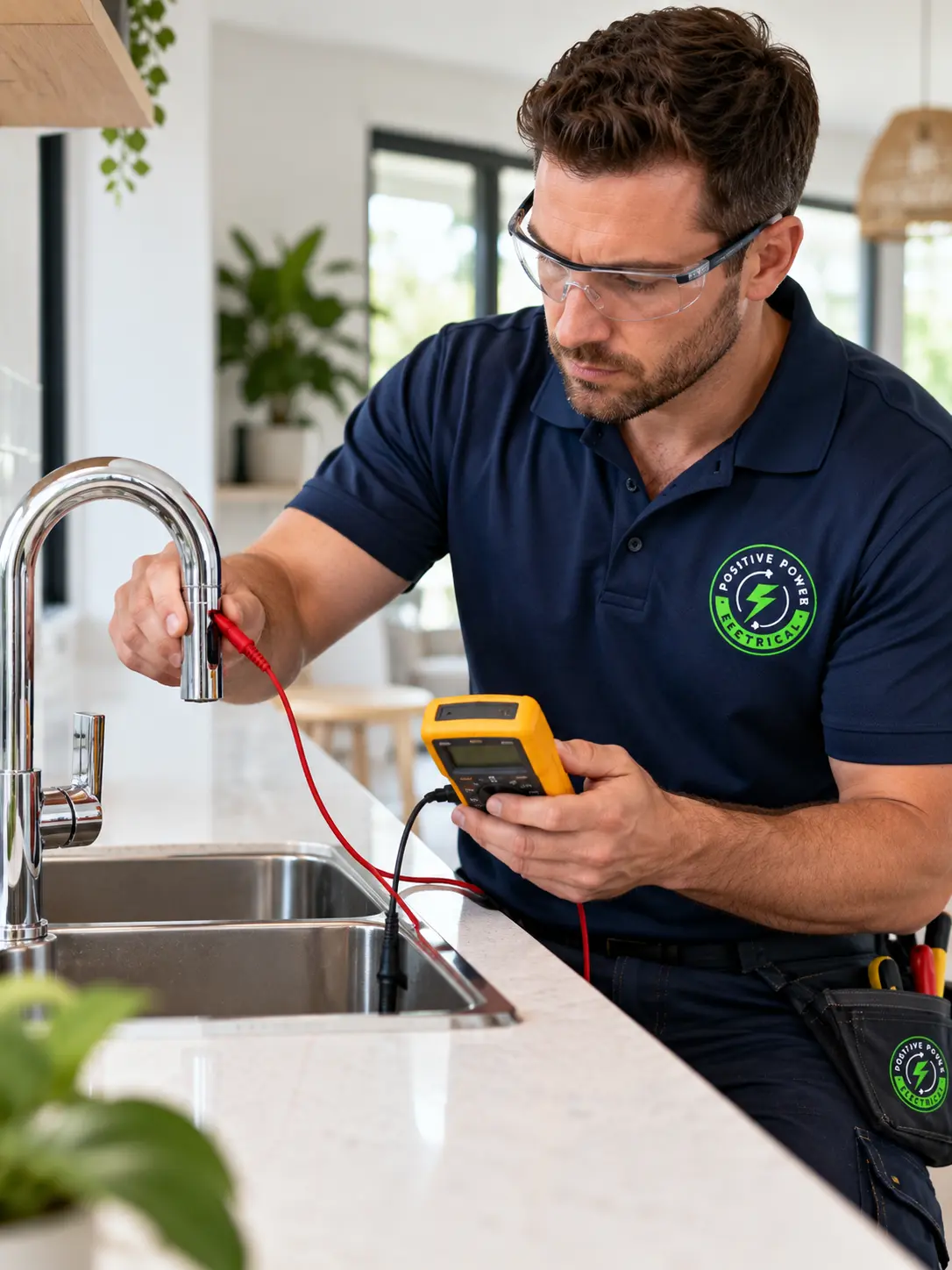
Who Do You Call, and in What Order?
This is one of the few electrical problems where the network should hear about it before an electrician does. A tingle can come from a broken or degraded neutral connection in the supply to your home, and that's dangerous for you and possibly for your neighbours too. Network operators treat shock reports seriously, send a crew to test the supply, and take care of anything on their side. If the fault turns out to be inside your home, in the earthing, a powerpoint or an appliance, that's when a licensed electrician takes over. Calling in that order gets the right people out fastest.
A faint tingle, just once
Still report it. These faults are often intermittent, so one tingle doesn't mean the problem has gone. Avoid touching that tap or appliance until it's been checked.
Tingles from several taps or appliances
That points to the earthing or the supply rather than one fitting. Report it straight away, and keep everyone away from metal taps, pipes and appliances.
A real shock, or someone hurt
Call 000 first. Don't touch the person if they may still be in contact with the source, and only switch off the main switch if it's safe to reach. Then report it to your network operator.
Signs Something Is Wrong With Your Earthing or Supply
A tingle rarely comes out of nowhere. These often show up alongside it, and together they tell a story worth reporting.
Tingles From Taps or Pipes
A buzz from a shower mixer, kitchen tap or garden tap means a metal pipe may be carrying voltage.
Lights Dimming and Brightening
Lights that go brighter, then dimmer, especially alongside a tingle, can be a sign of a neutral fault in the supply.
Shocks From Appliances
A tingle from the washing machine, the fridge door or the oven can point to the same fault, or to the appliance itself.
Tingles After a Storm or Plumbing Work
If the tingles started after a storm or after work on your pipes, mention it when you report it. It's a useful clue.
Castle Hill and Endeavour Energy
Why Taps and Pipes Can Become Live
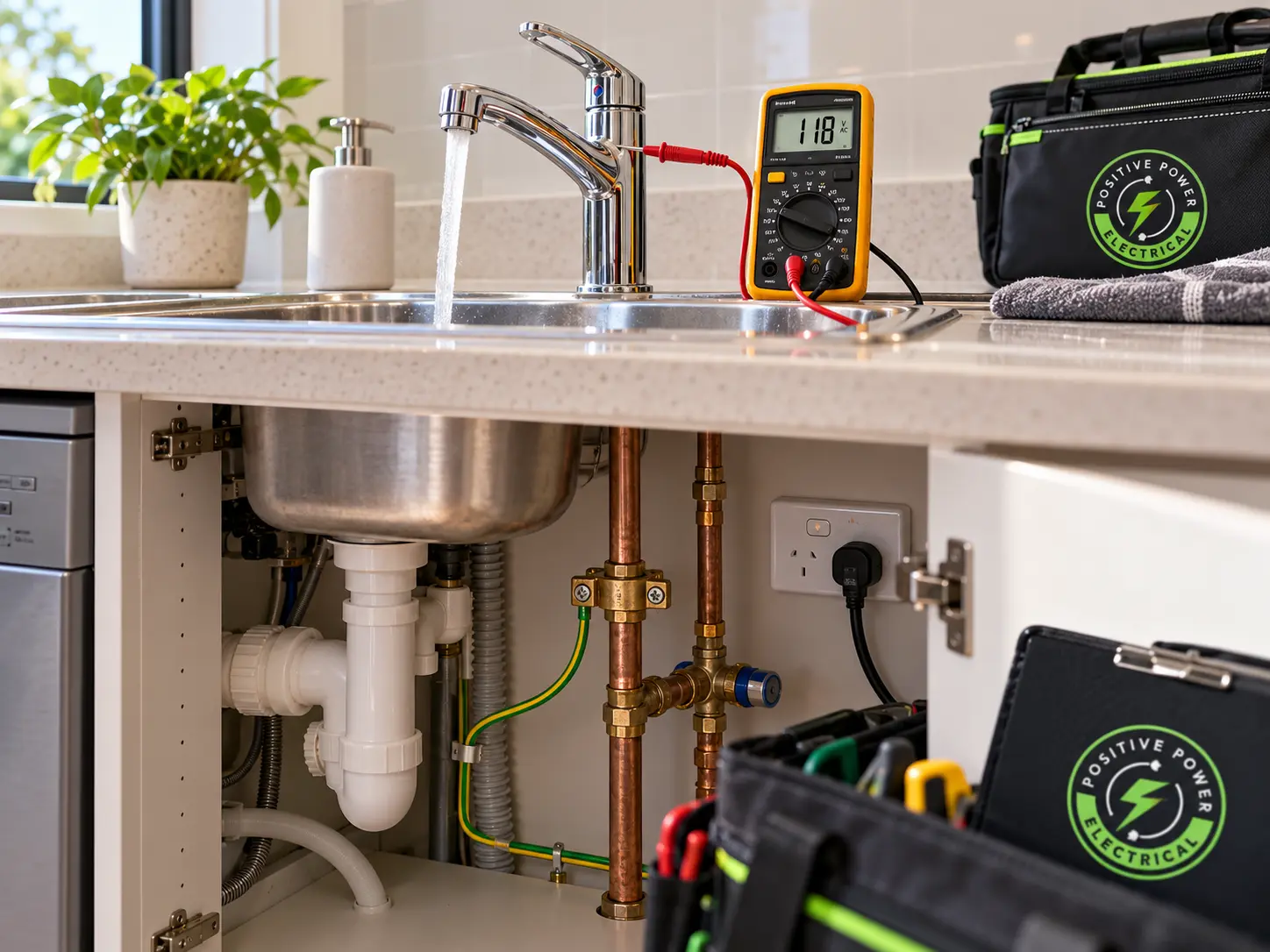
Every home's electrical system is connected to earth, and metal water pipes are often part of that connection. Normally that's exactly what keeps you safe: if something goes wrong, the fault has a safe path away. But if the neutral connection that carries power back to the network breaks or degrades, the voltage can rise on the earthing system itself. Suddenly the metal taps, pipes and appliance cases connected to it can carry a voltage, and anyone touching them becomes part of the circuit. A damaged earth connection, a faulty powerpoint or an appliance with a fault can do something similar. That's why a small tingle is taken so seriously: it's often the early warning of a fault that can get much worse.
1
Broken or degraded neutral
Voltage rises on the earthing system, so taps and pipes can become live.
2
Faulty earthing
A damaged earth connection can send current through metal pipes and taps.
3
Faulty powerpoint or switch
A damaged fitting can make nearby metal parts live.
4
Faulty appliance
An appliance with a fault can energise its metal case.
5
Fault next door or in the street
A fault at a neighbour's property or in the mains can show up at your taps.
How a Tingle Gets Tracked Down
Fixing a tingle is a two-part job: first rule the network in or out, then find anything inside the home. We work alongside your network operator so nothing gets missed in between.
Step 01
Report It to the Network
Your network operator sends a crew to test the supply and the neutral connection to your home. If the fault is on their equipment, it's theirs to fix.
What we look for
What We Test Inside the Home
- Earthing and bonding connections
- Powerpoints, switches and wiring
- Appliances with metal cases or water connections
Step 02
Test the Earthing and Wiring
Once the network side is cleared, we test your main earth, the connections to metal pipes and the wiring around the affected taps. That tells us whether the fault sits in the installation or in an appliance.
Step 03
Repair and Retest
We repair the earth connection, wiring or fitting at fault, then retest the whole installation, including your safety switches. You get a Certificate of Compliance for Electrical Work (CCEW) for the job.
- Fault found
- Earthing tested
- Safe to touch
Method matched to cause
If It's the Network, It's Their Fix
When the fault is in the street or the service connection, the network operator is responsible for it. We'll tell you straight if that's where it points, and pass on everything we've found.
Fault finding
Earthing testing- Safety checks
- Switchboard upgrades
What Shapes the Repair
The first call, to your network operator, costs you nothing. If the problem turns out to be inside your home, the cost depends on where the fault is and how easy it is to reach. A faulty appliance is a quick answer. A damaged earth connection under the house can take more finding.
What You Can Do Right Now
The most important thing you can do is stop touching the source and make the call. Don't test it by touching the tap again, and keep children and pets away from metal taps, pipes and appliances until it's been checked. Write down where and when the tingles happen, and whether anything else seemed odd, like lights dimming. That information helps the network crew and the electrician find the fault faster.
Safe to try yourself
Stop using the tap or appliance that tingled
Report it to your network operator
- Note where and when it happened
- Keep kids and pets away from metal fittings
Time to call a professional
- Any tingle or shock from a tap or appliance
Lights dimming or brightening with tingles
A safety switch that keeps tripping
Any work on earthing or wiring
Treat Every Tingle as a Warning
A tingle from the tap feels small, which is exactly why it's so easy to ignore. But it's your home telling you that electricity has found a path it shouldn't have. Reporting it costs nothing, the network will check their side, and if the fault is inside your home, it can be found and fixed properly. Ignoring it is the only option that carries real risk, for you and for whoever touches that tap next.
Remember this
There's no such thing as a harmless tingle. Stop touching it and make the call.
Tingling Taps FAQs
Is a small tingle from a tap dangerous?
It can be. A tingle means voltage is present where it shouldn't be, and these faults can get worse without warning. Treat it as a warning sign and report it straight away.
Who pays to investigate a tingle?
NSW network operators investigate reported shocks at no cost to you. If the fault turns out to be inside your home, the repair is usually the owner's responsibility.
Should I call an electrician or the network first?
The network first. They can check the supply and the connection to your home, which is their responsibility. If the fault is inside the home, that's when an electrician takes over.
I'm renting. What should I do?
Report the tingle to the network operator straight away, then tell your landlord or agent. A dangerous electrical fault counts as an urgent repair under NSW rental law.
Can a faulty appliance cause tingles?
Yes. An appliance with a fault can make its metal case live. If it's safe to, switch it off at the wall and unplug it, then report the tingle so the cause can be confirmed.
Can a storm cause tingles from taps?
It can. Storm damage to powerlines or the connection to your home can cause supply faults that show up as tingles. Report it just like any other shock.
Felt a Tingle? Let's Find the Cause
Once you've reported it to your network operator, Positive Power Electrical can test the earthing, wiring and appliances in your Castle Hill home and fix whatever is behind the tingling taps. Calm, thorough and done properly, so the next time you turn on the tap, all you feel is water.