How Do I Know My Safety Switch Actually Works?
Somewhere in your meter box there's a small switch with a button marked T. It might be the most important device in your home, and most people have never pressed it. A safety switch watches for electricity leaking where it shouldn't, like through a person, and cuts the power in as little as 0.03 seconds. But it can only protect you if it works, and the only way to know is to test the safety switch yourself. It takes less time than boiling the kettle.
- Faster than a heartbeat A working safety switch can cut the power in as little as 0.03 seconds.
- Test every three months Press the T or Test button, and it should trip straight away.
- Breakers aren't the same Circuit breakers protect the wiring and have no test button. Safety switches protect people.
One may not be enough Many homes only have safety switches on some circuits, not all of them.
- No clunk, call an electrician If it won't trip when tested, it needs checking by a licensed electrician.
It's one of the easiest safety habits there is, and one of the most overlooked. Whether your Pennant Hills home has a brand-new switchboard or one that's been there for decades, here's how to test it, what the result means, and when it's time to call in an electrician.
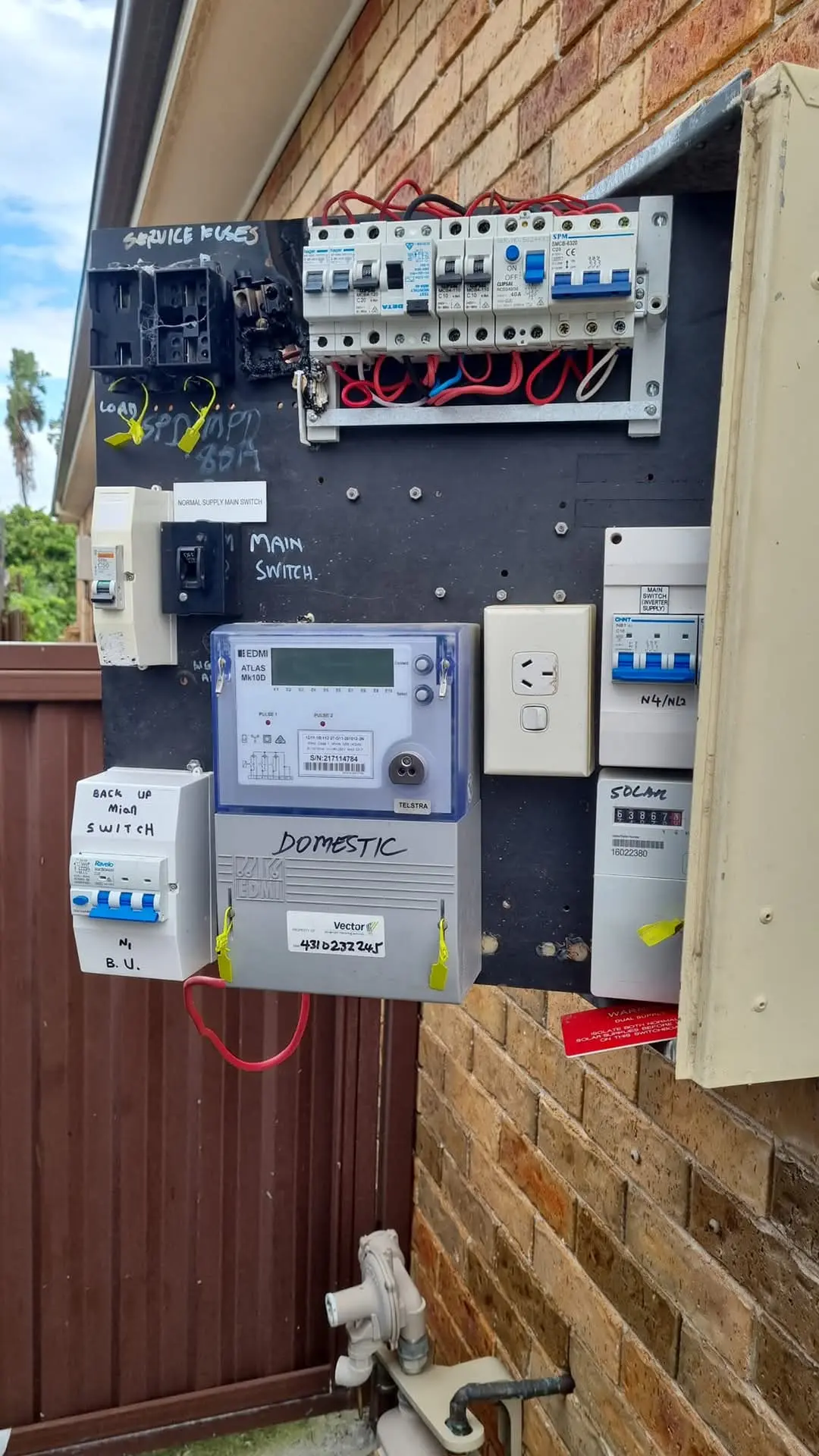
What Happens When You Press the Test Button?
Pressing the test button creates a small, controlled leak of electricity, the same kind of fault the switch is built to catch, like someone touching a faulty appliance. A healthy safety switch notices straight away, trips with a solid clunk and cuts power to the circuits it protects. Walk around the house and you'll see exactly which lights and powerpoints went off. Those are protected. Anything still running isn't covered by that switch. Flick it back up and everything comes back on. That's the whole test.
It trips, then resets
Your safety switch is working. Note which circuits went off, flick it back on, and put a reminder in your calendar for three months' time.
It trips but won't reset
Something on one of those circuits may have a fault. Unplug the appliances on that circuit and try once more. If it still won't reset, call an electrician.
It doesn't trip at all
That switch isn't protecting you. Book a licensed electrician as soon as you can, and avoid using appliances outdoors or near water on those circuits until it's sorted.
Signs Your Safety Switch Setup Needs a Look
A quick look at the switchboard tells you a lot. These are the signs your protection isn't what it should be.
No Test Buttons at All
If nothing on your board has a T or Test button, you probably have circuit breakers only, and no protection against shocks.
Only Some Circuits Go Off
If the lights, the oven or the hot water stay on during the test, those circuits aren't protected by that switch.
Not Tested in Years
A safety switch that's sat untouched for years may not trip when it's needed. Regular testing keeps the mechanism moving freely.
A Safety Switch in One Powerpoint
In some older homes, a safety switch is built into a single powerpoint instead of the switchboard. That protects that outlet, not the whole house.
The Rules Have Changed Over the Years
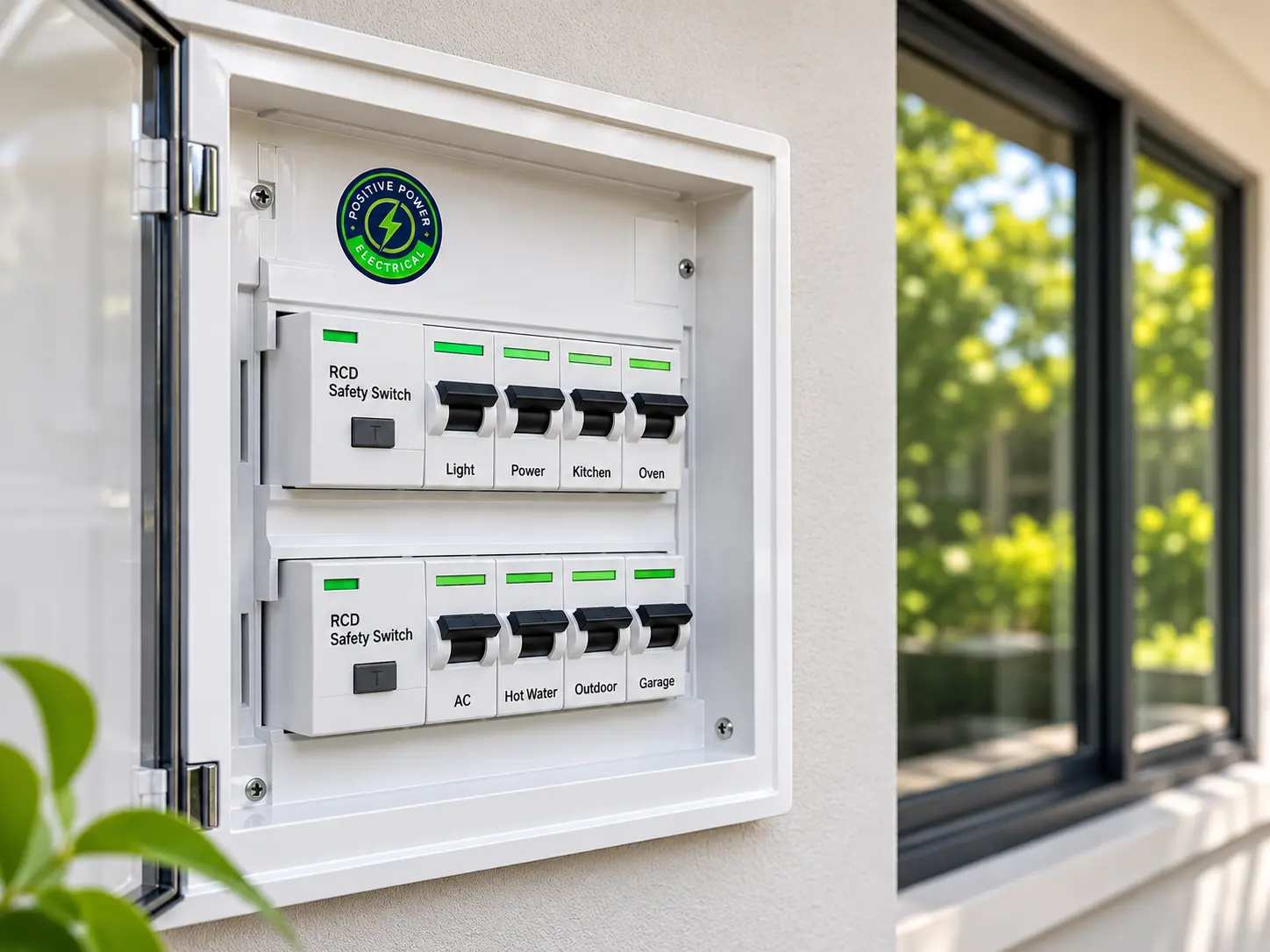
Why Safety Switches Fail or Fall Short
A safety switch is a simple device with a big job. Inside, it constantly compares the electricity flowing out along one wire with what comes back along the other. If they don't match, some of it is going somewhere it shouldn't, possibly through someone, and the switch cuts the power. Like anything mechanical, it works best when it's used. Left untouched for years, the mechanism can stiffen, and a switch that has never been tested is a switch nobody knows will work. Then there's coverage. Older homes were wired to the rules of their day, which can leave some circuits with no safety switch at all.
1
Never tested
The mechanism can stiffen when it's left untouched for years.
2
Age and wear
Older safety switches can wear out and stop tripping reliably.
3
Partial coverage
Older boards may only protect powerpoints, leaving other circuits exposed.
4
Older switch types
Some older safety switch types can no longer be installed in new work.
5
Damage or moisture
Water, heat or physical damage at the board can affect how it works.
How We Check and Upgrade Safety Switches
We start by finding out what you actually have, then make sure every circuit that should be protected is.
Step 01
Test Every Switch
We test each safety switch with proper test equipment, not just the button, to confirm it trips fast enough. That tells us whether it's genuinely protecting you or just looks the part.
What we look for
What We Check on the Board
- How fast each safety switch trips
- Circuits with no safety switch at all
- Signs of heat, damage or moisture
Step 02
Find the Gaps
We map which circuits each switch protects, including lights, the oven, the hot water and anything outside. Then we show you clearly what's covered and what isn't.
Step 03
Replace or Add Protection
We replace any switch that fails and add safety switches where circuits are unprotected, then test the whole board again. You get a Certificate of Compliance for Electrical Work (CCEW) for the job.
- Every switch tested
- Gaps covered
- Circuits labelled
Method matched to cause
Sometimes It's Time for a New Board
If your switchboard is old or out of space, adding safety switches one by one doesn't always make sense. We'll tell you when a full upgrade is the better option, and when it isn't.
Safety switch installation
Switchboard upgrades- Safety checks
- Fault finding
What Shapes the Cost
Testing is quick. What changes the cost is what the test turns up: a switch that needs replacing, circuits with no protection, or a board with no room left for new switches.
How to Test Your Safety Switch
Let everyone in the house know first, especially anyone working on a computer. Open the meter box door, find each switch with a T or Test button, and press it firmly. It should flick off with a clunk. Walk through the house and note what went off, then flick the switch back on. Some clocks and appliances may need resetting afterwards. To remember, test when your quarterly power bill arrives, or when the clocks change for daylight saving.
Safe to try yourself
- Press each T or Test button
- Note which circuits switch off
Flick the switch back on
Set a reminder for three months' time
Time to call a professional
- A switch won't trip when tested
- A switch won't reset afterwards
- No safety switches on the board
- Circuits that stay on during the test
Press the Button, Every Three Months
A safety switch is one of the few things in your home that can stop an electric shock before it does real harm. But it only helps if it's working, and the only way to know is to test it. Press the button every three months, notice which circuits go off, and call an electrician if anything doesn't behave the way it should. It's the easiest safety habit you'll ever pick up, and one that could genuinely save a life.
Remember this
If it doesn't trip when you test it, it won't trip when you need it.
Safety Switch FAQs
Will testing damage my appliances?
No. The test only cuts the power for a moment, much like switching off at the wall. Some clocks and timers may need resetting afterwards.
What's the difference between a safety switch and a circuit breaker?
A circuit breaker protects your wiring from overloads and short circuits. A safety switch protects people by cutting the power when electricity leaks to earth. Some devices combine both, and those have a test button too.
Do I need a safety switch on every circuit?
For the best protection, yes. Every circuit in a new home needs one, and adding them to an older home is one of the most worthwhile safety upgrades you can make.
Do NSW homes have to have safety switches?
There's no NSW rule forcing older homes to add them, but any new or altered circuits must be protected. Queensland goes further and requires safety switches on powerpoint circuits when a home is sold.
What if my safety switch keeps tripping on its own?
It's usually doing its job and catching a fault. Unplug everything on that circuit, reset it, then plug things back in one at a time. If it trips with nothing plugged in, call an electrician.
Are portable safety switches worth having?
Yes, as an extra. A portable safety switch plugs in between the powerpoint and a tool or appliance, which is handy for outdoor jobs. It's not a replacement for proper protection at the switchboard.
Want Every Circuit Protected?
If your safety switch failed the test, won't reset, or you've found circuits with no protection, Positive Power Electrical can sort it. We'll check every switch in your Pennant Hills home, fill the gaps, and make sure that the next time you test the safety switch, it does exactly what it should.