That Extension Lead to the Shed Has to Go
It started as a quick fix. One orange lead from the laundry to the shed, just to run the drill for an afternoon. Years later it's still there, snaking across the lawn, under the side gate and through a gap in the door, now running a fridge, the lights and a radio. Sound familiar? Getting proper power to shed buildings, garages and granny flats is one of the most common jobs on bigger blocks, and one of the most overdue.
Leads aren't permanent wiring Extension leads are made for temporary jobs, not for running a building day after day.
Outdoor cords get damaged Leads on the ground get crushed, chewed, cut by mowers and soaked by rain.
New wiring is licensed work Ausgrid says any new powerpoints, lighting or rewiring needs a licensed electrician.
- Check before you dig Before You Dig Australia is a free service that shows where underground pipes and cables run.
Plan for the load A workshop, a home office and a granny flat each need very different amounts of power.
The good news is that a proper setup is usually simpler than people expect, and it lasts for decades. Whether your Pennant Hills block has a garden shed, a detached garage or a granny flat out the back, here's what's involved in doing it properly.
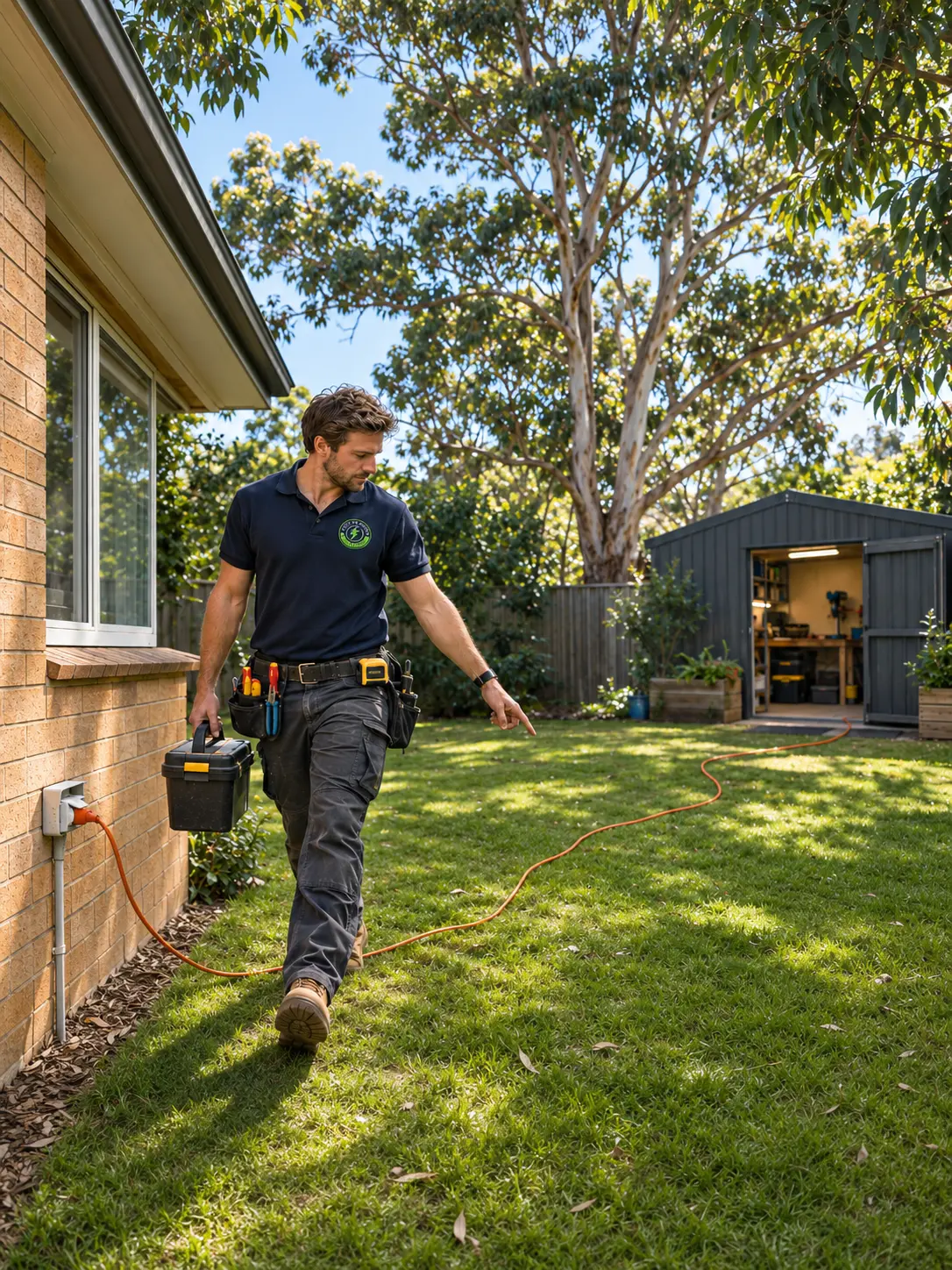
A Few Lights, a Workshop or a Whole Flat?
The right setup depends on what the building will actually do. A garden shed that needs a light and a powerpoint for the mower charger is a small job. A workshop running a table saw, a compressor and a welder needs far more, usually with its own small switchboard, called a sub-board, so the shed has its own safety switches and circuit breakers. A granny flat is a step up again: lights, powerpoints, a kitchen, hot water and air con, all wired to the standard of a home. Knowing which one you're building tells your electrician how big the cable needs to be and what the switchboard at the house can handle.
Lights and a powerpoint or two
A single new circuit from the house is often all a garden shed needs. It's protected by a safety switch and sized for light use.
A proper workshop or studio
Power tools, a heater or air con usually call for a sub-board in the shed, fed by a cable sized for the load.
Lead damaged, wet or getting warm
Unplug it at the house end straight away and stop using it. A damaged lead outdoors is a real shock risk. If there's smoke or fire, call 000.
Signs Your Shed Power Needs Sorting
If any of these sound like your backyard, the shed has outgrown its temporary setup.
A Lead That Never Gets Unplugged
An extension lead that has run the shed for months or years is acting as permanent wiring, which it was never built for.
Leads Joined Together
Two or three leads plugged end to end, often with a powerboard on the end, add heat and weak points at every join.
Tools Tripping the Power
If the saw or compressor trips the safety switch at the house, the circuit feeding the shed may not be up to the load.
Damaged or Sun-Faded Cable
Cracked, chewed or sun-damaged outdoor cable can leave live wires exposed, especially after rain.
Granny Flats Are a Bigger Job
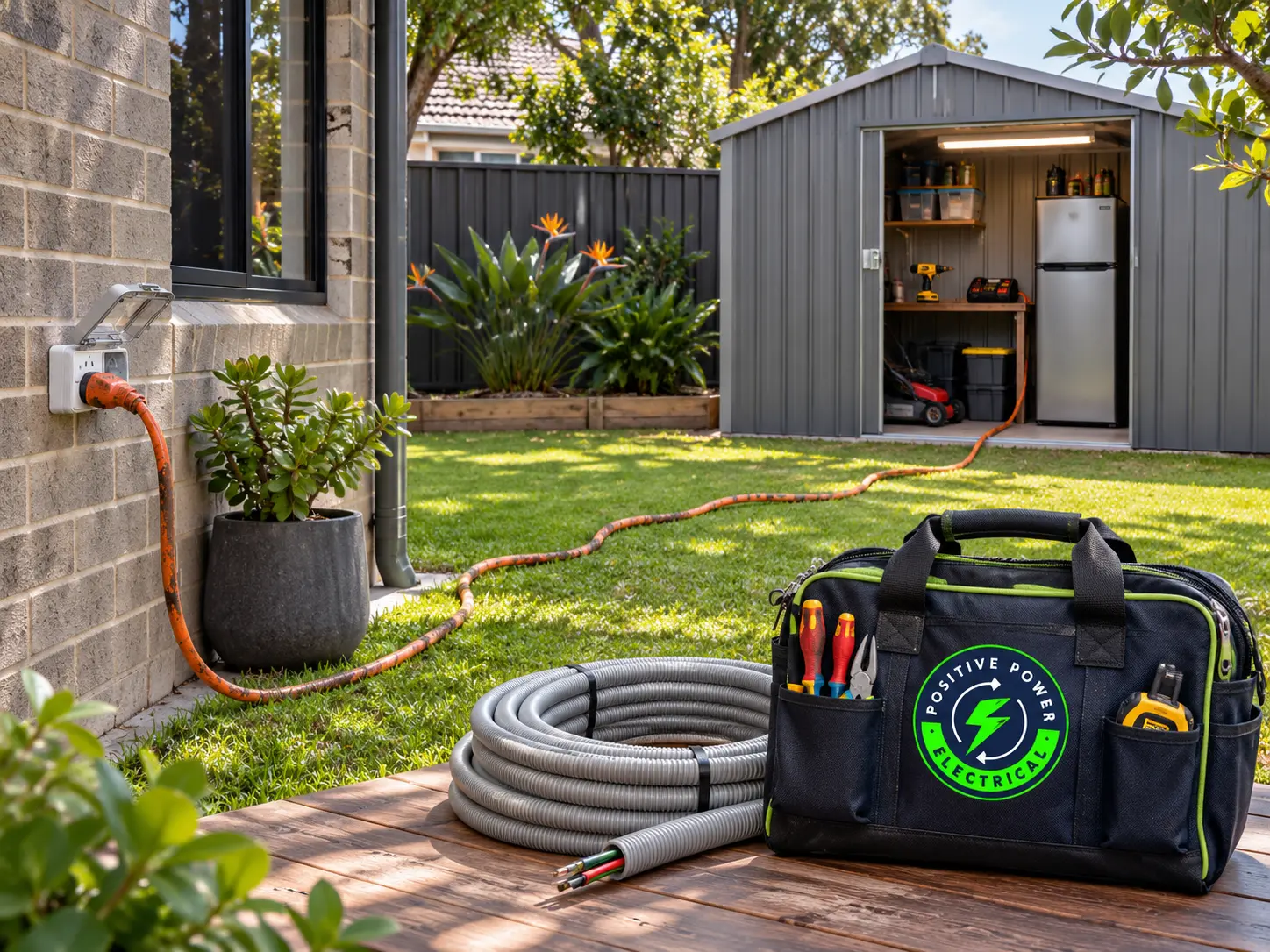
Why Temporary Shed Power Becomes a Hazard
An extension lead is designed to be rolled out, used and rolled back up. Left outside for months, it faces everything a backyard can throw at it: sun that cracks the outer sheath, rain that pools around the plugs, mowers and whipper snippers that nick the cable, and pets or rodents that chew it. Inside the shed, the load creeps up too. What started as a drill becomes a fridge, a heater and a set of power tools, all drawing through one thin lead from one powerpoint at the house. Every weak point adds heat, and the further the shed is from the house, the more the voltage drops along the way. A proper installation fixes all of that with cable sized and protected for the job.
1
Weather exposure
Sun and rain break down leads and plugs that aren't built to stay outdoors.
2
Physical damage
Mowers, tools, pets and rodents can cut or chew exposed cable.
3
Growing load
More tools and appliances push a single lead past what it can safely carry.
4
Long distances
Long cable runs lose voltage, which makes motors and tools work harder.
5
No local protection
Without a sub-board, a fault in the shed has no safety switch close by.
How We Run Power to Your Shed
We start with what the building will be used for, then plan the cable, the protection and the route so it's safe now and still useful if your plans grow.
Step 01
Work Out the Load
We talk through what you'll run out there, from lights and chargers to power tools, a heater or a full granny flat kitchen. That decides the cable size and whether the shed needs its own sub-board.
What we look for
What We Check First
- Spare capacity at the house switchboard
- The safest route for the cable
- Underground services along the way
Step 02
Plan the Route and Run the Cable
We choose the best path from the house, whether underground in conduit or fixed along a structure, and check for buried pipes and cables before any digging starts.
Step 03
Fit Out and Test
We install the sub-board, powerpoints and lights in the shed, then test every circuit and safety switch. You get a Certificate of Compliance for Electrical Work (CCEW) for the job.
- Cable sized for the load
- Safety switch protected
- Every circuit tested
Method matched to cause
Plan for What Comes Next
If there's any chance the shed becomes a workshop, a studio or a home office, it's cheaper to lay a bigger cable now than to dig the trench twice. We'll talk you through the options before anything goes in the ground.
- Shed and garage power
Sub-boards- Outdoor powerpoints
- Switchboard upgrades
What Shapes the Cost
The biggest factors are the distance from the house to the shed, what the cable has to cross on the way, and how much power the building needs. A short run across soft lawn is a very different job to one under a paved driveway or through rocky, root-filled ground.
What You Can Plan Yourself
Make a list of everything you want to run in the shed, now and in the next few years, and note where you'd like the lights and powerpoints. Walk the likely route from the house and look for anything in the way: paths, garden beds, trees, pools and water tanks. Then lodge a free enquiry with Before You Dig Australia, so everyone knows what's under the ground before a shovel goes in. Until the new wiring is in, use a heavy-duty outdoor lead, unwind it fully, keep it off the ground where people walk, and unplug it when you're done.
Safe to try yourself
List what you'll run in the shed
Mark where you want lights and powerpoints
- Walk the route and note any obstacles
Lodge a free Before You Dig enquiry
Time to call a professional
Running cable to the shed or garage
Installing powerpoints, lights or a sub-board
Wiring a granny flat
A lead that's damaged, wet or warm
Give the Shed Power It Deserves
An extension lead across the lawn feels harmless because it's always been there. But it was never meant to power a building, and every season outdoors makes it a little less safe. A proper supply, sized for the way you actually use the shed, garage or granny flat, takes the risk away and gives you power you can rely on. Plan it once, put it in the ground properly, and you'll never think about it again.
Remember this
If the lead never gets unplugged, the shed needs proper wiring.
Shed and Granny Flat Power FAQs
Can I just use an extension lead to power my shed?
For an occasional job, a heavy-duty outdoor lead is fine as long as it's unwound fully and put away afterwards. As a permanent way to power the shed, it isn't safe. That's a job for proper wiring.
Does my shed need its own switchboard?
Not always. A garden shed with a light and a powerpoint can often run from one new circuit. A workshop or granny flat usually needs its own sub-board with safety switches.
Does a granny flat need its own electricity meter?
No, a granny flat isn't required to have separate services. Many owners add a separate meter anyway so a tenant can pay their own bill, which involves the network and an electricity retailer as well as your electrician.
Can I dig the trench myself to save money?
Talk to your electrician first. Some are happy for you to help with digging, but the cable, conduit and connections are licensed electrical work, and the depth and route have to meet the wiring rules.
Will my house switchboard cope with a shed?
It depends on how much spare room it has and what the shed will run. An older or full board may need upgrading before a new circuit or sub-board can be added.
Can I add an EV charger in the garage later?
Yes, and it's worth planning for now. Running a cable big enough for a future charger while the trench is open is far cheaper than doing it twice.
Ready to Retire That Extension Lead?
Positive Power Electrical can plan the route, size the cable and run proper power to shed buildings, garages and granny flats across your Pennant Hills block. Safe lights and powerpoints where you need them, a sub-board where it makes sense, and room to grow when your plans do.