Your Pool's Electrics Deserve a Summer Check
The pool cover comes off, the water's sparkling and the kids are already in their swimmers. Before the first cannonball, it's worth thinking about everything around that water that runs on electricity: the pump, the chlorinator, the lights, and maybe a spa or a heater. Water and electricity are a dangerous mix, and pool electrical safety is one of those things you never want to learn about the hard way.
- A safety switch on every pool circuit Pool equipment should be protected by a working safety switch.
- Bonding around the pool Metal within arm's reach of the water, like fences and handrails, may need to be bonded to earth.
- Pump and equipment wiring Pumps, chlorinators and heaters need weatherproof, properly installed connections.
- Pool and spa lights Underwater and surround lights should be checked by an electrician, especially if they flicker or fog up.
- No leads near the water Keep extension leads and portable appliances well away from the pool and wet areas.
A professional can check most of these in a single visit, and some you can start on yourself today. Whether your Cherrybrook home has a family pool, a spa or both, a quick electrical check before summer means you can relax and enjoy it.
What Makes Pool Electrics Different?
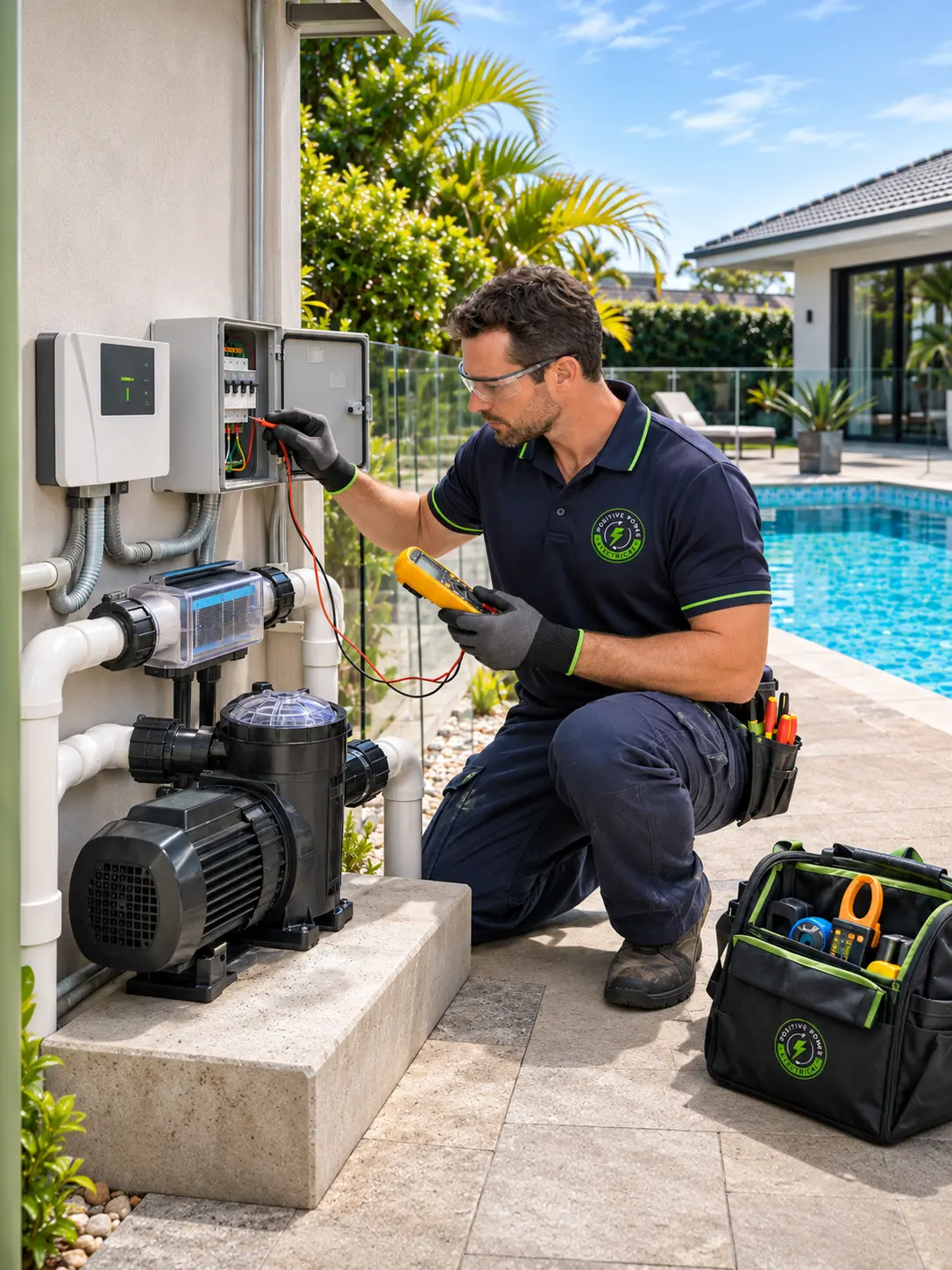
Around a pool, the rules change. Wet skin, bare feet and metal fences make it far easier for electricity to find a path through a person. That's why the wiring rules treat the area around pools and spas differently from the rest of the house. Equipment has to be protected by a safety switch, metal within reach of the water has to be bonded so it all sits at the same voltage, and some electrical equipment can't be placed close to the water at all. It isn't over-engineering. It's what stops a small fault in a pump or a light from becoming a tragedy.
Everything working normally
Test the safety switch, check leads and plugs are well away from the water, and book a check if the pool equipment hasn't been looked at in years.
Tingles in the water or from the fence
Get everyone out of the pool and stop using it. Switch off the pool equipment, then report it to your network operator and call an electrician, as it can mean a bonding or wiring fault.
Someone gets a shock
Call 000 straight away. Don't touch the person or the water until the power is off, and only switch it off at the switchboard if it's safe to reach.
Signs Your Pool Electrics Need Attention
Pool equipment lives a tough life in sun, rain and chlorine. These are the signs it's time for a check.
Safety Switch Tripping
A pool pump or light that keeps tripping the safety switch has a fault. Don't keep resetting it.
Water in Lights or Fittings
Fogging, water or flickering in an underwater light can mean a seal has failed.
Corroded or Damaged Equipment
Rust, cracked housings or perished cables on pumps and chlorinators let water reach places it shouldn't.
Leads Running Across the Yard
An extension lead to the pump, the pool heater or the spa is a sign the equipment needs a proper outdoor outlet.
Older Pools, Newer Rules
Why Pools Raise the Electrical Stakes
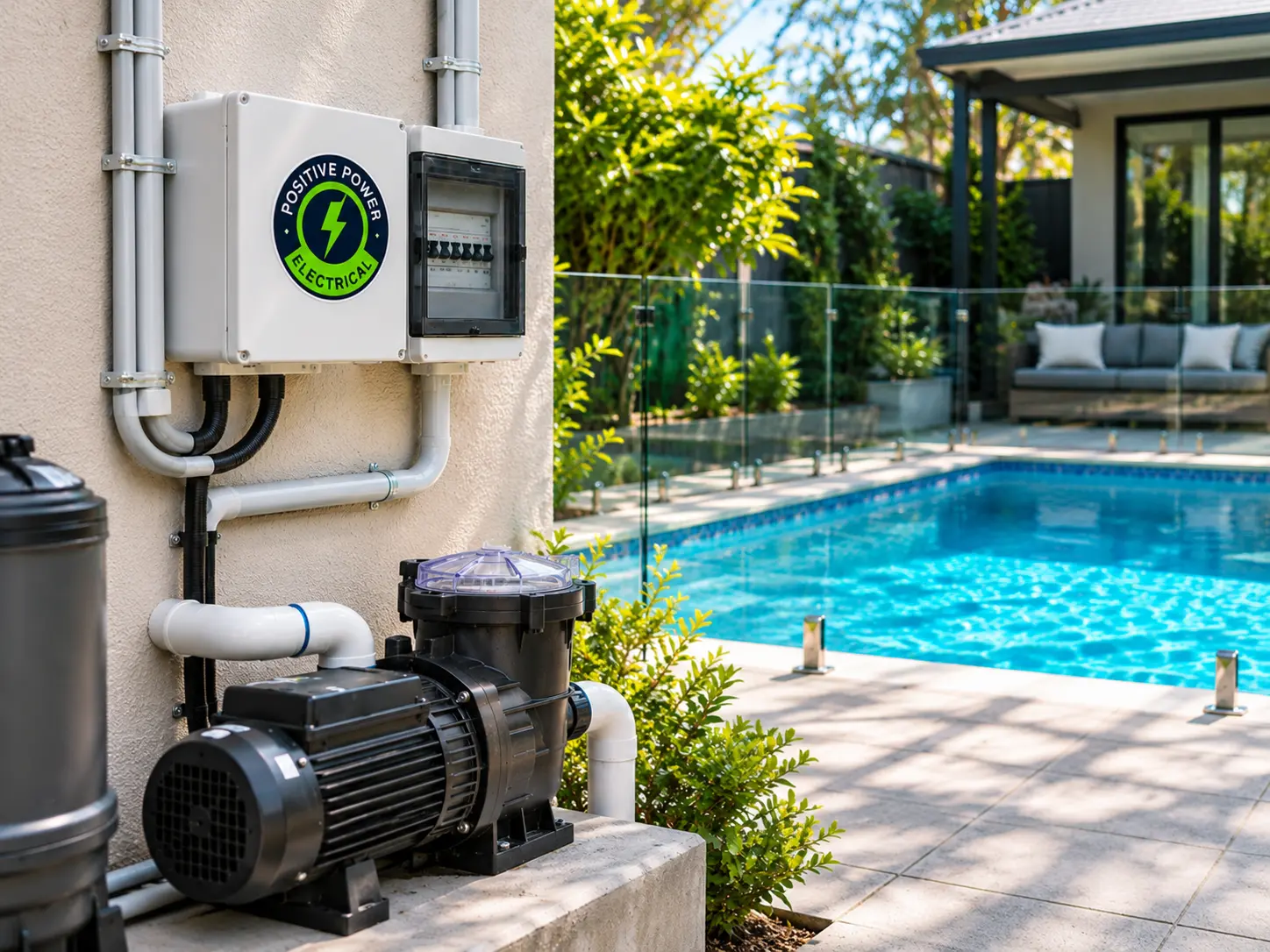
A pool combines the three things electricity likes least: water, metal and people with bare skin. The pump, chlorinator and lights sit outdoors through every season, where sun, rain and chemicals slowly wear down seals, cables and connections. Metal fences, ladders and handrails sit right at the water's edge. If a fault puts voltage on any of that, someone in or near the pool can complete the circuit. Bonding keeps all that metal at the same voltage, so there's nothing to drive a current through you, and a safety switch cuts the power the moment electricity leaks where it shouldn't. When either one is missing or faulty, the margin for error disappears.
1
Weathered equipment
Sun, rain and chlorine wear down seals and cables over time.
2
Missing or broken bonding
Metal near the pool can carry a dangerous voltage during a fault.
3
No safety switch
Nothing cuts the power fast if electricity leaks to earth.
4
Leaking pool lights
Water inside a light fitting can make it unsafe.
5
Extension leads outdoors
Temporary leads near water are easily damaged and wet.
How We Check Pool Electrics
We look at everything that connects your pool to the power, from the switchboard out to the water's edge, and fix anything that isn't safe before swimming season starts.
Step 01
Test the Protection
We test the safety switches on your pool circuits and confirm that every piece of pool equipment is actually covered by one.
What we look for
What We Check Around the Pool
- Safety switches on every pool circuit
- Bonding on metal near the water
- The condition of pumps, lights and cables
Step 02
Inspect Equipment and Bonding
We check the pump, chlorinator, heater and lights, along with their connections and outdoor outlets, and test the bonding to metal fences and fittings near the water.
Step 03
Repair and Retest
We fix any faults, replace damaged outlets or cables, and retest the lot. You get a Certificate of Compliance for Electrical Work (CCEW) for any electrical work.
- Pool circuits protected
- Bonding tested
- Ready for summer
Method matched to cause
Equipment Faults Need the Right Fix
Sometimes the problem is inside the pump or chlorinator itself. If so, we'll tell you whether it's worth repairing through the equipment supplier or simply replacing.
Safety checks
Safety switch installation- Outdoor powerpoints
- Fault finding
What Shapes the Cost
A pool electrical check is usually quick. The cost changes with what it turns up: a missing safety switch, a tired outdoor outlet, a leaking light, or bonding that needs work.
What You Can Check Yourself
Start with the safety switch: press its Test button and check the pool pump and lights switch off. Walk around the pool and look for damaged cables, cracked equipment housings, rust, or water inside the lights. Move any extension leads, speakers or chargers well away from the water. And make sure the pump is running on its timer, not left on all day.
Safe to try yourself
- Test the safety switch for the pool
- Look for damage, rust or water in lights
- Move leads and appliances away from water
- Check the pump timer is working
Time to call a professional
- A safety switch that trips or won't test
- Tingles from the water, fences or ladders
- Water inside a pool or spa light
Adding equipment, lights or outlets
Enjoy the Pool Without the Worry
A pool should be the safest, happiest part of summer, and a working safety switch, proper bonding and equipment in good condition are what make that possible. Test the switch, look over the equipment, keep leads well away from the water, and get a professional check if anything looks tired or behaves oddly. Then go and enjoy it.
Remember this
Any tingle in or near the pool means everyone out of the water and the power off.
Pool Electrical Safety FAQs
Does my pool equipment need a safety switch?
Yes. Pool and spa equipment should be protected by a safety switch, so the power cuts out fast if electricity leaks where it shouldn't.
What is equipotential bonding?
It's connecting the metal parts in and around the pool to the earthing system, so they all sit at the same voltage. That stops a fault from driving a current through someone touching them.
Does my glass pool fence need bonding?
Metal spigots or fencing within arm's reach of the pool edge may need to be bonded. If you've had new fencing installed, it's worth having an electrician check.
Can I run my pool pump on an extension lead?
It's not a good idea. Pool equipment should run from a properly installed weatherproof outlet, not a temporary lead across wet ground.
Does my spa need anything extra?
Spas usually need their own dedicated circuit with safety switch protection, plus an emergency stop switch within easy reach of the spa. Your spa's installation guide will list the exact requirements.
Why does my pool pump need a timer?
Building rules require timers on new pool and spa pumps for energy efficiency. It also stops the pump running all day when nobody remembers to switch it off.
Ready for a Safe Summer by the Pool?
Positive Power Electrical can check your pool's safety switches, bonding, pump, lights and outdoor outlets, and fix anything that isn't right before swimming season kicks off. Put pool electrical safety at the top of your summer list, and enjoy your Cherrybrook backyard with complete peace of mind.