5 Things to Get Right Before the Garden Lights Go In
Summer evenings are made for the backyard: dinner on the deck, the kids running around after dark, and the garden looking its best under a few well-placed lights. Then you start pricing it up and wonder whether you could just do it yourself. The honest answer is: partly. Good outdoor lighting installation starts with knowing which jobs are a weekend DIY and which ones need a licensed electrician.
- Pick the right voltage Plug-in 12V garden lighting kits are designed for DIY. Anything on 240V needs a licensed electrician.
- Check the IP rating As a rough guide, IP44 suits sheltered spots, while lights exposed to rain or sprinklers need IP65 or higher.
Have a proper outdoor outlet A 12V kit's transformer needs a weatherproof outdoor powerpoint, not an extension lead through the door.
Protect the circuit Outdoor lighting should run on a circuit with a working safety switch.
Check before you dig Before You Dig Australia is a free service that shows where underground pipes and cables run.
Get those five right and your lights will look great and last for years. Whether your Pennant Hills garden is a small courtyard or a big backyard full of trees, here's how to plan it so the only thing anyone notices is the glow.
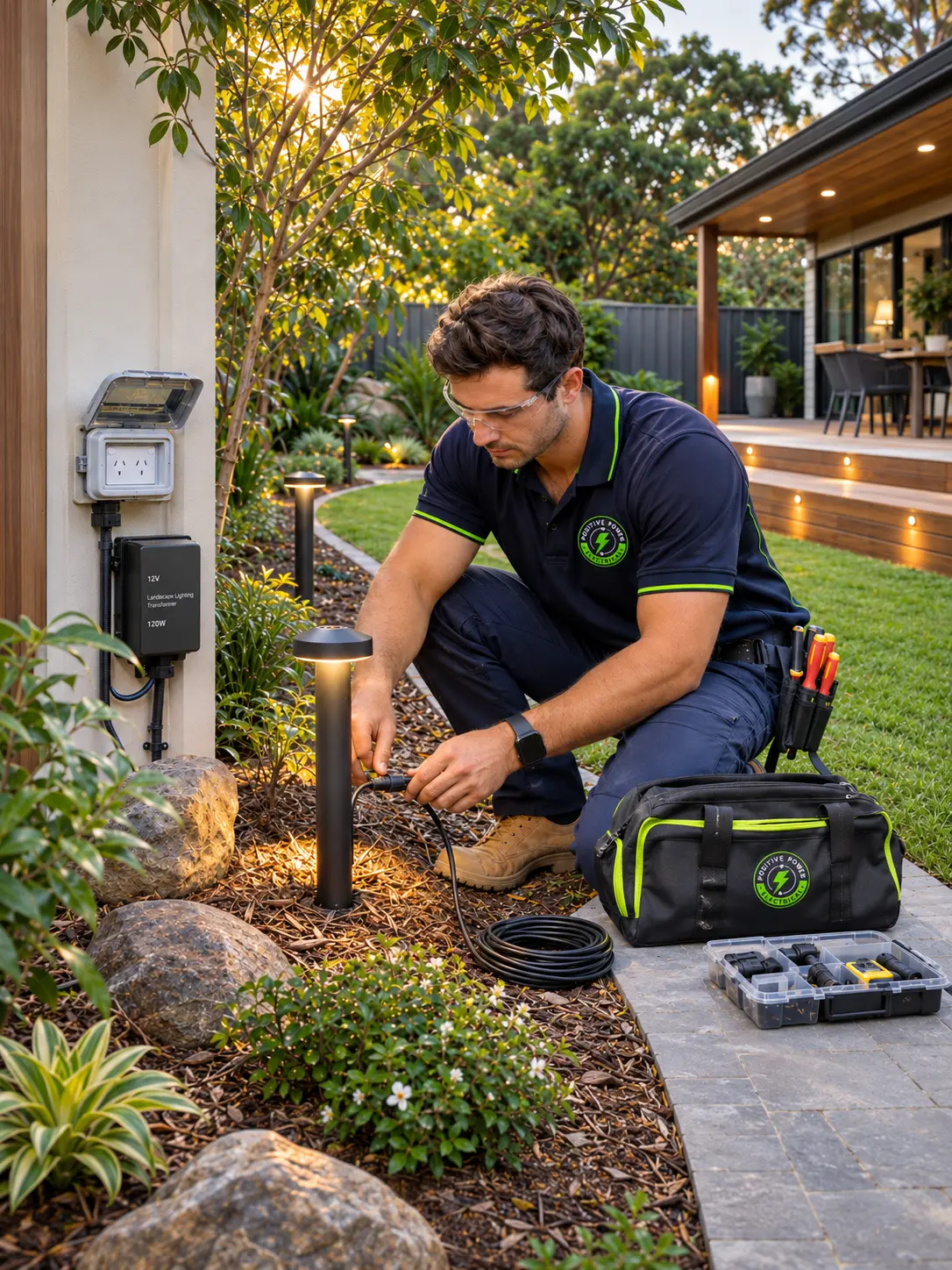
DIY Kit or Electrician Job?
Garden lighting comes in three flavours. Solar lights charge in the sun and need no wiring at all. Low-voltage lights run at 12V from a transformer that plugs into an outdoor powerpoint, and connecting the lights to their low-voltage cable is generally a safe DIY job. Mains lights run at 240V, the same as the rest of your home, and every part of that installation, from new outdoor outlets and hardwired transformers to cable buried in the garden, must be done by a licensed electrician. The system you choose decides how much you can do yourself.
Solar or a plug-in 12V kit
A great DIY option for paths and garden beds. You'll just need a weatherproof outdoor powerpoint for the transformer, in a spot it's rated for.
240V lights or a bigger design
Floodlights, wall lights, hardwired transformers and anything on mains power are an electrician's job. It's also the way to go for a lighting design built to last.
Damaged cable or water in a fitting
A cut cable, a cracked fitting or water inside a light can be dangerous on mains power. Switch that circuit off at the switchboard and don't use it until it's checked. If there's smoke or fire, call 000.
Signs Your Outdoor Lights Need Attention
Outdoor lights take a beating from sun, rain, sprinklers and the odd whipper snipper. Watch for these.
Lights Tripping the Safety Switch
Outdoor lights that trip the safety switch after rain usually have water getting in somewhere.
Fogging or Water Inside Fittings
Condensation or water inside a light means its seal has failed and it's no longer weatherproof.
Damaged or Exposed Cable
Cable chewed by animals, nicked by garden tools or poking out of the ground needs fixing before someone touches it.
Extension Leads on Permanent Duty
A lead running from the house to the garden lights is a temporary fix that's turned into a hazard.
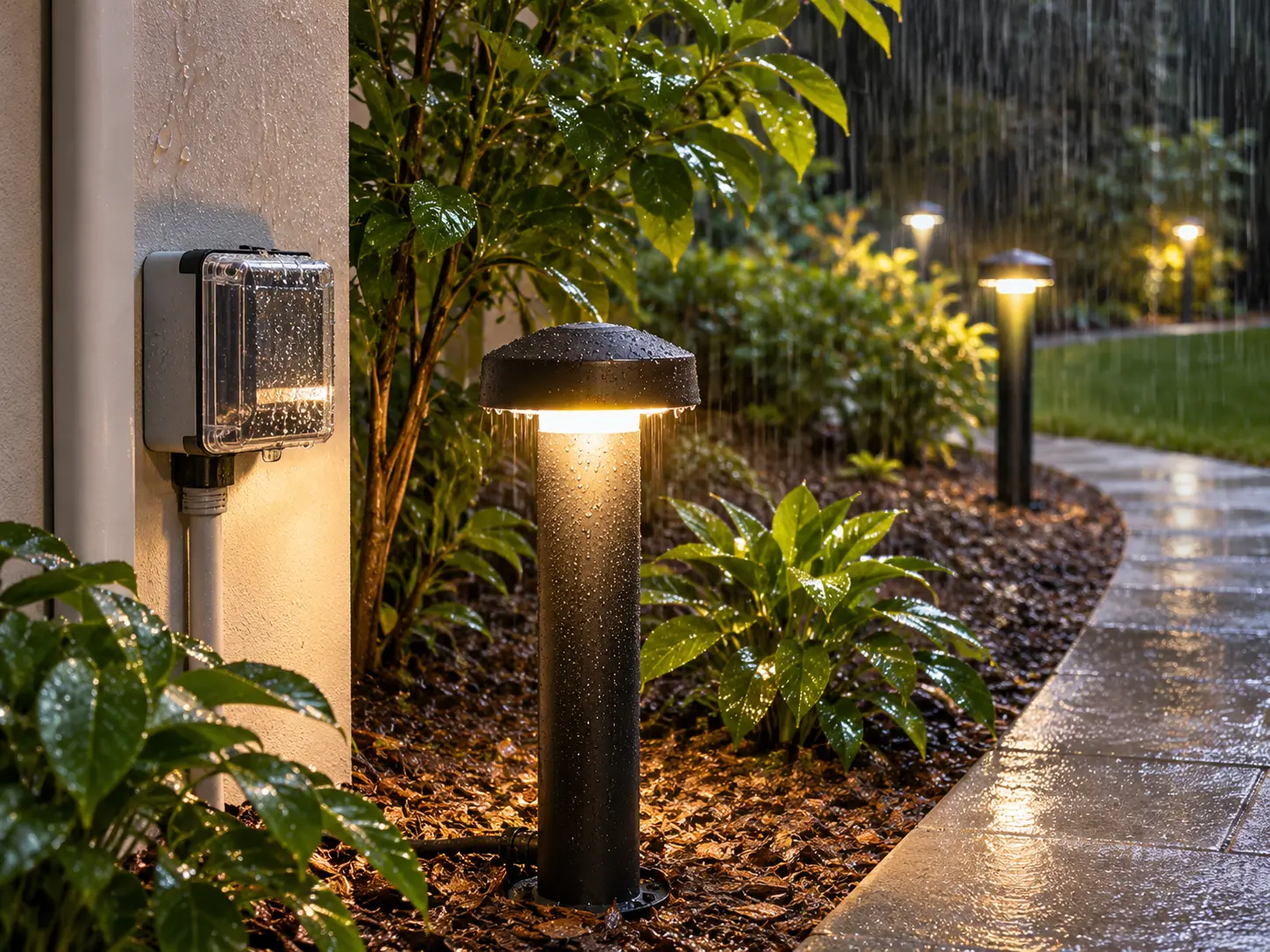
Leafy Gardens, Hidden Hazards
Why Outdoor Lighting Fails
Outdoor lights live in the toughest spot around the home. Summer sun bakes the plastic, rain and sprinklers test every seal, and soil, roots and garden tools are hard on buried cable. Indoor-rated fittings and cheap connections don't last long out there. Once water gets in, the light fails, the safety switch trips, or worse, a fitting becomes live. Most of these problems come back to three things: lights without the right IP rating for where they sit, cable that isn't properly protected, and connections that were never designed to stay dry.
1
Wrong IP rating
Lights not built for rain or sprinklers let water in.
2
Unprotected cable
Buried or exposed cable gets damaged by tools, roots and animals.
3
Poor connections
Joins that aren't weatherproof let moisture reach live parts.
4
Indoor fittings outdoors
Lights made for inside break down quickly in the weather.
5
Extension leads
Temporary leads left outside get crushed, wet and damaged.
How We Install Outdoor Lighting
We plan the lighting around how you actually use the space, then install it so it survives the weather and stays safe for years.
Step 01
Plan the Layout
We walk the garden with you and work out where light is needed: paths, steps, entertaining areas, feature trees and the driveway. Then we choose 12V, 240V or a mix, depending on the look and the job.
What we look for
What We Check Outside
- Safe cable routes away from digging
- Outdoor outlets and safety switch protection
- The right IP rating for every spot
Step 02
Install the Cable and Power
We run cable in the right conduit, install weatherproof outlets and transformers, and connect everything to a circuit protected by a safety switch.
Step 03
Fit, Aim and Test
We fit the lights, adjust them so they look their best after dark, and test every circuit. You get a Certificate of Compliance for Electrical Work (CCEW) for the electrical work.
- Weatherproof connections
- Safety switch protected
- Lights aimed and tested
Method matched to cause
Already Have a 12V Kit? We'll Power It Properly
If you've already bought a plug-in kit, you may only need a weatherproof outdoor powerpoint in the right spot. We'll install that, and you can set up the lights yourself.
Outdoor lighting
Outdoor powerpoints- LED lighting
- Safety checks
What Shapes the Cost
Outdoor lighting can be as simple as one outdoor powerpoint for a plug-in kit, or as involved as a full 240V garden design. The cost depends on the number of lights, the type of system and how far the cable has to run.
What You Can Do Yourself
Solar lights and plug-in 12V kits are made for DIY. Check the IP rating suits where each light will sit, follow the manufacturer's instructions, and keep the transformer out of the weather or in a spot it's rated for. Plug it into a weatherproof outdoor powerpoint, never an indoor extension lead. And before you dig even a shallow trench, lodge a free enquiry with Before You Dig Australia.
Safe to try yourself
- Install solar garden lights
- Set up a plug-in 12V kit
- Check IP ratings before you buy
- Lodge a free Before You Dig enquiry
Time to call a professional
- Any 240V outdoor lighting
- New outdoor powerpoints
- Hardwiring a transformer
Lights tripping the safety switch
Light the Garden, Not the Risk
Good outdoor lighting turns a backyard into somewhere you actually want to be after dark. The secret is choosing the right system for each job: solar and 12V kits where they fit, a licensed electrician for anything on mains power, and fittings rated for the weather they'll face. Do that, and your garden lights will keep glowing long after the novelty wears off.
Remember this
12V kits are DIY. Anything on 240V is an electrician's job.
Outdoor Lighting FAQs
Can I install 12V garden lights myself?
Generally, yes. Plug-in 12V kits are designed so homeowners can connect the lights to the low-voltage cable. The transformer still needs a proper weatherproof outdoor powerpoint.
What IP rating do outdoor lights need?
As a rough guide, IP44 suits sheltered spots like a covered patio, while lights exposed to rain or sprinklers should be IP65 or higher.
Are solar garden lights any good?
They're great for marking paths and garden beds with zero wiring. They're less suited to bright feature or security lighting, especially in shady spots.
Do I need Before You Dig for garden lights?
It's a good idea for any digging. Before You Dig Australia is free and shows where member organisations' pipes and cables run, though it usually won't show private cable on your own property.
Can I plug my garden lights into an extension lead?
Not as a permanent setup. Extension leads left outside get damaged and wet. A weatherproof outdoor powerpoint is the safer long-term option.
Are LED outdoor lights worth it?
Yes. LEDs use far less power than old halogen or incandescent lights and last much longer, which matters for lights you leave on every evening.
Ready to Light Up the Garden?
Positive Power Electrical can plan and handle your outdoor lighting installation, from a single outdoor powerpoint for a plug-in kit to a full garden design. We'll make your Pennant Hills backyard look great after dark, and keep it safe through every season.