No Power to One Room in Hornsby: Why?
You walk into the bedroom, flick the light switch and realise the lights and nearby power points have stopped working while the rest of the home still has electricity. No power to one room in Hornsbycan point to a tripped circuit, faulty equipment, damaged wiring or another local electrical fault, so the useful question is what lost power together and what happened immediately beforehand.
- One room affectedA localised outage helps narrow which circuit may be involved.
- Protection switching off usually means something needs investigating.
- An intermittent fault can disappear without actually being resolved.
- Unusual heat around outlets or switches needs professional attention.
- Burning smell Scorching, smoke or electrical odours require prompt action.
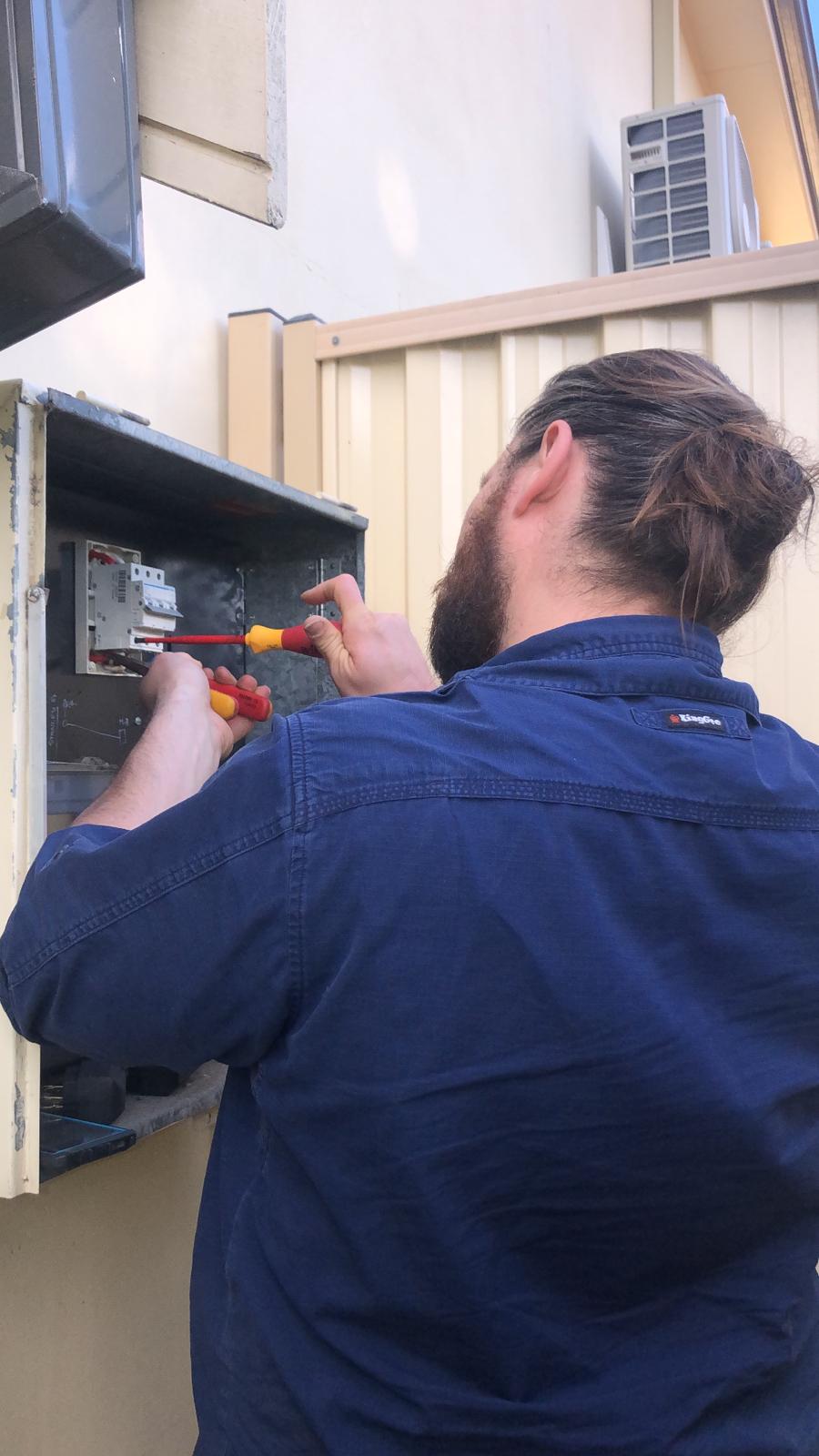
Treat a Local Outage as a Clue
When there isno power to one room in Hornsby, start by identifying exactly what has stopped working rather than assuming the whole property has a supply problem. If lights and power points in one area are affected while other rooms remain normal, the fault may sit on a particular circuit, connected equipment or part of the fixed wiring. Repeated tripping, heat, burning smells or visible damage make professional assessment more important. Electrical wiring work in NSW must be carried out by a licensed electrician.
One area
If only one room is affected, note whether both lighting and outlets are off. That pattern can help identify whether one or several circuits are involved.
Repeat loss
Power that returns and then disappears again is still an unresolved problem. Repetition gives an electrician valuable fault-finding information.
Heat or smell
Warm fittings, sparks, scorching or burning odours move the issue beyond inconvenience. Keep clear of affected electrical equipment and arrange professional help.
Signs a Room Outage Needs Attention
An isolated power loss rarely tells you the cause by itself. What matters is the pattern across the room, the equipment that was running and whether the problem has happened before. A single failed lamp is very different from every outlet in the room losing power together. Several symptoms occurring at once make the electrical picture much clearer.
Dead Outlets
Several outlets failing together can point to a shared circuit problem.
Lights Also Off
Lighting loss alongside outlets suggests the outage extends beyond one appliance.
Repeat Tripping
Protection that keeps operating indicates the underlying condition remains unresolved.
Warm Fittings
Unusual heat around outlets or switches requires professional electrical assessment.
Hornsby Homes Are Not All Alike

What Causes Power Loss in One Room?
The visible symptom can be identical even when the causes are completely different. A faulty appliance may affect one circuit, while damaged wiring or a poor connection can produce a similar loss of power. Finding the cause first prevents parts being replaced simply because they are easiest to see.
1
Equipment
Faulty equipment can cause circuit protection to operate.
2
Connection
A poor connection can interrupt power intermittently.
3
Circuit fault
Electrical faults can disconnect one protected circuit.
4
Wiring
Damaged wiring can interrupt supply or trigger protection.
5
Heat damage
Deterioration can create serious electrical safety concerns.
No Power to One Room in Hornsby Diagnosed
A licensed electrician should work from the pattern toward the source rather than immediately replacing the first dead outlet. Which fittings are affected, what protection has operated and what equipment was being used can all narrow the investigation. The repair should follow the diagnosis.
Step 01
Map the Outage
Identify exactly which lights, outlets and fixed equipment have stopped working. Nearby areas that still have power can be just as useful as the areas that do not.
What we look for
Key Fault Clues
- Circuits affected together
- Equipment operating beforehand
- Heat or visible damage
Step 02
Trace the Fault
Electrical fault finding can separate an equipment problem from faults involving connections, wiring or circuit protection. The method changes depending on what testing identifies.
Step 03
Repair and Verify
Once the electrical fault is identified, the required repair can be completed and the affected installation checked. Applicable electrical wiring work in NSW must be tested and documented through the Certificate of Compliance for Electrical Work process.
- Fault located
- Repair completed
- Circuit checked
Method matched to cause
Fix What Testing Identifies
Positive Power Electrical can match the next step to the actual electrical fault rather than guessing from the symptom.
Fault finding
Safety checks- Rewiring
Switchboard upgrades
What Changes the Repair Scope?
A one-room outage does not tell you how difficult the repair will be. A fault at one accessible fitting is different from an intermittent wiring problem affecting several points around the room. Circuit layout, access, wiring condition, fault location and whether switchboard work is needed can all change the scope.
What You Can Safely Check First
Useful information can be gathered without dismantling anything electrical. Note which parts of the room have lost power, whether other rooms remain normal and what appliances were operating before the outage. Do not remove power points, switches or switchboard covers, and do not modify fixed wiring. NSW Government guidance states that DIY electrical wiring work is dangerous and illegal, and electrical installation work must be completed by a licensed electrician.
Safe to try yourself
- Note every affected light and outlet
- Check whether nearby rooms work
- Record equipment running beforehand
Time to call a professional
- Whole room repeatedly loses power
- Power points feel unusually warm
One Dead Room Can Reveal a Bigger Fault
If one room loses power while everything else works, the localised pattern is useful because it gives electrical fault finding somewhere specific to begin. One failed fitting may be relatively minor, but several dead outlets, repeated outages or circuit protection that keeps operating point toward a problem worth investigating. Current NSW guidance explains that safety switches disconnect electricity when leakage is detected, while circuit breakers protect household wiring and circuitry.Positive Power Electrical can assess the affected area, trace the electrical fault and determine whether the next step is a local repair, wiring work or switchboard-related work.
Remember this
Getting the room powered again is useful. Knowing why it lost power in the first place is what stops guesswork from becoming the repair method.
One-Room Power Outage FAQs
Why is one room powerless?
The problem may involve an affected circuit, connected equipment, wiring or another electrical fault. Which lights and outlets stopped working together helps narrow the possibilities.
Is it always the switchboard?
No. The switchboard is one part of the electrical system, but the fault may be located elsewhere on the affected circuit. Testing should identify the cause before replacement work is recommended.
Why does power return?
Intermittent electrical faults can appear and disappear depending on connections, equipment or circuit conditions. Power returning does not prove the underlying problem has resolved.
Should I keep resetting it?
Repeated operation of circuit protection should not become routine. If the same protection keeps switching off or will not remain on, arrange licensed electrical assessment.
What affects repair cost?
Fault location, circuit access, number of affected fittings, wiring condition and the repair ultimately required all influence the cost. An intermittent concealed fault can require more investigation than one accessible damaged fitting.
Who can repair the wiring?
Electrical wiring work in NSW requires an electrical licence or certificate. Applicable completed wiring work must also follow current testing and CCEW compliance requirements.
No Power to One Room in Hornsby?
Positive Power Electrical provides electrical fault finding for no power to one room in Hornsby, along with safety checks, rewiring and switchboard upgrades. If one room keeps losing electricity while the rest of the property works normally, arrange an assessment with a licensed and insured Electrician so the actual fault can be identified before parts are replaced unnecessarily.