Old Downlights Run Hotter Than You Think
Look up at the kitchen ceiling. If you see a row of small, very bright downlights that get too hot to touch, they're probably halogens. They were the go-to light in plenty of homes built or renovated through the 90s and 2000s, and many are still burning away today. From below, they look harmless. Up in the roof space it's a different story, and an LED downlight upgrade is one of the simplest changes you can make for safety, comfort and your power bill.
Serious heat Fire and Rescue NSW says halogen downlights can reach up to 370°C.
- Insulation risk Insulation sitting on a hot downlight or its transformer can smoulder or catch fire.
Big power savings LEDs use about 75% less energy than halogens to make the same light.
Longer life LEDs last five to ten times longer, so far fewer trips up the ladder.
Not always a globe swap Older fittings may need a new transformer or a whole new LED downlight.
The good news is that this is one of the most satisfying jobs around the house. The kitchen gets brighter, the ceiling stops cooking the roof space, and the power bill drops. Whether your Cherrybrook home has six downlights or sixty, the first step is working out what's actually up there.
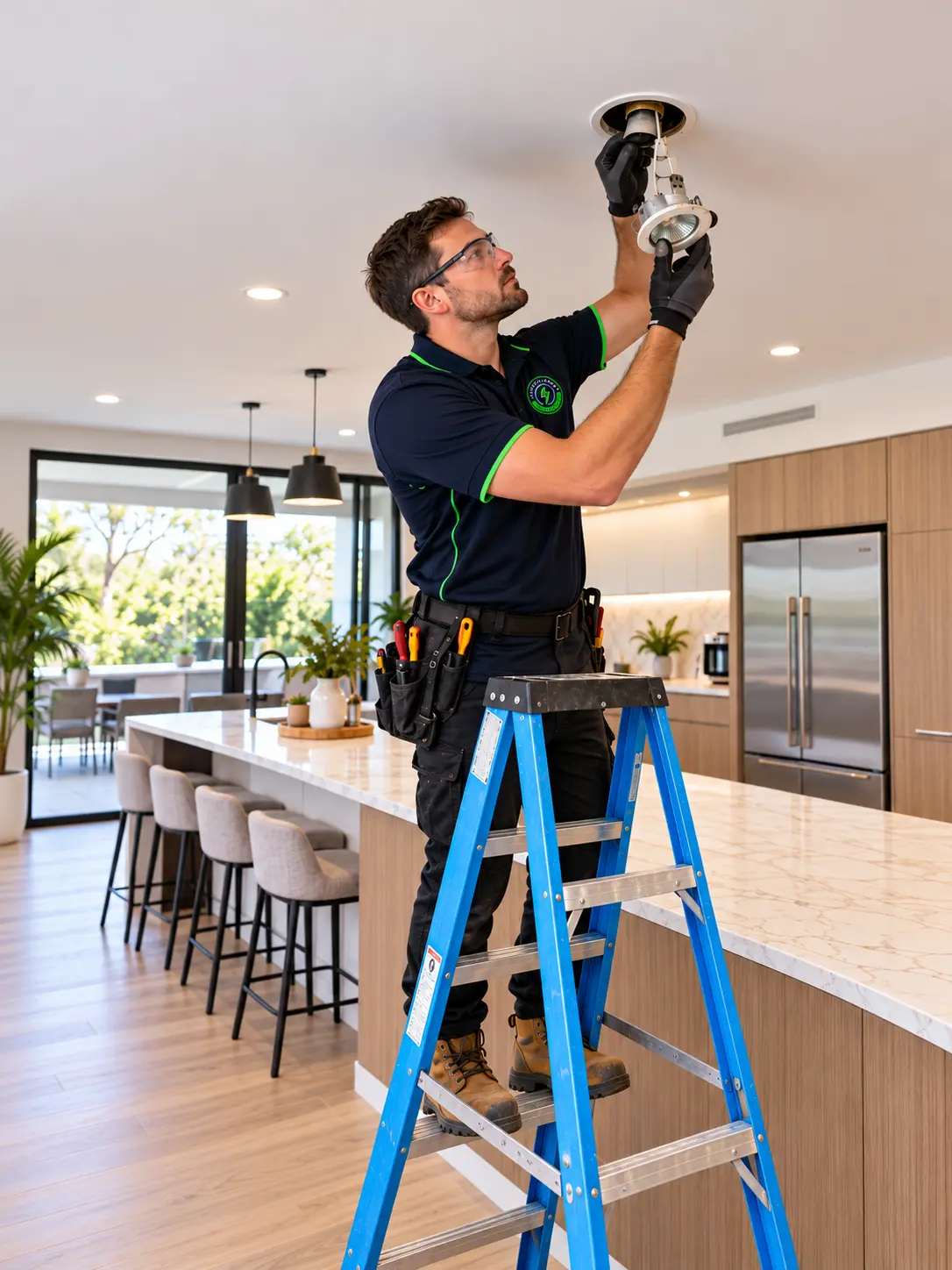
Globe Swap or New Downlights?
Here's the question most people get wrong: can you just buy LED globes and swap them in yourself? Sometimes, yes. Many older halogen downlights take a small plug-in globe, and an LED replacement can go straight in. But plenty of those fittings run on an old transformer hidden in the ceiling, and a cheap LED globe on an old transformer can flicker, buzz or fail early. And if the fitting itself is old, heat-damaged or buried in insulation, a new globe doesn't fix the real problem. The right answer depends on what's above the ceiling, not what's on the shelf at the hardware store.
A few globes, newer fittings
If your downlights are fairly new and only a few still use halogen globes, a matched LED swap may be all you need. Check the globe type, and that it suits any dimmer, before you buy.
A house full of old halogens
A whole home of old fittings and transformers is usually better done properly in one go. New LED downlights replace the lot, so there's nothing left to mismatch or fail next year.
Scorch marks or a burning smell
Brown marks around a fitting, a buzzing transformer or a burning smell from the ceiling means heat is building up. Call 000 straight away if you can smell smoke and can't find where it's coming from. Otherwise, switch that circuit off at the switchboard and get it checked.
Signs Your Downlights Need Attention
Downlights rarely fail with a bang. They drop small hints first, and most people walk straight past them every day.
Discoloured Ceiling or Trim
Yellow or brown rings on the ceiling around a downlight are a sign of long-term heat. The fitting has been slowly cooking the plaster around it.
Buzzing or Flicker
A hum from the ceiling, or a flicker that won't settle, often comes from an old transformer or an LED globe that doesn't suit it.
Globes Blowing Often
Replacing the same halogen globe every few months can point to a tired transformer or a fitting that's running too hot.
Insulation Touching the Fittings
If insulation has been topped up and nobody moved it away from the old downlights, it may be sitting right on top of them.
Old Lights, New Insulation
Why Old Downlights Become a Problem
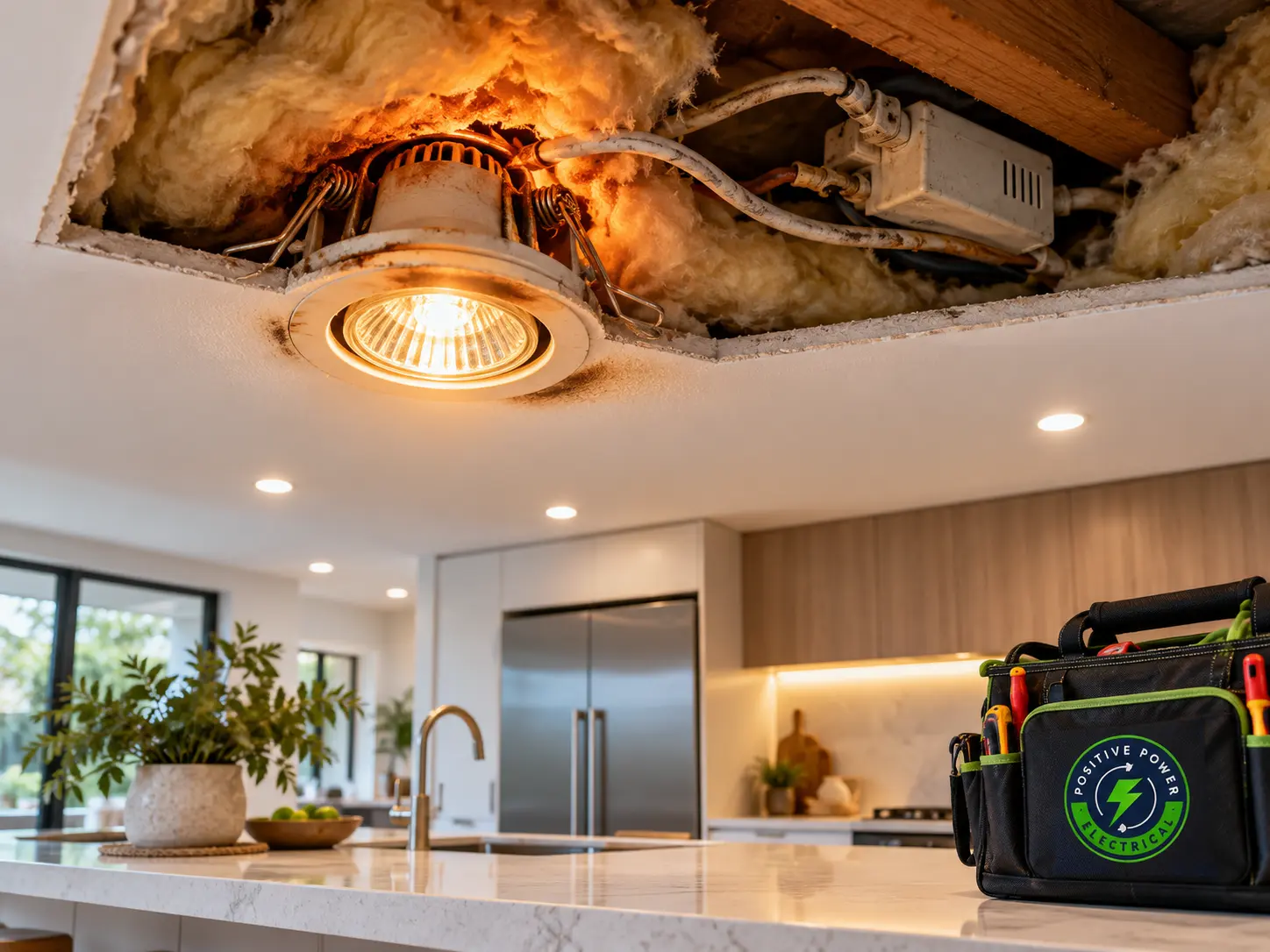
Halogen downlights became popular because they're small, bright and look great in a kitchen. The catch is how they make that light. Much of the power going into a halogen globe comes out as heat, and that heat has nowhere to go but up into the ceiling cavity. Many older fittings also rely on a transformer sitting in the roof space, which adds heat of its own. Over the years, that heat dries out plaster, discolours trim and ages the wiring around each fitting. Then someone tops up the insulation, or vermin build a cosy nest beside one, and a hot light becomes a fire risk. LEDs make the same light with far less heat, which is why the switch matters.
1
Halogen heat
Much of the globe's power turns into heat that builds up in the ceiling.
2
Old transformers
Ageing transformers run warm, hum and can fail, taking the light with them.
3
Insulation contact
Insulation over non-rated fittings traps heat right where it's hottest.
4
Mismatched LED globes
Cheap LED globes on old transformers or dimmers can flicker and fail early.
5
Vermin and dust
Nests and dust build up around warm fittings in the roof space.
How We Upgrade Your Downlights
We look at what's above the ceiling before we recommend anything below it. That way you end up with lights that suit the room, the dimmer and the insulation, not just the cheapest globe that fits the hole.
Step 01
Check the Fittings
We look at each downlight, its transformer and what's sitting around it in the roof space, wherever it's safe to get to. That tells us whether a globe swap will do or the fittings need replacing.
What we look for
What We Check Before Adding Outlets
- Spare capacity on each circuit
- Old single powerpoints worth upgrading
- Heavy appliances that need their own outlet
Step 02
Choose the Right LEDs
We match the light colour and brightness to each room, check every dimmer, and use IC-rated LED downlights wherever insulation will sit against them. You get a brighter result without the heat.
Step 03
Install and Test
We remove the old fittings and transformers, install the new LED downlights and test every circuit. We'll also tell you where insulation can now safely go back, and you get a Certificate of Compliance for Electrical Work (CCEW) for the job.
- Cooler ceiling
- Brighter rooms
- Lower power use
Method matched to cause
If a Globe Swap Will Do, We'll Say So
Not every home needs new fittings. If yours are in good shape and suit LED globes, we'll tell you, and the job gets a whole lot smaller.
LED lighting
Dimmer replacement- Safety checks
- Switchboard upgrades
What Shapes the Cost of an Upgrade
Downlight upgrades are often priced per light, so the number of fittings matters most. After that, it comes down to roof access, dimmers and whether the old holes suit the new fittings. On the running side, LEDs use about 75% less energy than halogens, so the savings start from the very first night.
What You Can Check Yourself
Start from the ground. Count how many downlights you have, note which rooms have dimmers, and look for brown rings around any of the fittings. If you'd like to swap a halogen globe for an LED yourself, turn the light off at the wall, let it cool completely, and check the new globe suits your fitting and any dimmer. Anything beyond the globe itself is a job for an electrician.
Safe to try yourself
Count your downlights, room by room
- Note which lights are on dimmers
- Look for brown rings or discoloured trim
Swap a globe once the light has cooled
Time to call a professional
- Replacing fittings or transformers
- Lights that buzz, flicker or keep blowing
Insulation sitting on top of old downlights
Any scorch marks or burning smell
Cooler Ceilings, Brighter Rooms, Smaller Bills
Old halogen downlights did their job for years, but they turn much of their power into heat and they don't mix well with insulation. Swapping them for LEDs cuts the energy they use by around three quarters, takes a real heat source out of your roof space and usually makes the room look better too. Whether it's a few globes or a full set of new fittings, it's one of the easiest upgrades you can make to an older home, and one you'll notice every time you flick the switch.
Remember this
If your downlights are too hot to touch, they're heating your roof space too.
LED Downlight FAQs
Can I just put LED globes in my old downlights?
Sometimes. If the fitting is in good condition and the LED globe suits the transformer and any dimmer, it can work well. If the fittings are old, or the new globes flicker or buzz, new LED downlights are the better long-term fix.
Can LED downlights be covered with insulation?
Only if they're rated for it. IC-rated downlights are designed to have insulation sitting against them. Non-rated fittings need clearance, so always check the rating before any insulation goes back in.
Will LEDs work with my dimmers?
Not always. Many older dimmers were made for halogen globes and can make LEDs flicker or hum. We'll check each dimmer and replace any that won't play nicely with the new lights.
How much will I actually save?
LEDs use about 75% less energy than halogens for the same light, and lighting makes up around 10% of a typical household's electricity budget. The more downlights you have, and the longer they're on each day, the bigger the saving.
Can I keep my existing ceiling holes?
Often, yes. Many LED downlights are made to fit common cut-out sizes. If yours are an unusual size or the edges are damaged, we'll talk you through the options before anything is cut.
Are halogen globes being phased out?
Yes. Incandescent and halogen globes are being phased out of the Australian market wherever an LED equivalent is available, so replacement halogens will only get harder to find.
Ready to Swap Out Those Old Downlights?
Positive Power Electrical can check the downlights in your Cherrybrook home, tell you whether a globe swap will do or the fittings need replacing, and handle the whole LED downlight upgrade from roof space to light switch. Brighter rooms, a cooler ceiling and a smaller power bill, without the guesswork.