One Alarm Goes Off, Every Alarm Goes Off
Picture a fire starting in the garage at 2am. There's a smoke alarm out there, and it's doing its job, screaming at an empty room. But the bedroom doors are closed, the air con is humming and everyone is asleep at the other end of the house. That's exactly the gap interconnected smoke alarms close. When one detects smoke, every alarm in the house sounds at once, so the warning reaches you, not just the room where the fire started.
They all sound together Smoke in one room sets off every linked alarm in the house.
Closed doors block smoke A smoke alarm can't detect smoke through a closed door, so bedrooms need their own.
Fire moves fast Fire and Rescue NSW warns a fire can take hold in around three minutes.
The recommended standard Fire and Rescue NSW recommends interconnected alarms in bedrooms, living areas, hallways and the garage.
Wired or wireless Alarms can be linked through the wiring or by wireless signal, depending on your home.
NSW law asks for at least one working smoke alarm on every level, and plenty of homes stop there. But one alarm in the hallway can't wake a family behind closed doors at the other end of the house. Whether your Baulkham Hills home is a single-storey with a long hallway or a double-storey with bedrooms upstairs, linking the alarms is one of the simplest safety upgrades you can make.
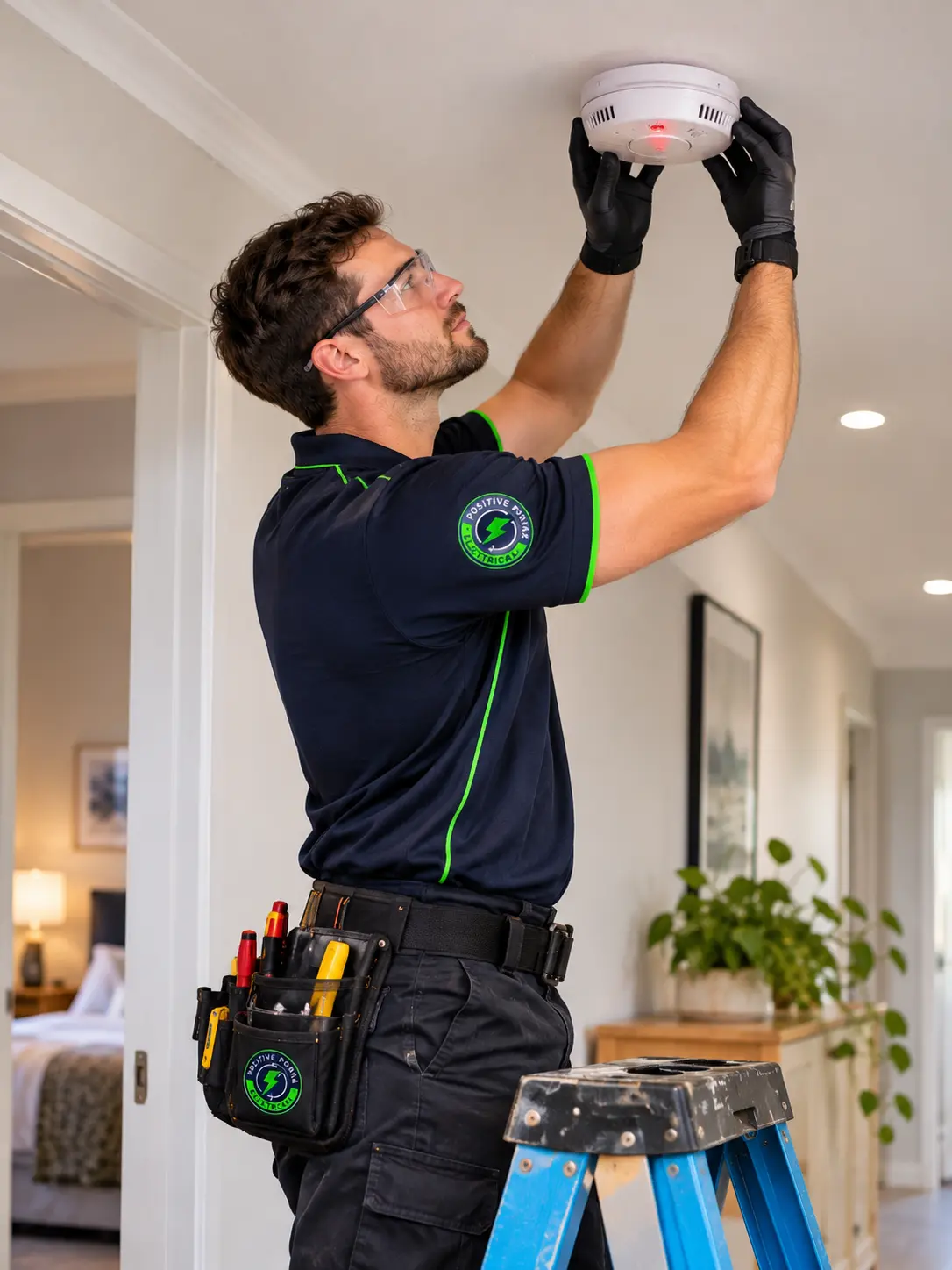
Do You Need to Upgrade Your Smoke Alarms Now?
Here's the honest answer. If your smoke alarms work, you have at least one on every level and they're within their 10-year life, you're meeting the minimum for an existing NSW home. Fire and Rescue NSW says existing alarms can stay until the end of their service life. But when they're due for replacement, its advice is clear: replace them with interconnected alarms in every bedroom, living area, hallway and the garage. So the real question isn't whether to upgrade. It's when. For plenty of homes with alarms fitted years ago, that time is now.
Alarms in date and working
You can keep them until they reach the end of their life. Plan the upgrade now, so you're ready when the time comes instead of replacing one alarm at a time.
Alarms past 10 years
They're due for replacement anyway, which makes it the perfect moment to switch to interconnected alarms. You pay for the change once, not twice.
An alarm sounding with smoke
Treat every alarm as real. Get everyone out, stay out, and call 000 from outside.
Signs Your Smoke Alarms Need an Upgrade
Most smoke alarm setups look fine until you ask what they'd actually do in a real fire. These are the common gaps.
One Alarm Per Level
It meets the minimum, but an alarm in the hallway may not wake anyone sleeping behind closed bedroom doors.
Alarms Over 10 Years Old
Every smoke alarm should be replaced after 10 years, and that's the ideal moment to switch to interconnected alarms.
No Alarms in Bedrooms
A fire that starts in a bedroom, from a heater, a charger or an electric blanket, can go unnoticed until the smoke reaches the hall.
Garage or Granny Flat Out of Earshot
An alarm in a garage or granny flat is no use if nobody in the main house can hear it.
Ionisation or Photoelectric?
Some older homes still have ionisation alarms, which can be slower to detect the smouldering fires behind many fatal house fires. Fire and Rescue NSW recommends photoelectric alarms, and suggests replacing older alarms with interconnected ones once they reach the end of their life. If you're not sure which type your Baulkham Hills home has, the label on the back of the alarm usually tells you.
Why a Single Alarm Isn't Enough
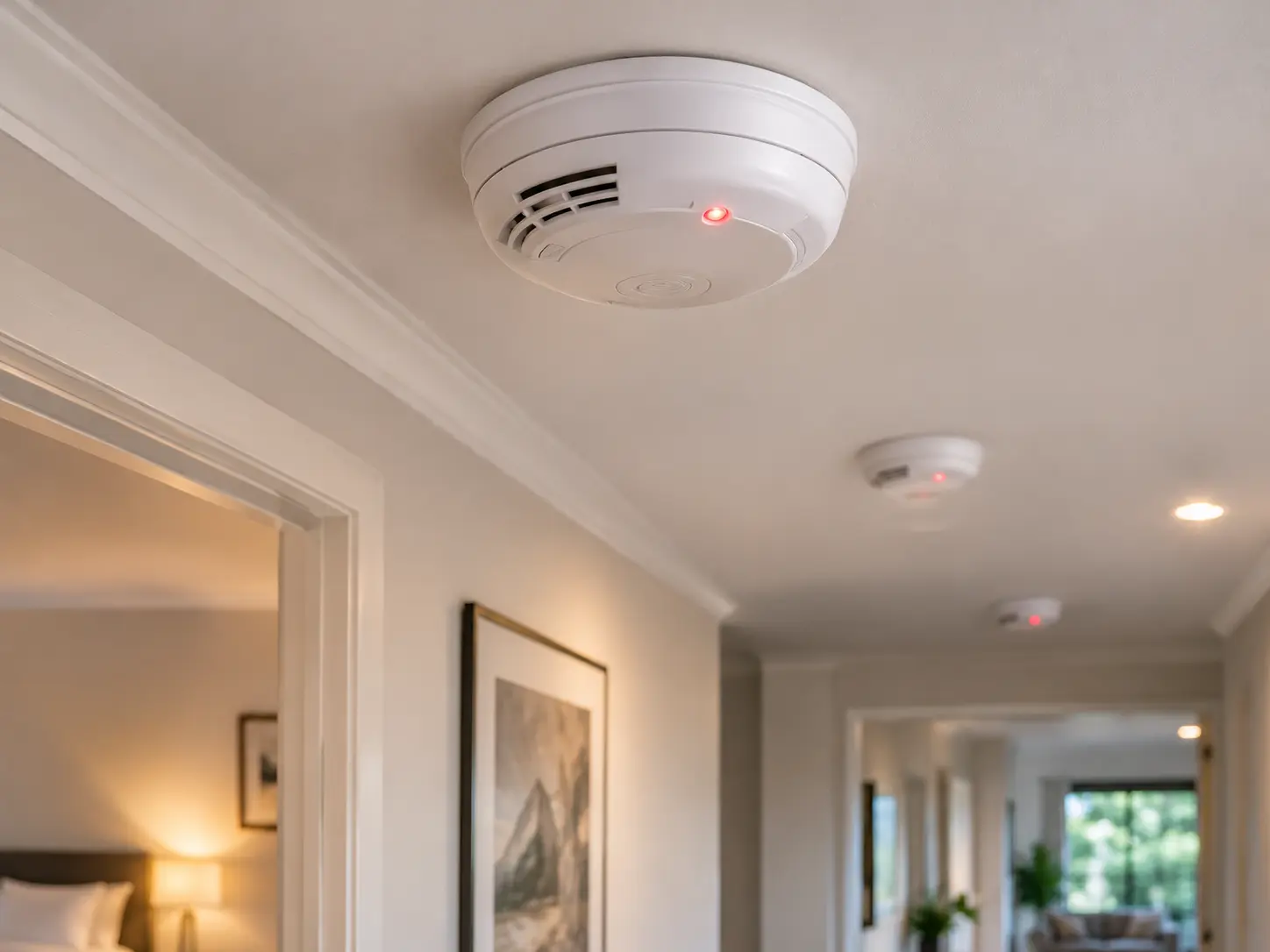
A smoke alarm only warns the people who can hear it. In a small unit, one alarm in the hallway might be enough. In a bigger family home, with bedrooms at one end, a living area at the other and a garage tacked on the side, smoke can build for minutes in one room before it ever reaches the alarm. Closed doors slow it down even further, and the hum of an air conditioner or a fan can drown out an alarm two rooms away. Interconnected alarms fix that by turning every alarm into a messenger: whichever one senses smoke first, all of them sound. That buys the one thing that matters most in a house fire, which is time.
1
Closed doors
Smoke can't reach a hallway alarm through a closed bedroom door.
2
Distance
Alarms at the far end of the house may not be heard in time.
3
Background noise
Air con, fans and deep sleep can mask a single alarm.
4
Old alarms
Alarms past 10 years may not respond the way they should.
5
Older alarm types
Ionisation alarms can be slower to pick up smouldering fires.
How We Install Interconnected Smoke Alarms
We plan the system around how your family actually lives: where people sleep, where fires are most likely to start, and which rooms are hardest to hear from.
Step 01
Check Your Current Alarms
We look at every existing alarm: its type, its age and whether it's hardwired or battery. That tells us what can stay, what needs replacing and how the new system should link together.
What we look for
What We Check in Every Home
- Alarm age and type
- Bedrooms and hallways without alarms
- Garages, granny flats and upstairs levels
Step 02
Plan the Layout
We map alarms for every bedroom, hallway, living area and level, plus the garage. Where a kitchen or garage would cause false alarms, we'll suggest a linked heat alarm instead.
Step 03
Install, Link and Test
We install the new alarms, link them through the wiring or wirelessly, and test them together so one sets off the rest. You get a Certificate of Compliance for Electrical Work (CCEW) for any hardwired work.
- All alarms linked
- Every room covered
- Tested together
Method matched to cause
Wired or Wireless, Whatever Suits the House
Hardwired links are ideal when the roof space is easy to get into. Wireless interconnected alarms work well where running new cable would mean cutting into finished walls. We'll recommend whichever fits your home best.
Smoke alarm installation
Hardwired alarms- Wireless interconnected alarms
- Safety checks
What Shapes the Cost
The biggest factor is how many alarms your home needs, which depends on the number of bedrooms, levels and living areas. After that, it comes down to whether the alarms can be hardwired and linked through the roof space, or whether wireless interconnection makes more sense for your layout.
What You Can Check Yourself
Start by counting your alarms and noting where they are. Is there one in every bedroom? On every level? Near the garage? Then press and hold each test button until it sounds. If your alarms are already interconnected, pressing one should set them all off. If only that one sounds, they aren't linked, or the link isn't working.
Safe to try yourself
Count your alarms, room by room
Press and hold each test button
Check the date on battery alarms
Vacuum the dust off each alarm
Time to call a professional
- Linking alarms through the wiring
Replacing hardwired alarms
- Alarms that don't set each other off
Adding alarms to bedrooms or levels
Make Sure the Warning Reaches You
A smoke alarm is only as good as the people who can hear it. One alarm in the hallway meets the minimum, but in a bigger home it can leave whole rooms out of earshot. Interconnected alarms close that gap, so a fire anywhere in the house wakes everyone in it. If your alarms are old, the wrong type or missing from the bedrooms, an upgrade is one of the simplest and most meaningful safety jobs you can do for your family.
Remember this
A smoke alarm can't wake you if you can't hear it. Link them all.
Interconnected Smoke Alarm FAQs
Are interconnected smoke alarms required in NSW?
For new homes, yes: under the building code, where a new NSW home has more than one smoke alarm, they must be interconnected. Existing homes only need at least one working alarm on each level, but Fire and Rescue NSW recommends interconnected alarms in every bedroom, living space and the garage.
Can wired and wireless alarms work together?
Often, yes. Some systems let hardwired and wireless alarms link together, which is handy for garages, granny flats or rooms that are hard to wire. We'll check what works with your existing setup.
What's the difference between photoelectric and ionisation alarms?
Photoelectric alarms are better at detecting slow, smouldering fires, and they're the type Fire and Rescue NSW recommends. Ionisation alarms are older technology and can be slower to respond to those fires.
Should I put a smoke alarm in the kitchen?
Kitchens are prone to false alarms from cooking. A heat alarm is often a better fit there, linked to the rest of the system so it still warns the whole house.
Do interconnected alarms still need testing?
Yes. Test them once a month by pressing and holding the test button on one alarm and checking they all sound. Vacuum the dust off them every six months, and replace the whole set when they reach 10 years.
What do other states require?
Queensland has gone further, requiring interconnected photoelectric alarms in every bedroom of rental homes, with owner-occupiers following. NSW hasn't made that law for existing homes yet, but Fire and Rescue NSW's advice points the same way.
Ready to Link Your Smoke Alarms?
Positive Power Electrical can check the smoke alarms in your Baulkham Hills home, plan the right layout and install interconnected smoke alarms that sound together, wherever a fire starts. One visit, every room covered, and a system you can test with a single button.