Your Building Report Doesn't Cover the Wiring
You've found the house. The building and pest report came back fine, the offer's in, and you're already picturing where the couch goes. Then you read the fine print and spot it: the electrical installation isn't part of a standard building inspection. The inspector looked at the walls, not at what's running behind them. That gap is exactly what anelectrical safety inspection fills.
- Visual only A standard building inspection is a look, not a test, and it leaves the electrical installation out.
Safety switches Older homes can be missing them on some circuits, or have switches nobody has tested in years.
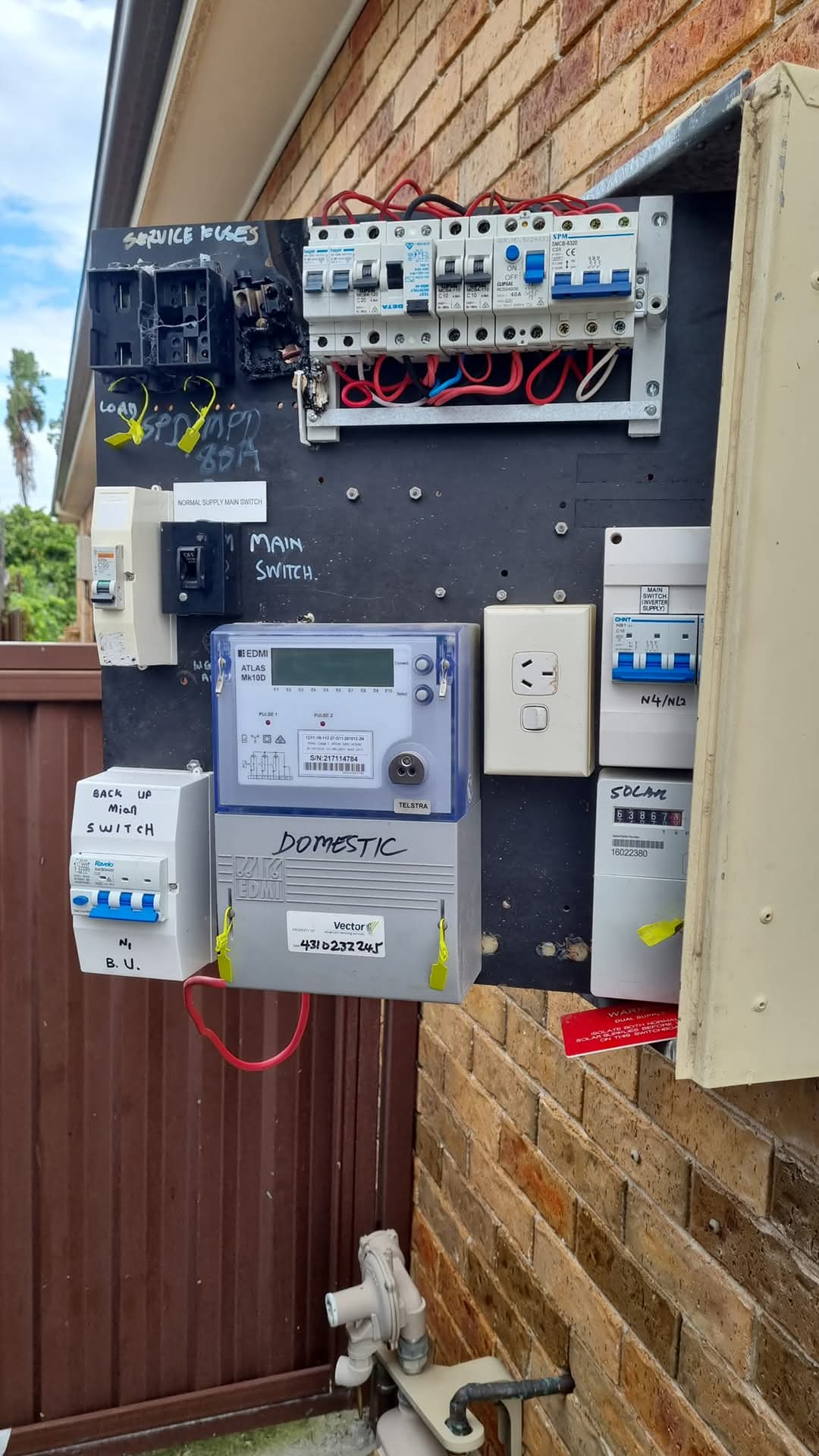
The switchboard Its age, spare space, scorch marks and past repairs all tell a story.
Smoke alarms NSW law requires at least one working alarm on every level of your home.
Old wiring Rubber-insulated cable from before 1960 can crumble and leave live wires exposed.
Most checks turn up a few small fixes and a lot of peace of mind. Some find something you'd much rather know about now than after the first summer of air con. Whether you're buying in Castle Hill, renting a place out or you've just moved in, the check works the same way, and it starts at the switchboard.
Who Actually Needs an Electrical Safety Check?
Not every home needs one tomorrow. But a few situations make it well worth booking. You're buying an older home and want to know what you're really taking on. You've just moved in and have no idea what the last owner did on their weekends. You're renting a place out and want to know it's safe for the people living in it. Or the house has had a scare: a storm, a burning smell, a safety switch that won't stay on. Each time, the question is the same. Is this home's electrical system safe, and what will it need soon?
Just moved in
A check gives you a clear starting point: what's sound, what's tired and what can wait. You'll also find out which switch on the board controls what, which saves a lot of guesswork later.
Buying an older home
The building report won't test the wiring, so a separate electrical check fills the gap. Knowing about an old switchboard or tired wiring before you commit gives you room to plan, or to negotiate.
Burning smell, sparks or shocks
That's not a booking for next month. Call 000 if there's smoke, fire or anyone has been hurt. Otherwise, switch off the affected circuit at the switchboard if it's safe to reach, and call an electrician today.
Signs Your Home Is Due for a Check
Some homes quietly tell you they need a look. Notice any of these, and don't wait for the next big job to find out why.
Ceramic Fuses
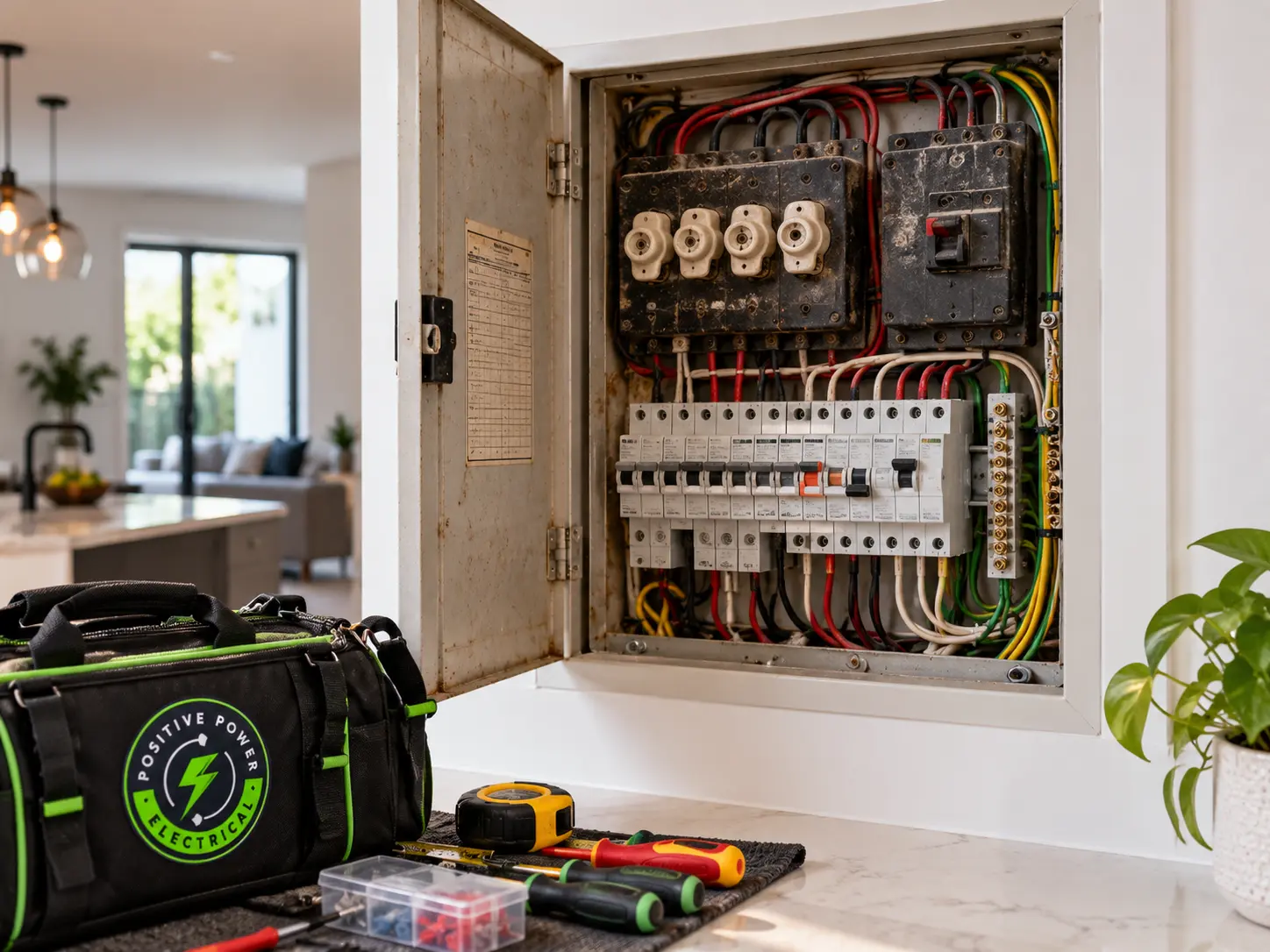
White ceramic fuses in the meter box mean an older board, usually with limited protection against shocks. It's the clearest sign the system hasn't been touched in a long time.
Lights Dim or Flicker
Lights that dip when the kettle or air con starts can point to loose connections or a circuit working too hard. It's often something small, but it's worth knowing which.
Warm or Marked Outlets
A switch or powerpoint that feels warm, buzzes or has brown marks around it is a connection overheating. That one shouldn't wait for a convenient week.
Past DIY Work
Powerpoints that don't match, cable run along the skirting boards or a chain of powerboards behind the TV are all worth a second look. Not every past job was done by a licensed electrician.
Older Homes, Hidden Surprises
Homes built before 1990 can have asbestos in the backing panel behind the switchboard, and safety switches have only been required on new homes' power circuits since 1991. If your Castle Hill home dates from before then, it's worth checking whether the board has kept up. An inspection tells you what's really there, without anyone drilling into a panel to find out.
Why Electrical Systems Fall Behind
Electrical systems rarely fail all at once. They drift. A board installed decades ago was built for a fridge, a few lights and maybe a heater. Since then, the same house has picked up air conditioning, a second fridge, computers, chargers and perhaps a pool pump, often plugged in wherever there was space. Connections loosen over years of use. Cable insulation ages, and in homes wired before 1960 the old rubber can crumble right off the copper. Add a renovation or two, plus some weekend wiring by a previous owner, and you end up with a system nobody has looked at as a whole for years. None of that makes a house dangerous overnight. It does mean the only way to know is to check.
1
Age
Older boards and cable reach the end of their safe working life.
2
More load
Modern appliances ask far more of circuits than they were built for.
3
Loose connections
Years of use loosen terminals, which then heat up.
4
Old renovations
Extensions and add-ons are often wired onto whatever was already there.
5
Unlicensed work
DIY wiring can hide faults nobody has ever tested.
How Our Electrical Safety Inspection Works
We go through the home the way the electricity does: from the switchboard out to every room. You get a clear picture of what's safe, what needs fixing now and what can wait, explained in plain English rather than code numbers.
Step 01
Start at the Switchboard
We check the board's age and condition, test every safety switch and look for heat damage, gaps and signs of past work. The switchboard tells us more about a house than any other single spot.
What we look for
What We Check on Every Visit
- Safety switches that trip when tested
- Smoke alarms on every level
- Heat marks, loose fittings and damaged cable
Step 02
Walk the Whole Home
We check powerpoints, switches, lights and outdoor outlets room by room, and look into the roof space where it's safe to. That's where old wiring and dodgy joins tend to hide.
Step 03
Report and Recommend
You get a clear list of what we found, sorted into urgent, soon and fine for now. Nothing gets fixed without your say-so, and if everything checks out, we'll tell you that too.
- Board checked
- Safety switches tested
- Clear priorities
Method matched to cause
Fix What Matters First
Most homes don't need everything done at once. We'll point out the one or two jobs that genuinely affect safety, so your money goes there first and the rest can be planned.
Safety checks
Switchboard upgrades- Smoke alarms
- Fault finding
What Shapes the Inspection and Any Repairs
The inspection itself is usually straightforward. What changes the picture is what it turns up. A newer home with a modern board might need nothing more than a smoke alarm swap. An older home could need a switchboard upgrade before anything else makes sense.
What You Can Check Before We Arrive
There's a fair bit you can spot yourself without touching anything risky. Open the meter box door and see whether you have ceramic fuses or switches, and whether any have a Test button. Let everyone in the house know, then press each Test button: power to some circuits should cut straight away. Flick them back on, then walk through the house and note anything warm, buzzing, marked or loose.
Safe to try yourself
Press each safety switch Test button
- Press and hold each smoke alarm test button
Note any warm, marked or loose fittings
List anything added by a previous owner
Time to call a professional
- A safety switch won't trip when tested
Ceramic fuses, or no safety switches at all
Scorch marks, buzzing or a burning smell
Anything you'd have to open up to check
Know What's Behind the Walls
A home can look perfect and still have a switchboard from another era, a safety switch that hasn't worked in years, or wiring a previous owner put in on a Sunday afternoon. None of that shows up in the listing photos or the building report. An electrical safety inspection is how you find out calmly and on your own terms, rather than in the middle of a storm or halfway through a renovation. Most of the time the news is good. When it isn't, you'll be glad you heard it first.
Remember this
A building report looks at the house. An electrical inspection looks at what keeps it running.
Electrical Safety Inspection FAQs
Isn't the wiring covered by my building inspection?
Not in any detail. A standard pre-purchase building inspection is visual only, and the electrical installation is excluded under the Australian Standard it follows. If you want the wiring properly checked, you need a licensed electrician.
How long does an inspection take?
It depends on the size of the home and how many circuits it has. We'll give you a time window when you book, so you can plan your day around it.
How often should I get one?
There's no fixed rule for owner-occupied homes. It's worth doing when you buy, before a big renovation, after a storm or electrical scare, and every so often in an older home. In between, test your safety switches yourself every three months.
I'm a landlord. What do I need to check?
NSW landlords must keep smoke alarms working and check them every year. A wider electrical safety check is a smart way to make sure the rest of the property is safe for your tenants too, and it's easier to fix things between leases than mid-tenancy.
Will you fix things on the spot?
Small fixes, like a loose powerpoint cover, can often be sorted during the visit if you're happy for us to. Anything bigger goes on the report with a clear quote, so you can decide in your own time.
What do I get at the end?
A clear summary of what we checked, what we found and what we recommend, in order of priority. If we carry out any electrical work, you'll also get a Certificate of Compliance for Electrical Work (CCEW).
Book an Electrical Safety Inspection
Buying, renting out or just settling into a Castle Hill home? Positive Power Electrical will check the switchboard, safety switches, smoke alarms and wiring, then give you a straight answer on what's safe, what needs attention and what can wait. One visit, a clear electrical safety inspection report and no pressure.