Electrical Safety Checks in Pennant Hills: What Matters
A breaker trips once, a power point feels different from the others, or the lights briefly dip when an appliance starts. Electrical safety checks in Pennant Hills help connect those small clues and assess the switchboard, circuits, fittings and wiring as one electrical system. The point is not to assume every unusual symptom is dangerous, but to identify problems that deserve attention before they become harder to ignore.
- Repeat tripping A recurring circuit problem deserves proper fault finding.
- Warm fittings Unusual heat around switches or outlets needs assessment.
- Damaged outlets Cracks, looseness or scorching should not be ignored.
- Changing demand Renovations and new equipment can alter electrical requirements.
Pennant Hills has a housing profile dominated by separate houses, which represented 73.3% of occupied private dwellings in the 2021 Census. Almost half, 48%, had four or more bedrooms, so an electrical assessment may need to consider numerous rooms, circuits and fittings across one property rather than focusing only on the switchboard.
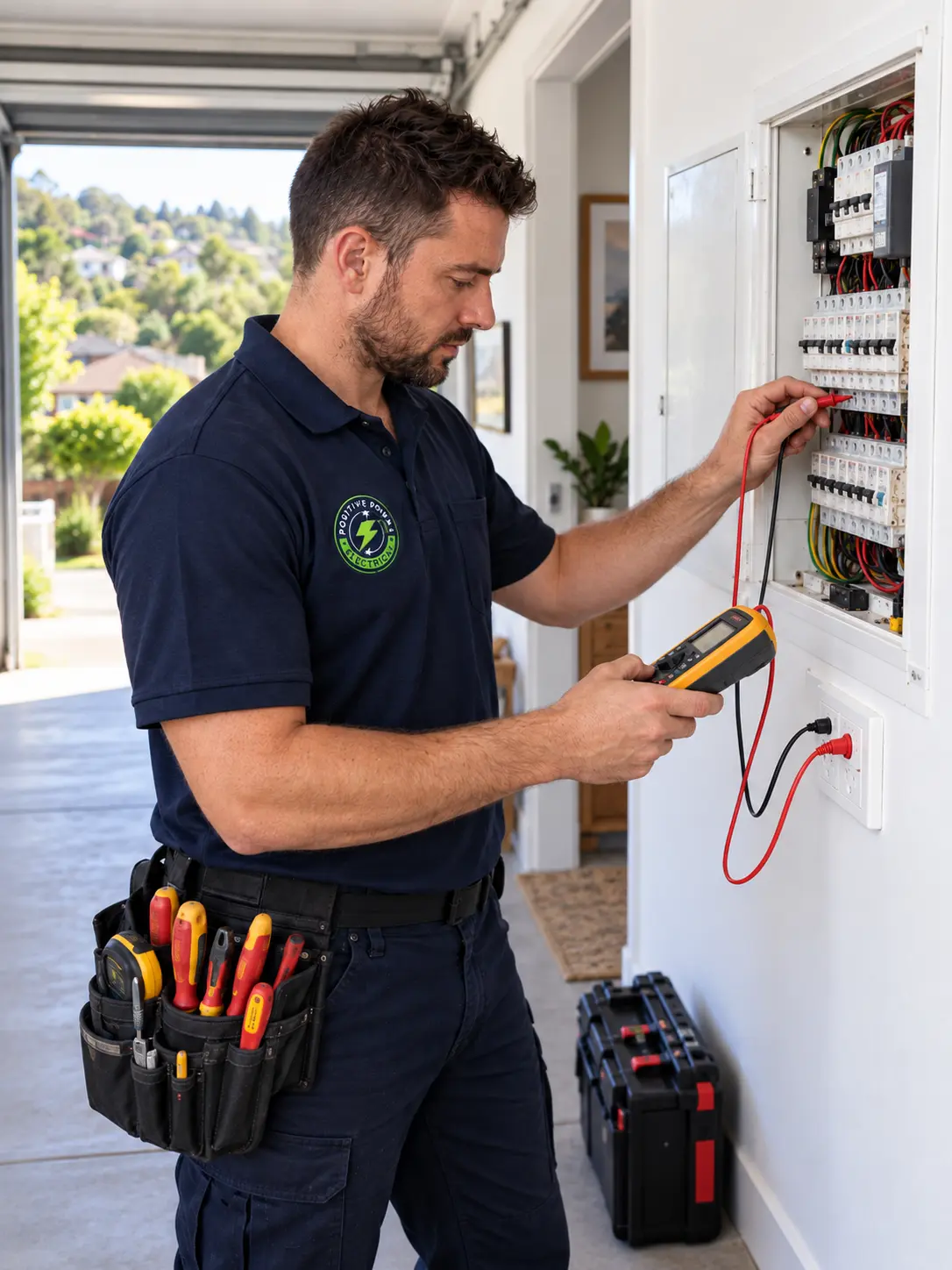
Look at the Whole Electrical System
Useful electrical safety checks in Pennant Hills go beyond confirming that power is available. They consider safety switches, switchboard condition, recurring faults, power points, lighting and other signs that something is behaving differently. A minor isolated issue may need targeted work, while repeated tripping, damaged fittings or wiring concerns can justify further investigation. The assessment should determine what actually needs attention before repairs or upgrades are recommended.
Small changes
One light flickering once or one isolated trip does not automatically indicate a major fault. Notice whether the same behaviour returns.
Repeat faults
When the same circuit, fitting or area repeatedly causes trouble, the pattern becomes more useful. That is a good reason to arrange fault finding.
Heat damage
Burning smells, unusual warmth, sparks or scorch marks require professional attention. Avoid opening fittings or attempting fixed electrical repairs yourself.
Warning Signs Your Electrical System Needs Attention
Electrical systems rarely announce every developing problem with one obvious failure. More often, you notice a collection of smaller symptoms such as repeated tripping, loose fittings or changes in how lights and appliances behave. The pattern matters more than any single inconvenience. Once several signs start pointing in the same direction, an assessment can help determine whether the problem is isolated or broader.
Repeat Trips
The same circuit operating repeatedly suggests an unresolved electrical condition.
Damaged Fitting
Cracks, scorching or looseness can indicate an electrical safety concern.
Warm Outlet
Unusual warmth around a fitting deserves professional electrical assessment.
Lighting Changes
Recurring flickering or dimming can provide useful fault-finding clues.
More Rooms Mean More Clues
The average occupied Pennant Hills dwelling had 3.4 bedrooms in the 2021 Census, and 48% had four or more bedrooms. In a larger home, knowing exactly which rooms are affected can help narrow down whether a problem appears local to one fitting or follows a particular circuit. The property size itself is not the fault. It simply gives the electrician more information to map when investigating the electrical system.
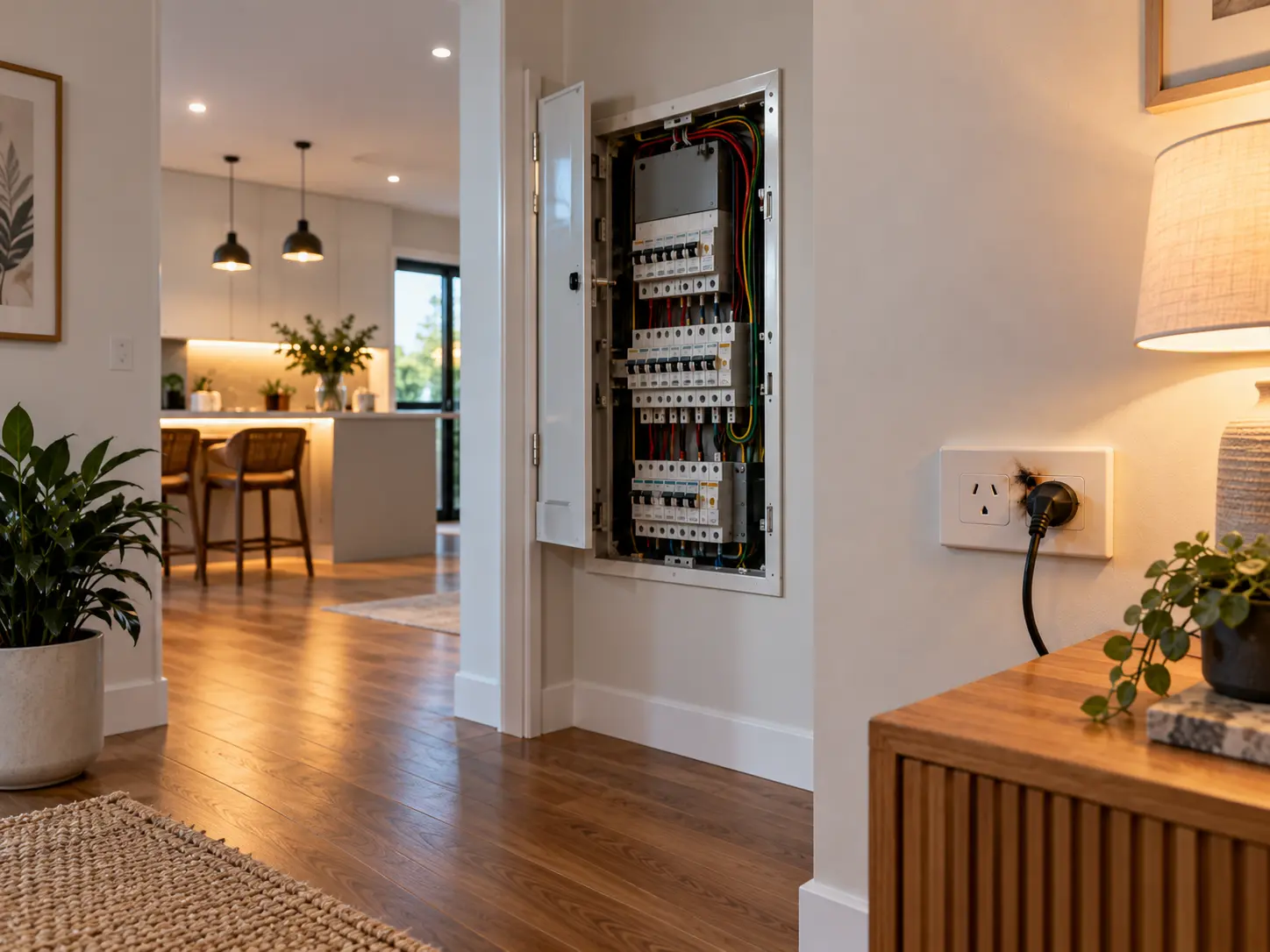
What Creates Hidden Electrical Safety Problems?
Electrical faults can develop at different points in the system. The visible symptom may appear at a light or power point while the underlying issue sits somewhere else on the circuit. That is why checking the cause matters more than simply replacing the component where the symptom appeared.
1
Wear
Everyday use can gradually affect switches, outlets and connections.
2
Overload
Excess demand can repeatedly activate electrical circuit protection.
3
Connections
Deteriorated connections can cause intermittent or unusual electrical behaviour.
4
Wiring
Damaged wiring can create faults requiring licensed electrical work.
5
Switchboard
Protection or capacity issues can affect several circuits together.
How Electrical Safety Checks in Pennant Hills Work
A licensed electrician starts by listening to what has been happening around the property, not by assuming every home needs the same upgrade. The switchboard, affected circuits and visible electrical fittings can then be assessed in context. Any repair or upgrade should follow what is actually identified.
Step 01
Read the Pattern
The assessment begins with symptoms such as repeat trips, lighting changes or damaged fittings. Knowing when and where they occur gives the inspection a clearer direction.
What we look for
Electrical Warning Signs
- Repeated circuit behaviour
- Damaged electrical fittings
- Switchboard protection concerns
Step 02
Narrow the Issue
Fault finding helps separate a local fitting problem from wiring, circuit or switchboard concerns. The scope should reflect the actual condition identified.
Step 03
Complete the Work
If electrical work is required, the appropriate repair or upgrade can be completed and checked. The goal is to address the identified issue rather than simply hide the symptom.
- Issue identified
- Work completed
- System checked
Method matched to cause
The Work Follows the Finding
Positive Power Electrical can match the next step to the electrical problem identified during assessment.
- Safety checks
- Fault finding
- Switchboard upgrades
- Rewiring
What Changes the Inspection and Repair Scope?
Two properties can show similar symptoms while requiring very different electrical work. Access, the number of affected circuits, switchboard condition, wiring and the type of fault all influence what happens after the initial assessment. A safety check might reveal nothing requiring major work, or it may identify a specific fitting, circuit or switchboard concern. An accurate quote should therefore follow the assessment rather than assume the repair in advance.
What You Can Check Without Taking Risks
Observation is useful, but electrical inspection should not turn into DIY wiring work. NSW Government guidance states that fixed electrical wiring work must be completed by a licensed electrician and specifically warns against DIY replacement or movement of power points, lights, switches and ceiling fans. You can gather useful information without opening a switchboard or dismantling a fitting.
Safe to try yourself
- Note which circuits keep tripping
- Record when problems usually happen
- List recent electrical additions
Time to call a professional
- Power point feels unusually warm
- Circuit keeps tripping repeatedly
- Sparks or scorching are visible
Small Electrical Clues Are Worth Connecting
An electrical safety check is not about finding reasons to replace everything in the house. It is about understanding whether recurring trips, damaged fittings, ageing protection or unusual electrical behaviour point to something that needs attention. Current NSW Government guidance says 40% of house fires in NSW each year are caused by electrical faults and electrical appliances, and it recommends licensed electrical assessment where safety-switch coverage or wiring condition is uncertain. If an assessment finds a specific issue, the appropriate repair can then be planned around the actual problem. Positive Power Electrical provides electrical safety checks, fault finding, rewiring and switchboard upgrades for Pennant Hills homes and surrounding areas.
Remember this
An electrical system that still works can hide a developing problem. The useful check is the one that explains what the warning signs are actually telling you.
Electrical Safety Check FAQs
What does an electrician check?
The scope depends on the property and reason for the assessment. It can include switchboard protection, recurring electrical faults, power points, lighting, wiring concerns and other visible warning signs.
How often should electrics be checked?
There is no single inspection interval that suits every property or situation. Changes to the home, repeated faults, damaged fittings or uncertainty about the electrical system can all be reasons to arrange an assessment.
Should safety switches be tested?
Yes. Current NSW Government guidance recommends using the safety switch test button every three months and contacting a licensed electrician if the switch fails the test.
Is a warm outlet dangerous?
A power point that feels unusually warm should not be ignored. Stop using damaged or suspicious equipment where appropriate and have the fitting assessed by a licensed electrician.
What affects inspection cost?
Property size, access, the symptoms being investigated, number of circuits and whether fault finding or repairs are required can all affect the scope. The appropriate work can only be determined after the electrical system is assessed.
Can I inspect wiring myself?
You can look for visible signs such as damaged fittings, but you should not open electrical equipment or work on fixed wiring. NSW law requires electrical wiring work to be performed by, or under the supervision of, a licensed electrician.