Are Your Christmas Lights Safe to Switch On?
The box comes down from the garage roof, the lights come out in one giant tangle, and someone's already up the ladder. It's the same ritual every year, and every year it's easy to skip the boring part: checking whether those lights, leads and powerboards are still safe to use. Good Christmas lights safetytakes about as long as untangling the first string, and it's the difference between a display the street remembers for the right reasons and one that ends with a fire truck out the front.
- Outdoor lights only outside Indoor lights aren't safe outdoors, even on a covered veranda.
- Test the safety switch first Press the test button before the lights go up, so you know it will trip if something goes wrong.
- Look for the RCM The Regulatory Compliance Mark shows the lights are approved for sale in Australia.
If in doubt, throw them out Fire and Rescue NSW says old lights you're unsure about aren't worth the risk.
Low voltage is safest Solar, LED and extra-low-voltage lights reduce the risk of shocks and overheating.
None of this means skipping the lights. It just means setting them up the way electrical safety regulators recommend. Whether your Baulkham Hills home goes for a single string on the tree or a full front-yard spectacular, here's how to get it right.
Indoor, Outdoor or Somewhere In Between?
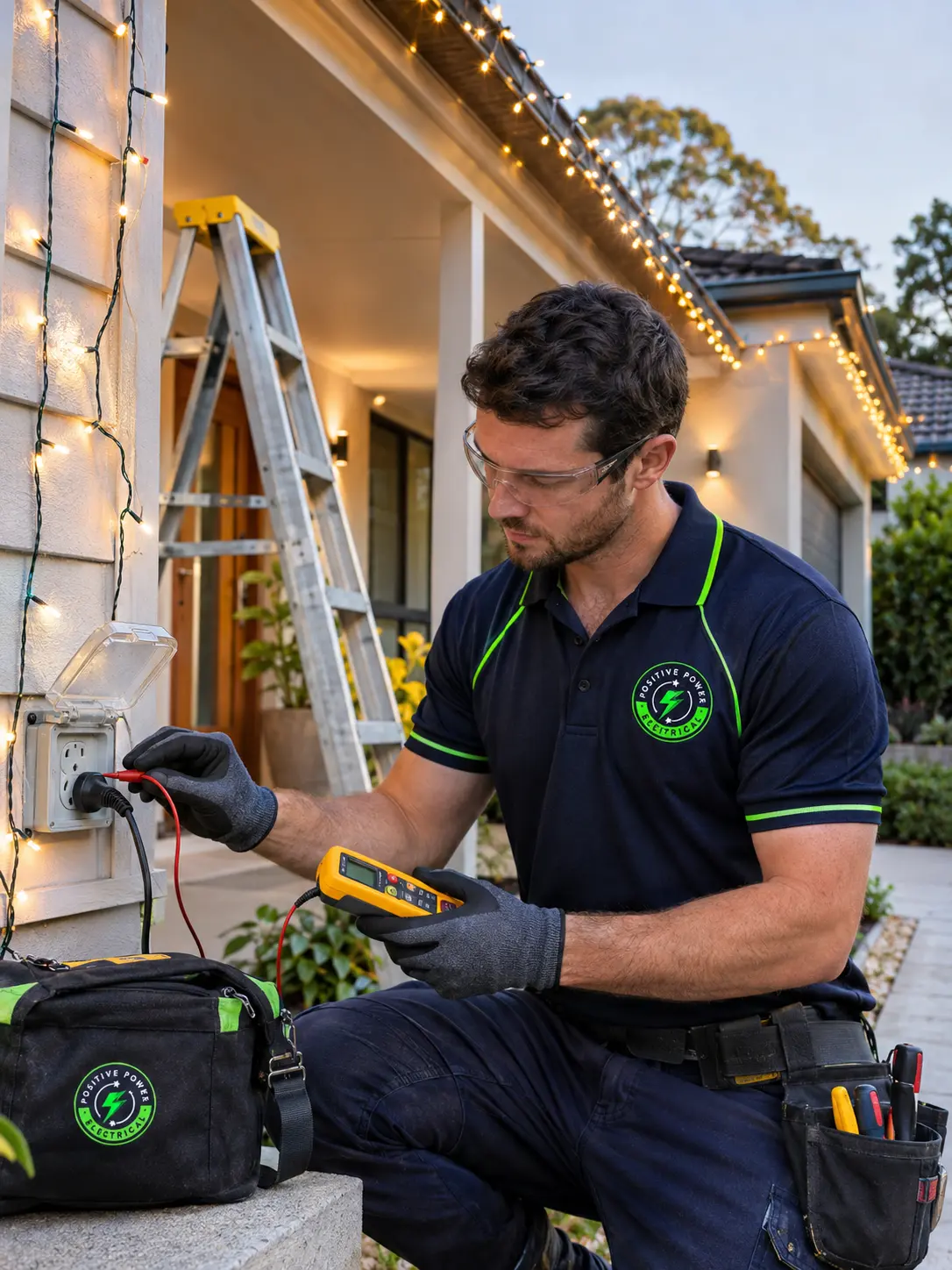
The single biggest mistake with Christmas lights is using the wrong ones in the wrong place. Indoor lights are built for dry rooms. Take them outside, even onto a covered veranda, and moisture can find its way into the wiring. Outdoor lights are made to a higher standard, and some still need their transformer, the plug pack, kept indoors and out of the weather. Then there's what they plug into. Lights on a weatherproof outdoor powerpoint, on a circuit with a working safety switch, are a world away from a string run through a window onto a chain of indoor powerboards.
Lights on the tree inside
Indoor lights are fine here. Check the leads for damage, keep them away from curtains, and switch them off when you go to bed or leave the house.
A display outside
Use lights marked for outdoor use, plug them into a weatherproof outdoor powerpoint, and make sure that circuit has a working safety switch. No safety switch? Use a portable one.
Sparks, smoke or a burning smell
Switch off at the wall and don't use those lights again. If there's smoke or fire, get everyone out and call 000.
Signs Your Lights Belong in the Bin
Before anything goes up, check every string, lead and plug. Any of these means it's time for new lights.
Damaged or Brittle Leads
Cracked insulation, kinks or bare wire can leave live parts exposed. Never use a damaged lead.
No Compliance Mark
Lights with no RCM, or only an overseas approval, haven't been approved for sale in Australia.
Broken Globes or Sockets
Gaps and cracked sockets along the string are exactly where water and little fingers can find their way in.
Plugs That Get Warm
A plug, transformer or powerboard that feels warm after a while is either working too hard or starting to fail.
Pools, Verandas and Big Displays
Why Christmas Lights Cause Shocks and Fires
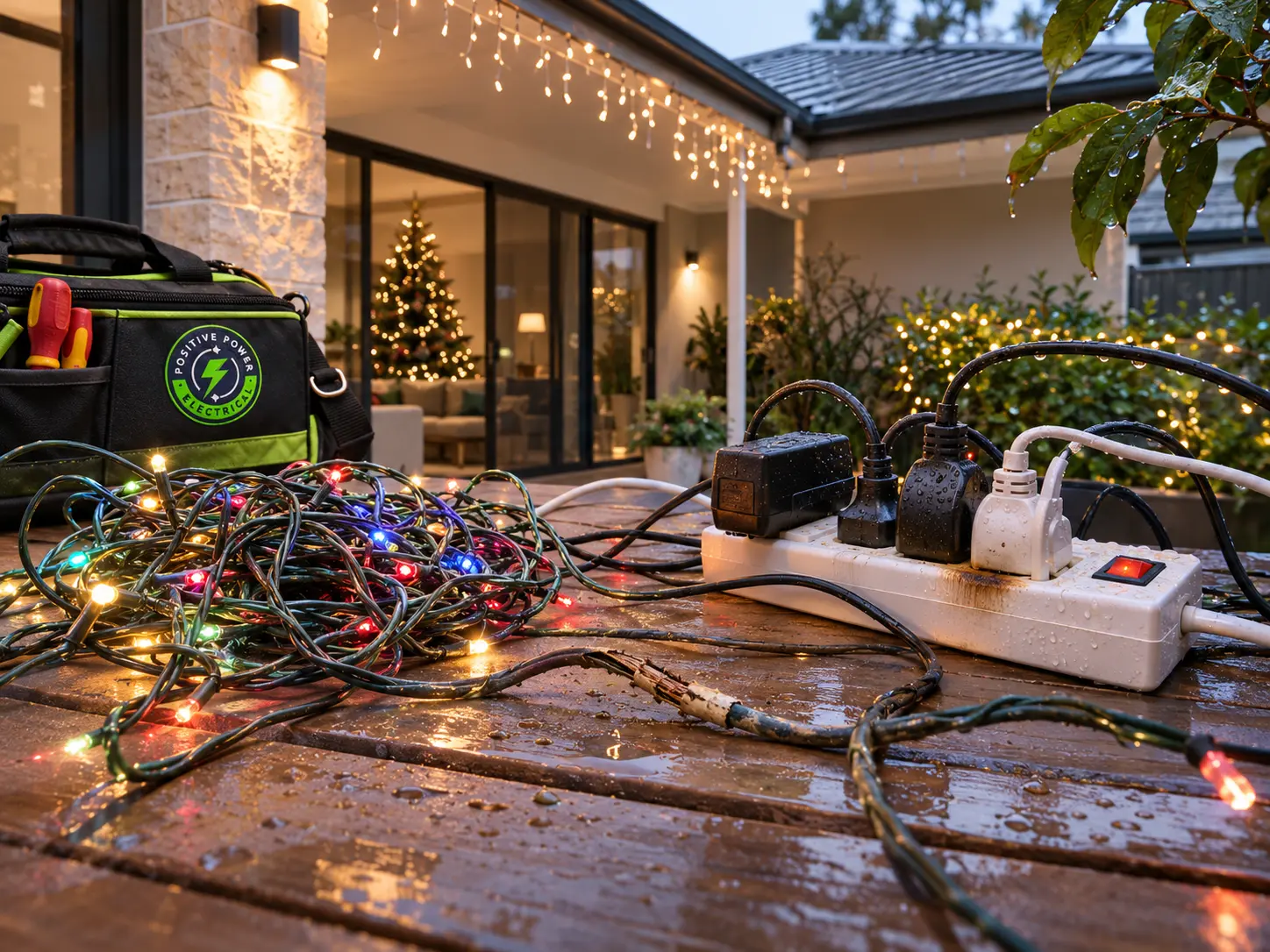
Christmas lights spend most of the year in a box in a hot garage or roof space, then get pulled out, untangled and hung up for weeks at a time. That's hard on thin wiring. Insulation cracks, connections loosen and globes break, leaving live parts where they shouldn't be. Outside, rain and dew add water to the mix. Then the lights get plugged into whatever's handy: an indoor powerboard, a coiled extension lead, or a chain of adaptors feeding a whole display. Fire and Rescue NSW points out that all kinds of Christmas lights, even LEDs, can start a fire. The risk isn't the lights themselves. It's old, damaged or badly connected ones.
1
Indoor lights used outside
Moisture can get into wiring that isn't built for the weather.
2
Damaged leads
Cracked insulation can leave live parts exposed.
3
Overloaded powerboards
Too many plugs on one board heat up the outlet behind it.
4
Coiled extension leads
A lead left wound up can overheat under load.
5
Non-compliant lights
Lights without Australian approval may not meet safety standards.
How We Make Your Display Safe
We don't hang the lights, but we can make sure everything they plug into is up to the job. That way, the only thing left to worry about is the design.
Step 01
Test Your Safety Switches
We test every safety switch on the board and check which circuits they protect. Any outdoor powerpoint you'll use for the lights should be on a protected circuit.
What we look for
What We Check Before the Lights Go Up
- Working safety switches
- Weatherproof outdoor powerpoints
- Circuits that can take the extra load
Step 02
Add Outdoor Power Where You Need It
If you're running leads through doors and windows, we can install a weatherproof outdoor powerpoint right where the display goes. It's safer, neater and ready for next year too.
Step 03
Test and Certify
We test the new outlet and the circuit it's on, and you get a Certificate of Compliance for Electrical Work (CCEW) for any work we do.
- Safety switches tested
- Outdoor power where you need it
- Ready for the season
Method matched to cause
Tired Lights? Bin Them
We'll tell you honestly when a set of lights isn't worth plugging in again. If in doubt, throw them out, and start the season with lights you can trust.
Outdoor powerpoints
Safety switch installation- Safety checks
- Powerpoint installation
What Shapes the Cost
Most of the electrical work behind a safe display is small. The main factors are whether your home already has safety switches, and where you need outdoor power.
What You Can Check Yourself
Before the ladder comes out, test your safety switch, then lay out every string of lights and check it along its full length. Look for the RCM and an outdoor rating on anything going outside. Unwind extension leads fully, don't overload powerboards, and keep plugs and transformers out of the weather. Then set a timer, or switch the lights off when you go to bed or leave the house.
Safe to try yourself
- Test your safety switch first
- Check every lead and plug for damage
- Use outdoor-rated lights outside only
- Fully unwind extension leads
Time to call a professional
No safety switch on the board
- Leads running through doors or windows
- A safety switch that trips when the lights go on
Plugs or powerboards that feel warm
Make It Bright, Not Risky
Christmas lights are one of the best parts of the season, and a little care keeps them that way. Use outdoor lights outside, check for the RCM, test your safety switch, and throw out anything that looks tired. If your display needs power where you don't have it, a proper outdoor powerpoint beats a chain of leads through the front door every time.
Remember this
Outdoor lights outside, safety switch tested, and if in doubt, throw them out.
Christmas Lights Safety FAQs
Can I use indoor Christmas lights on a covered veranda?
No. Indoor lights aren't designed for outdoor conditions, even under cover, and moisture can still reach them. Use lights marked for outdoor use.
Are LED Christmas lights safer?
LEDs run cooler and use less power, which helps. But Fire and Rescue NSW notes that all kinds of Christmas lights, including LEDs, can still start a fire if they're damaged or misused.
Is it safe to buy Christmas lights online from overseas?
Be careful. Lights sold in Australia must meet Australian safety standards, so look for the RCM. Overseas approvals on their own aren't accepted here.
What if I don't have a safety switch?
Use a portable safety switch between the powerpoint and your lights for now, and look at having a safety switch installed at the switchboard.
Should I leave the lights on overnight?
It's best not to. Switch them off when you go to bed or leave the house, or use a timer so they're only on when someone's around.
Why does my safety switch trip when the lights are on?
Usually there's water or damage somewhere in the lights or leads. Switch off and unplug them, check for wet connections or damaged wiring, and don't keep resetting it. If it keeps tripping, call an electrician.
Want Power Where the Lights Go?
Positive Power Electrical can test your safety switches, install a weatherproof outdoor powerpoint right where your display needs it, and make sure your Baulkham Hills home is ready for the season. Get the Christmas lights safety side sorted early, then sit back and enjoy the show.