Ceiling Fan Installation in Castle Hill: What to Check
The room feels stuffy even with the windows open, and the old pedestal fan is taking up floor space again. Ceiling fan installation in Castle Hill works best when room size, ceiling structure, electrical wiring and the position of existing lights are considered before the fan goes up. Choosing the fan is only part of the job.
- Poor airflow The fan position affects how effectively air moves around the room.
- Low ceiling Ceiling height can influence the most suitable fan configuration.
- Existing light Replacing a light with a fan may require more than a simple swap.
- Large room Blade size and placement should suit the space being covered.
- Old wiring Existing electrical condition should be assessed before installation.
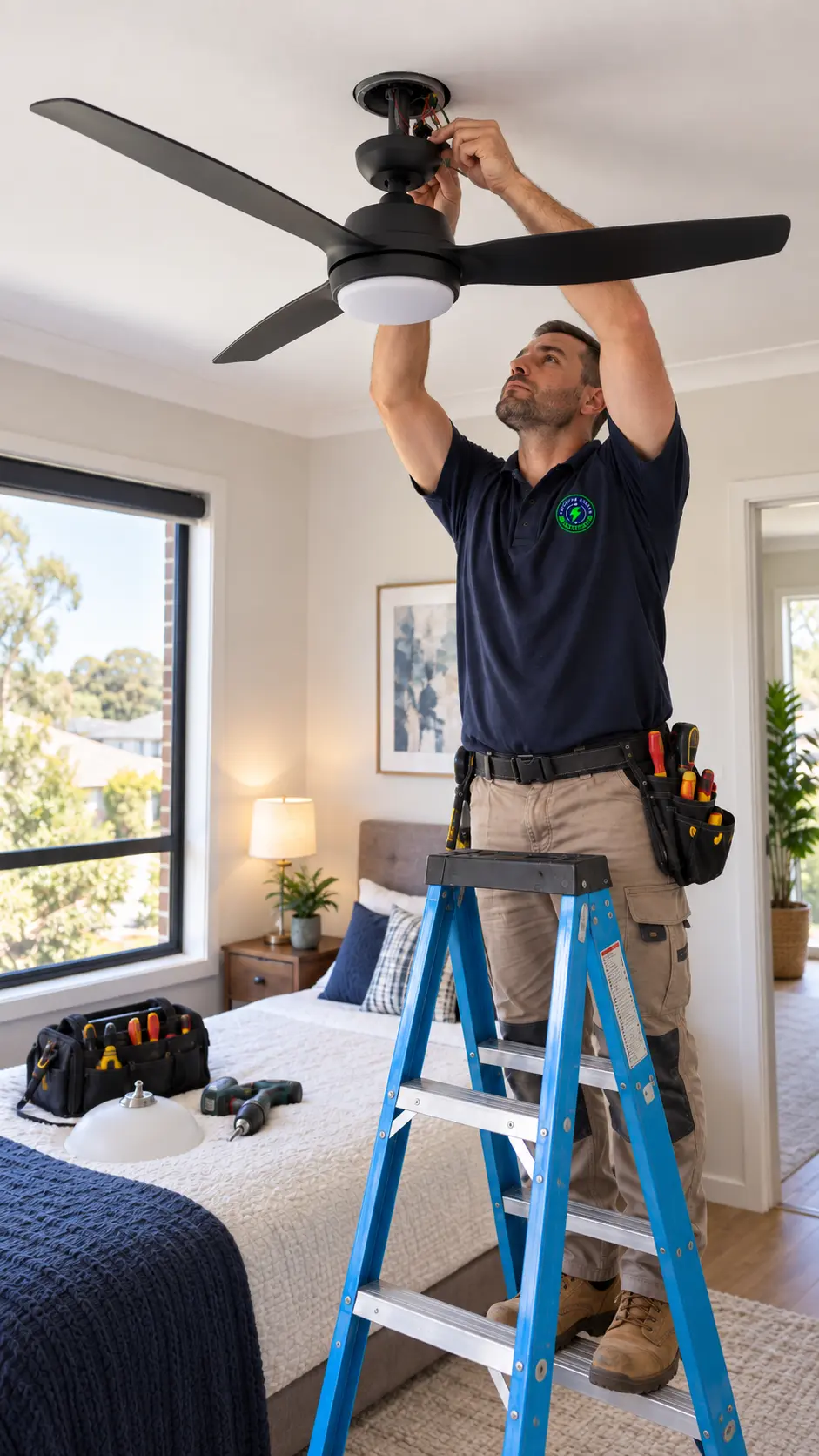
Match the Fan to the Room
A good ceiling fan installation in Castle Hill starts by looking at the room rather than simply choosing the largest fan that fits. NSW Climate and Energy Action recommends matching fan size to the space and states that installation should be completed by a licensed electrician using suitable support for the fan's weight and vibration. A bedroom may need a different setup from a large living area. Ceiling structure, wiring and nearby fittings can all change the final installation.
Poor airflow
The existing fan may run normally but still leave parts of the room uncomfortable. Position, blade size and room layout can all affect how the airflow feels.
Fan wobble
Movement or vibration should not simply be accepted as normal. Mounting, balance or installation issues may need professional assessment.
Heat or smell
Burning smells, unusual heat or electrical noises around a fan or switch require attention. Stop using affected equipment and arrange an electrical assessment.
Signs Your Ceiling Fan Setup Needs Attention
A ceiling fan problem is not always about whether the blades are spinning. Poor airflow, unusual movement, electrical symptoms and an inconvenient location can all indicate that the existing setup is not working as intended. The pattern matters more than one isolated annoyance. If several symptoms appear together, it is worth having both the fan and its electrical connection assessed.
Weak Airflow
A running fan can still distribute air poorly around the room.
Unusual Noise
New electrical or mechanical sounds can indicate developing problems.
Excess Movement
Noticeable wobbling deserves assessment rather than being ignored.
Lighting Issues
Fan-light flickering can point to an electrical or fitting issue.
Different Rooms Need Different Fans
Castle Hill homes commonly include multiple bedrooms and larger living spaces, with an average of 3.6 bedrooms per occupied dwelling in the 2021 Census. A fan that suits a smaller bedroom may not provide the same result in an open living area. Room dimensions, ceiling height and furniture layout should therefore be considered individually rather than applying one fan choice across the entire property.
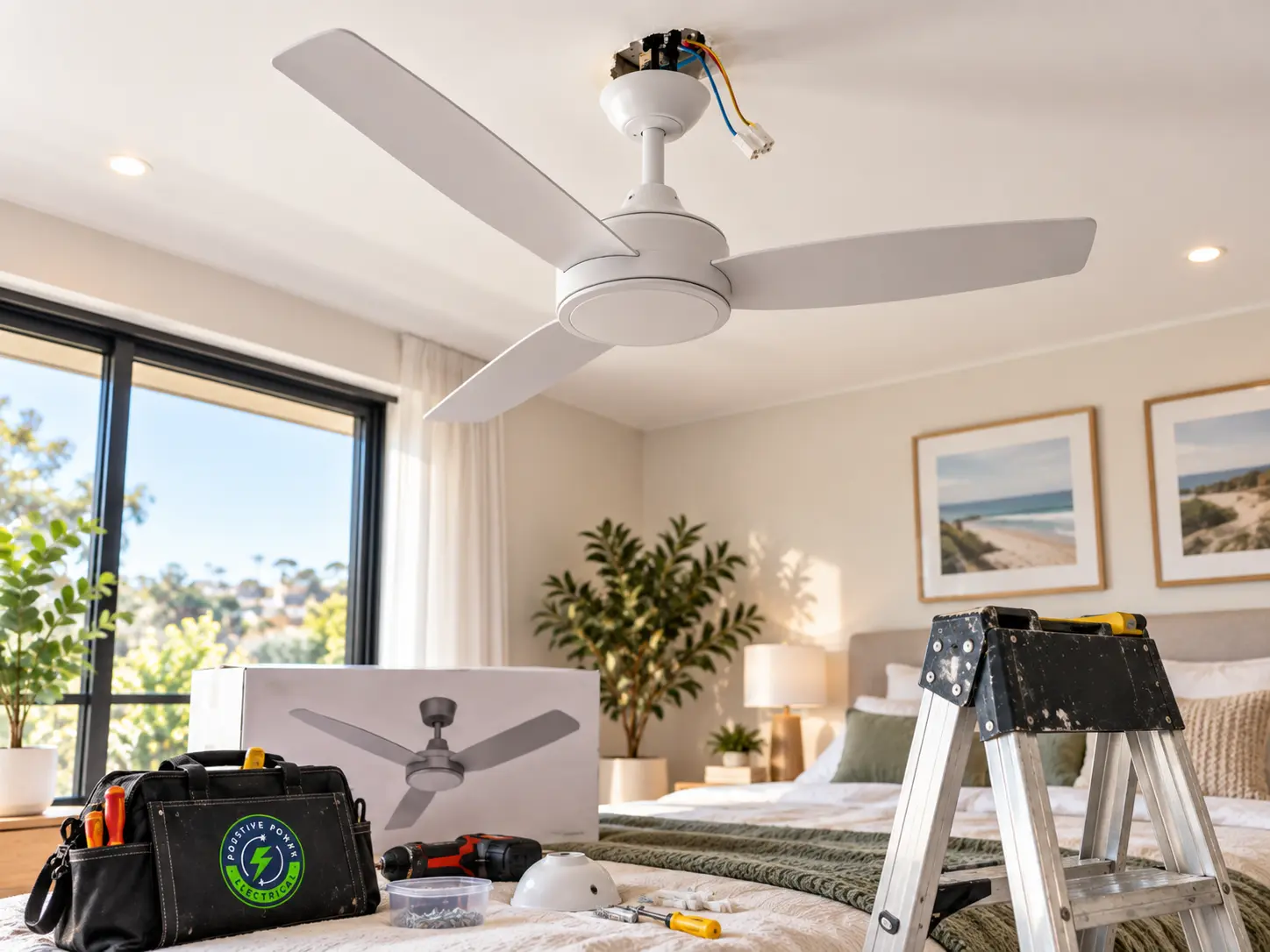
What Changes a Ceiling Fan Installation?
The fan itself is only one component of the installation. Ceiling construction, room dimensions, mounting requirements, wiring and existing lighting can all change how the work needs to be approached. Checking those factors first helps avoid selecting equipment that does not suit the room or existing electrical setup.
1
Room size
Larger spaces can require different fan dimensions and positioning.
2
Ceiling height
Mounting style should suit the available clearance.
3
Support
Fans require mounting suitable for their weight and vibration.
4
Wiring
Existing electrical connections can affect the installation scope.
5
Faults
Electrical problems should be resolved before a new fan is installed.
How Ceiling Fan Installation in Castle Hill Is Planned
A licensed electrician first considers where the fan will sit, what already exists at that ceiling position and how the room is used. The mounting point, electrical connection and controls can then be assessed together. The installation method should follow the room and existing electrical system rather than treating every ceiling fan as the same job.
Step 01
Assess the Room
Start with room dimensions, ceiling height and the area where airflow is most useful. Existing lights and furniture placement can also influence the best fan position.
What we look for
Key Installation Details
- Suitable ceiling support
- Existing electrical wiring
- Fan and light controls
Step 02
Plan the Installation
The electrician checks how the fan can be mounted and connected safely. Any wiring, switch or electrical fault issues should be identified before installation proceeds.
Step 03
Install and Check
Once installed, the fan can be checked for secure operation, controls and lighting where applicable. The goal is stable operation and useful airflow for the room.
- Fan secured
- Controls checked
- Operation tested
Method matched to cause
Electrical Work Matches the Installation
Positive Power Electrical can match the work to the existing electrical setup and fan requirements.
- Fan installation
- Safety checks
- Fault finding
- Electrical upgrades
What Changes the Installation Scope and Cost?
Ceiling fan jobs vary because the existing ceiling and electrical setup can be completely different from one room to another. Replacing an existing fan is not the same as converting a basic light position into a fan and light combination. Access, ceiling support, existing wiring, controls and electrical faults can all influence the work. NSW Climate and Energy Action also notes that fan size should suit the room, while DC motor fans can offer quieter and more energy-efficient operation than comparable AC motor models.
What You Can Plan Before Calling
You can choose a preferred fan style, measure the room and think about where airflow is needed most. The electrical installation itself is not DIY work. NSW Government guidance specifically states that people who are not qualified electricians should not install or replace ceiling fans, and electrical installation work must be completed by a licensed electrician.
Safe to try yourself
- Measure the room dimensions
- Note the ceiling height
- Choose preferred fan features
- Mark the preferred fan position
Time to call a professional
- New fan needs installation
- Existing wiring needs changes
- Fan wobbles or behaves unusually
- Burning smell or heat appears
Good Airflow Starts Before the Fan Spins
A ceiling fan can make a bedroom, living room or home office more comfortable, but the result depends on more than blade appearance. Fan size, room dimensions, mounting support, controls and electrical wiring all play a part. Current NSW guidance requires a licensed electrician for ceiling fan installation, while NSW Climate and Energy Action recommends support specifically suitable for the weight and vibration created by a fan. If the existing position also has wiring faults or other electrical problems, those should be resolved as part of the job rather than hidden behind the new fitting. Positive Power Electrical provides fan installation and residential electrical services across Castle Hill and surrounding areas.
Remember this
A fan that spins is only the starting point. The better installation is secure, electrically sound and actually moves air where the room needs it.
Ceiling Fan Installation FAQs
What fan size do I need?
The right size depends on the room dimensions and the area you want the fan to cover. NSW Climate and Energy Action recommends smaller fans for smaller rooms and larger-blade fans for larger living spaces.
Can a fan replace a light?
Sometimes, but it is not always a direct replacement. Ceiling support, existing wiring and the controls required for the new fan or fan-light combination need to be assessed first.
Are DC ceiling fans better?
They can offer useful advantages depending on the model and application. NSW Climate and Energy Action says DC motor fans can be quieter and more energy efficient than AC models.
Why does my fan wobble?
Movement can relate to mounting, blade balance or another mechanical issue. If wobbling becomes noticeable or changes over time, stop assuming it is normal and have the fan assessed.
What affects installation cost?
Existing wiring, ceiling access, mounting support, fan type, controls and whether the location already contains a suitable fan connection can all change the job. An inspection is needed before accurate pricing can be provided.
Can I install it myself?
No, unless you are appropriately qualified to perform the electrical work. NSW Government guidance specifically lists ceiling fan installation and replacement among electrical jobs homeowners should not attempt themselves.
Planning Ceiling Fan Installation in Castle Hill?
Positive Power Electrical provides ceiling fan installation in Castle Hill, along with lighting, powerpoints, fault finding and other residential electrical services. If you are replacing an existing fan or adding one to a new room, have the ceiling position and electrical setup assessed by a licensed and insured Electrician before installation.