5 Things to Know Before You Install a Ceiling Fan
It's thirty-something degrees outside, the bedroom feels like an oven, and the thought of running the air con all night makes your wallet wince. A ceiling fan won't change the temperature of the room, but it will change how the room feels, and it does it for a few cents an hour. Before you pick one off the shelf, though, a good ceiling fan installation comes down to a few details most people don't think about until the electrician arrives.
Cheap to run Sustainability Victoria says ceiling fans cost only a few cents per hour to run.
- Big savings alongside air con NSW Climate and Energy Action says fans with occasional air con can cut energy use by up to 76%.
- Height matters Australian standards require fan blades to sit at least 2.1 metres above the floor.
- Fix it to the frame A ceiling fan must be fixed to the ceiling's structure, not just the plasterboard.
- It's licensed work Ceiling fans must be installed by a licensed electrician, and many warranties depend on it.
Get those right and a fan becomes one of the best-value upgrades in the house. Whether your Castle Hill home has standard ceilings, raked ceilings or a patio that bakes in the afternoon sun, here's how to choose and install the right one.
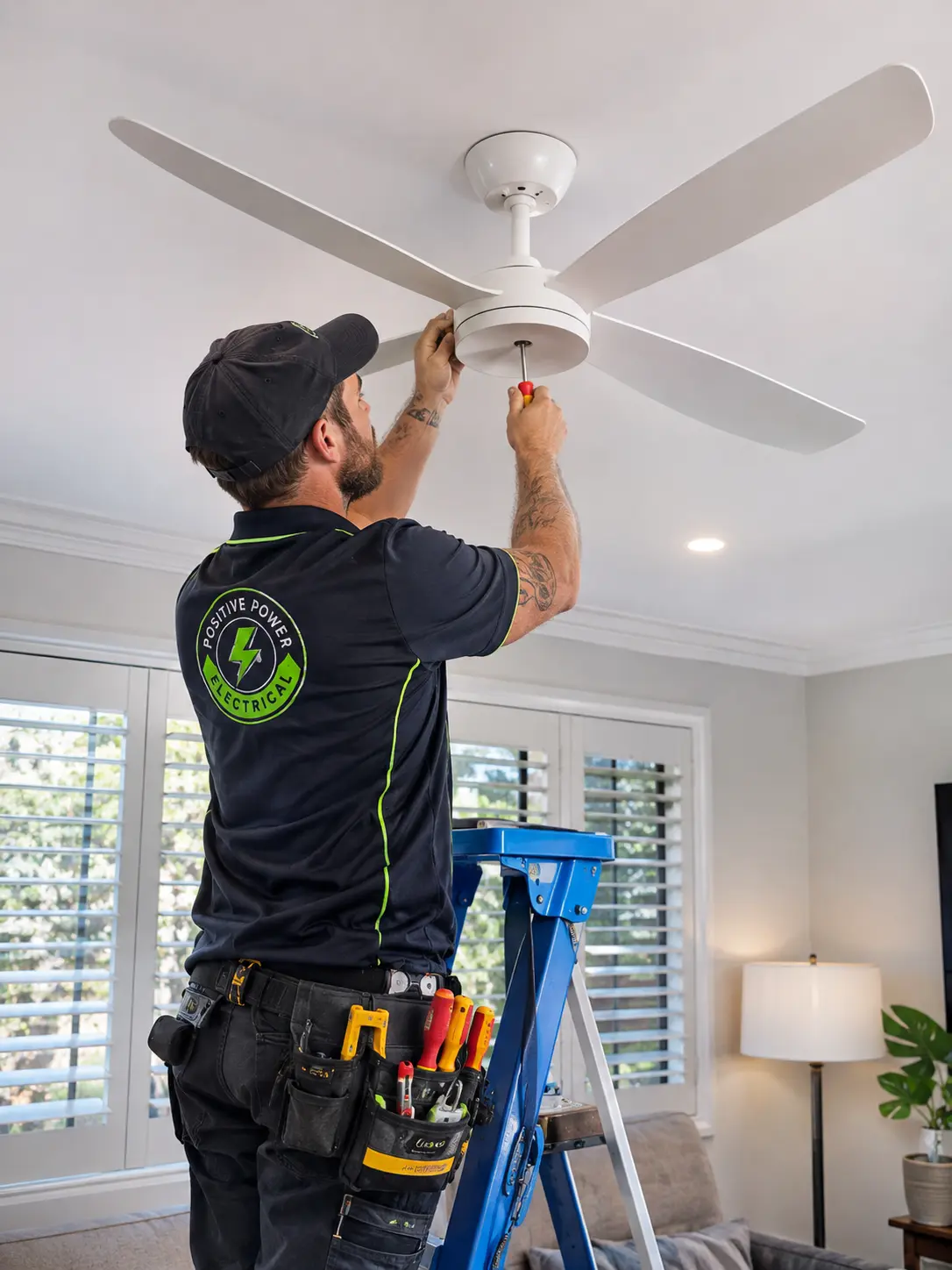
Fan, Air Con or Both?
A ceiling fan and an air conditioner do different jobs. An air con lowers the temperature of the room. A fan moves air across your skin, which carries heat away and makes you feel cooler, even though the room itself stays the same temperature. That's why fans are so cheap to run, and why they work brilliantly alongside air con: the breeze lets you set the air con a little warmer and still feel comfortable. On mild nights, the fan on its own is often enough. On the hottest days, the two together beat either one alone.
Mild nights and shoulder seasons
A fan on its own is often all you need. Turn it off when you leave the room, because it cools people, not the space.
Hot days with the air con on
Run the fan on low alongside the air con and set the thermostat a little higher. You'll feel just as cool and use less power.
Wobbling, grinding or a burning smell
Turn the fan off straight away and don't use it again until it's checked. A loose mounting or a failing motor can be dangerous. If there's smoke, call 000.
Signs Your Ceiling Fan Needs Attention
Fans run for hours on end through summer. These are the signs one needs a closer look.
Wobbling or Swaying
A fan that wobbles more than it used to can mean loose fixings or a bent blade. Stop using it until it's checked.
Clicking or Grinding
Noises from the motor housing can point to worn bearings or something working loose.
Hot Smell From the Motor
A warm, electrical smell from the fan means the motor may be overheating.
Light or Speeds Not Working
A fan light that flickers, or speeds that don't respond, can point to a wiring or controller fault.
Raked Ceilings, High Ceilings and Patios
If your Castle Hill home has a raked ceiling, a high living area or a covered patio that cooks in summer, check three things before you buy. Raked ceilings need a sloped mounting kit to keep the fan level, high ceilings may need a longer downrod, and outdoor spaces need a fan rated for covered outdoor use.
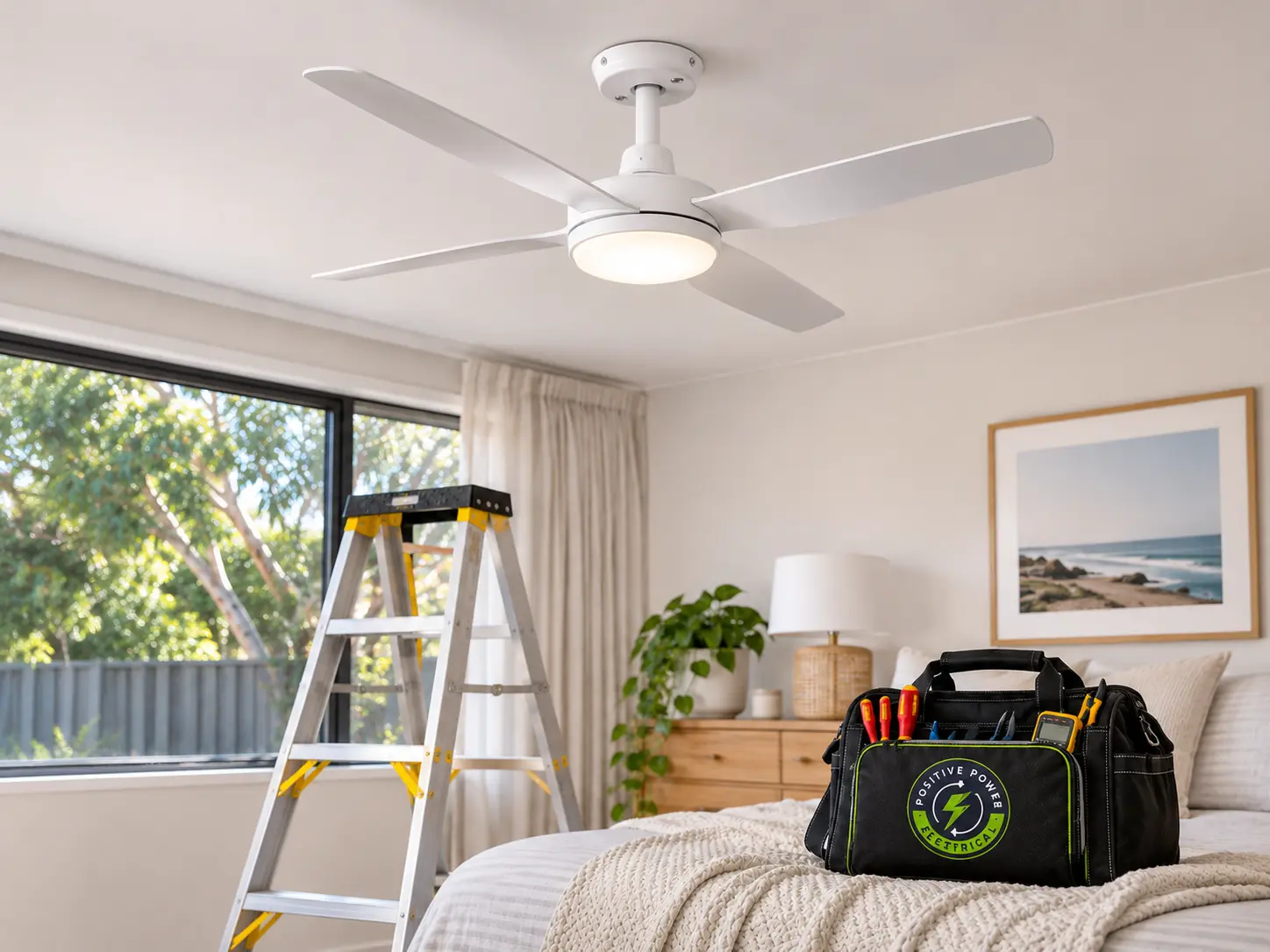
Why Fan Installation Is More Than Hanging It Up
A ceiling fan looks like a light fitting with blades, but it's a spinning motor hanging over people's heads, often all night long. That changes everything about how it's installed. It has to be fixed to the ceiling's structure, so the constant movement doesn't work it loose over time. The blades have to sit high enough that nobody can hit them with a raised arm. The wiring has to suit the fan and its controls, whether that's a wall switch, a remote or a smart app. And the fan itself has to suit the room: the right size for the space, a downrod that matches the ceiling height, and a rating that fits where it's going.
1
Constant movement
A spinning fan can loosen fixings that aren't secured to the structure.
2
Ceiling height
Low ceilings need a hugger fan, and high ceilings need a longer downrod.
3
Raked ceilings
Sloped ceilings need a mounting kit to keep the fan level.
4
Controls
Wall controls, remotes and smart fans need different wiring setups.
5
Location
Outdoor and damp areas need a fan that's rated for them.
How We Install a Ceiling Fan
We make sure the fan suits the room, the ceiling and the controls before it goes up, so it runs quietly and safely for years.
Step 01
Check the Ceiling and Wiring
We check the ceiling height, the framing above it and whether there's an existing light point we can use. That tells us how the fan should be mounted and wired.
What we look for
What We Check First
- Framing strong enough to hold the fan
- Ceiling height and blade clearance
- The right control setup for the room
Step 02
Mount It Properly
We fix the mounting to the ceiling structure, adding support where needed, and set the height so the blades sit at least 2.1 metres above the floor.
Step 03
Wire, Balance and Test
We connect the fan and its controls, balance the blades, and test every speed, the light and the reverse function. You get a Certificate of Compliance for Electrical Work (CCEW) for the job.
- Securely mounted
- Blades balanced
- Every speed tested
Method matched to cause
Swapping a Light for a Fan? Often Simpler
If there's already a light point in the right spot, a fan can often go in its place with less work. We'll tell you whether yours is suitable when we check the ceiling.
Ceiling fan installation
LED lighting- Safety checks
- Switchboard upgrades
What Shapes the Cost
The fan itself can be anything from a budget model to a premium smart fan, and NSW Climate and Energy Action puts ceiling fans at around $100 to more than $1,000. Installation depends mostly on whether there's an existing light point, how easy the roof space is to get into, and what kind of ceiling you have.
What You Can Do Yourself
Measure your ceiling height before you shop, and check the fan's specifications for the minimum ceiling height and room size it suits. Think about how you want to control it: a wall switch, a remote or an app. Once it's in, set it to spin the right way for the season using the reverse switch or the remote, and wipe the blades clean every so often so dust doesn't build up.
Safe to try yourself
Measure the ceiling height before buying
- Choose wall, remote or smart controls
Switch the fan to reverse in winter
Wipe the blades clean regularly
Time to call a professional
Installing or replacing a fan
- Wobbling, grinding or a hot smell
- A fan light or speeds not working
Adding a wall control or a new circuit
Stay Cool for Cents an Hour
A ceiling fan is one of the cheapest ways to stay comfortable through a Sydney summer, and one of the best partners your air con can have. Choose the right size and mount for the room, have it installed properly, and set it spinning the right way for the season. You'll feel the difference on the first hot night, and see it on your next power bill.
Remember this
Fans cool people, not rooms. Turn them off when you leave.
Ceiling Fan FAQs
Which way should my ceiling fan spin in summer?
In summer, the fan should push air straight down to create a breeze. Check your fan's manual for the right setting, as it can vary between models.
Can I put a ceiling fan on a low ceiling?
Often, yes, with a hugger or flush-mount fan, as long as the blades sit at least 2.1 metres above the floor. Standard 2.4 metre ceilings usually need one.
Are DC fans better than AC fans?
CHOICE's testing found DC fans are generally cheaper to run, and they often have more speed settings. They can cost more up front.
Can a ceiling fan go outside?
Only if it's rated for outdoor use, and usually only in a covered area like a patio or alfresco. Check the fan's rating before you buy.
Do ceiling fans help in winter?
Yes. Running the fan in reverse on a low setting pushes warm air that has risen to the ceiling back down into the room, which helps your heating feel more effective.
How big should my ceiling fan be?
It depends on the size of the room. Check the fan's specifications for the room size it suits, and for large open-plan spaces, two fans can work better than one.
Ready to Beat the Heat?
Positive Power Electrical can check your ceilings, recommend the right mounting and handle your ceiling fan installation from start to finish. Cooler bedrooms, a more comfortable family room and lower running costs, all in time for summer in Castle Hill.