Your Air Con Shouldn't Be Tripping the Power
Your Air Con Shouldn't Be Tripping the Power
It's the hottest afternoon of the year. You crank the air con, it hums to life, and a few minutes later everything goes quiet. You reset the switch, it starts again, and then it trips a second time. It's hot, it's frustrating, and it's tempting to keep flicking the switch back up. Don't. Anair conditioner tripping power is your switchboard telling you something is wrong with the unit, the wiring or the circuit it runs on.
- It's protection working A trip means a breaker or safety switch has spotted a problem and cut the power on purpose.
- Don't keep resetting it Repeated resets can make a fault worse, so reset once and then stop.
- Dirty filters matter A clogged filter makes the unit work harder and draw more power.
Rain can trip it Moisture in outdoor wiring or the unit can trip the safety switch after a storm.
- Two trades, two jobs Electricians handle the circuit and wiring. Refrigerant work needs a licensed air con technician.
The good news is that the cause can usually be tracked down. Whether your Hornsby home has a single split system or air con in every bedroom, the first step is working out which switch tripped, and why.
Breaker or Safety Switch? It Changes the Answer
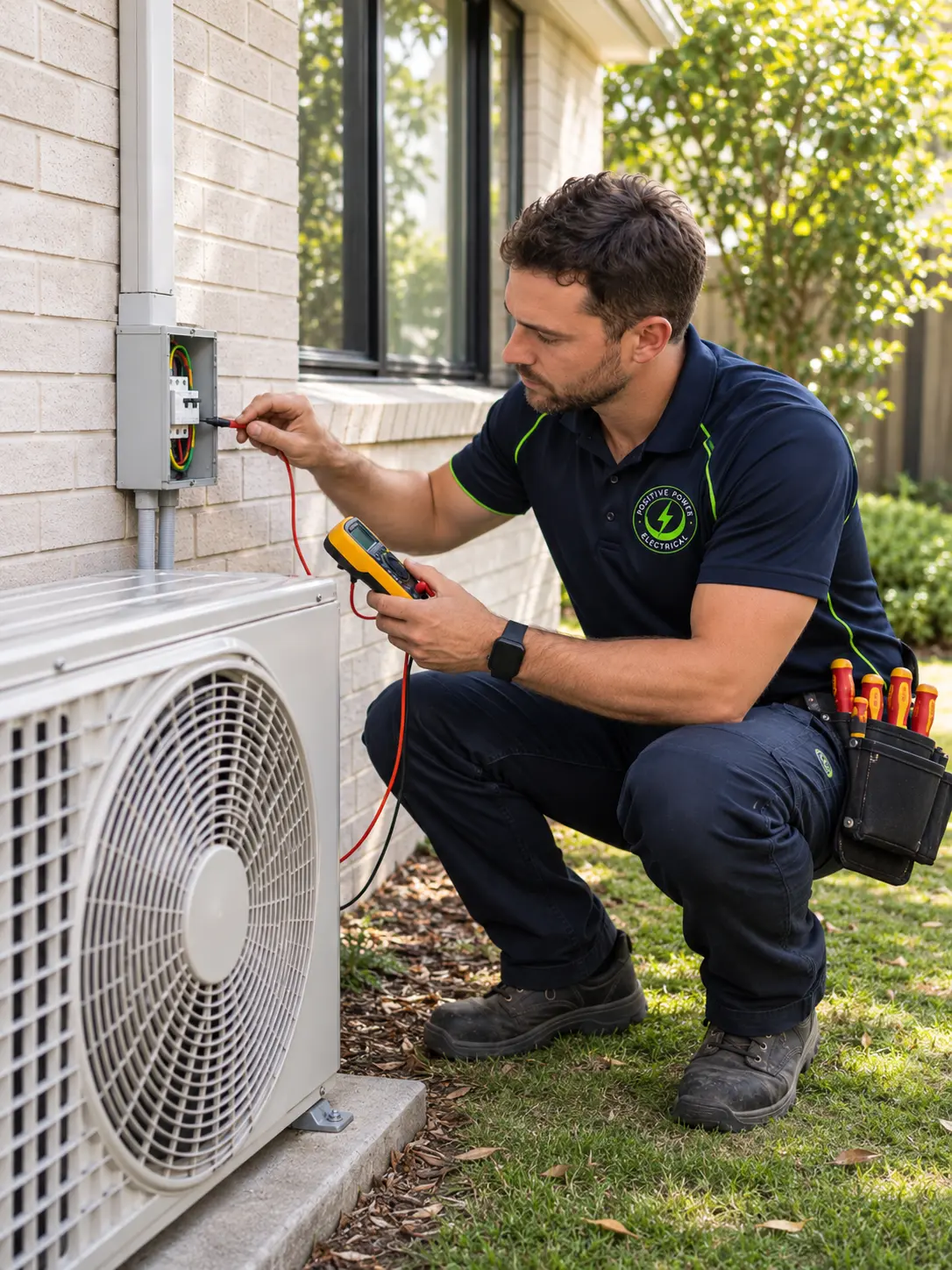
When the power goes, head to the switchboard and look at which switch has dropped. If it's the circuit breaker for the air con, the unit is drawing more current than that circuit can handle, which points to the air con working too hard, a failing part, or a circuit shared with other big appliances. If it's a safety switch, the one with a T or Test button, electricity is leaking to earth, which often points to moisture or damaged wiring. And if the whole house trips, not just the air con, it could be the main switch reacting to everything running at once. Knowing which one tripped cuts the guesswork in half.
Trips once on a scorching day
A single trip in extreme heat can be a one-off. Clean the filter, reset once and keep an eye on it. If it happens again, it isn't a one-off.
Trips every time it starts
That points to a fault in the unit or its circuit, such as a failing part or a damaged connection. Leave it off and book a check.
Burning smell, smoke or sparks
Switch the air con off at the isolator and the switchboard, and don't use it. If there's smoke or fire, get everyone out and call 000.
Signs It's More Than a Dirty Filter
A clean filter fixes plenty of trips. These signs suggest something else is going on.
Trips Soon After Starting
If it cuts out within a few minutes every time, a part in the unit or its electrical supply is likely failing.
Trips Only After Rain
Water getting into the outdoor unit, the isolator or the outdoor wiring can trip the safety switch.
Lights Dim When It Starts
A noticeable dip in the lights as the compressor kicks in can point to a circuit or supply struggling with the load.
Warm or Marked Isolator
The isolator switch next to the outdoor unit should never feel hot or show brown marks. That's a connection overheating.
Older Boards, Newer Air Con
Why Air Conditioners Trip the Power
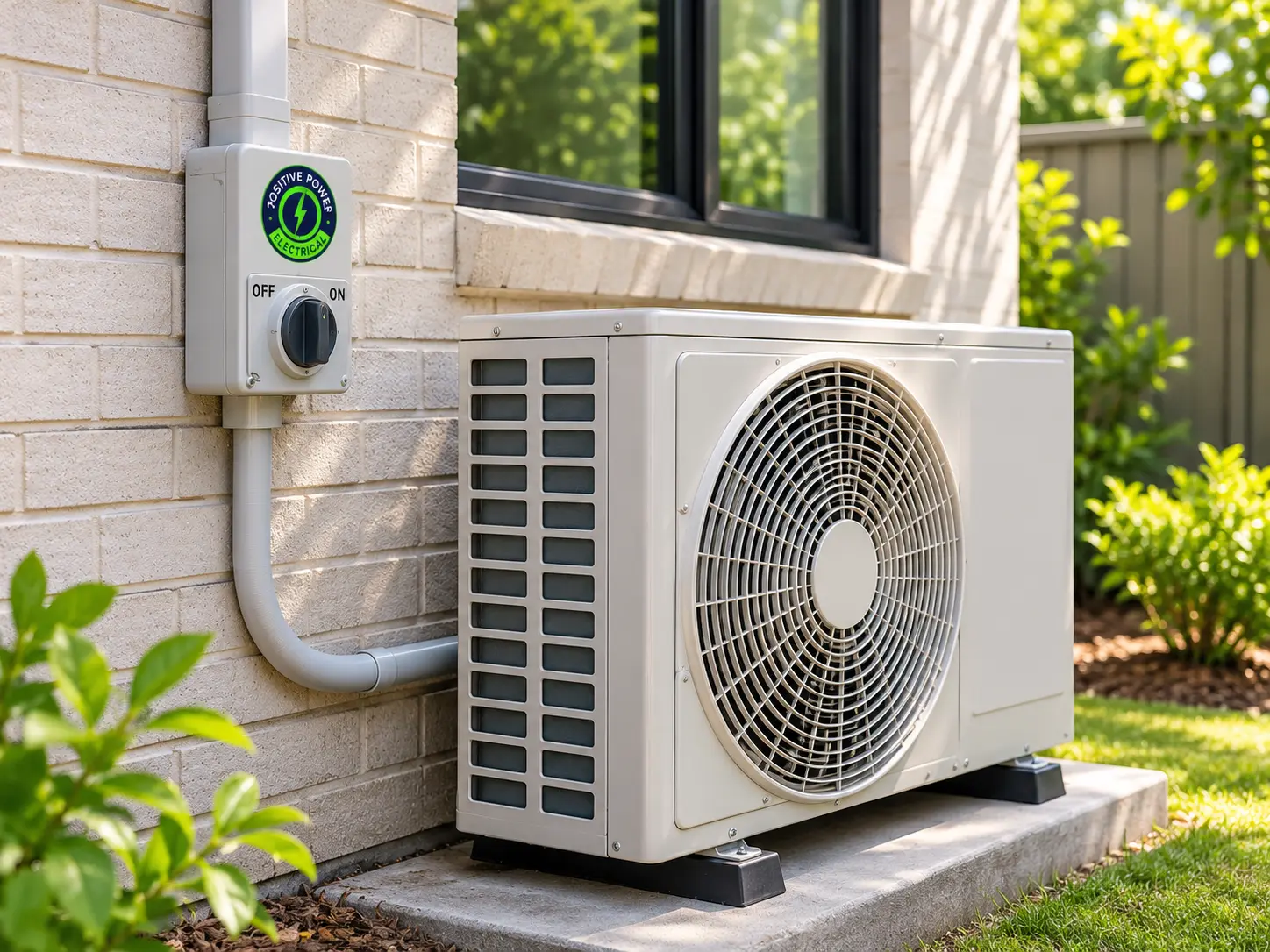
An air conditioner is one of the biggest loads in most homes, and the hardest work it does is starting up, when the compressor kicks in. On a hot day it does that over and over. Anything that makes the job harder, like a clogged filter, a blocked outdoor unit or a part that's starting to fail, makes it draw more current, and the circuit breaker steps in. Moisture is the other big one. Rain or condensation reaching the electrical parts can let current leak to earth, and the safety switch cuts the power. Add an older switchboard or a circuit shared with other appliances, and the margin for error gets very thin.
1
Dirty filters or coils
The unit works harder and draws more current.
2
Failing part
A weak capacitor or tired compressor can trip the breaker on start-up.
3
Moisture
Water in the outdoor unit or wiring can trip the safety switch.
4
Loose connections
Loose terminals heat up and can trip the circuit.
5
Shared circuit
The air con competes with other appliances on the same circuit.
How We Track Down an Air Con Trip
We start with the electrical side, the switchboard, circuit and wiring, because that's where an electrician can give you a clear answer fast. If the fault turns out to be inside the unit, we'll tell you straight.
Step 01
Check the Switchboard and Circuit
We find out which device tripped, check the circuit suits your unit and see whether anything else is sharing it.
What we look for
What We Check First
- Which switch tripped, and why
- Whether the air con has its own circuit
- Heat or damage at the isolator
Step 02
Test the Supply to the Unit
We test the wiring, isolator and connections between the switchboard and the air con, including the outdoor run, for damage, moisture or loose terminals.
Step 03
Repair and Retest
We fix any electrical fault, run the air con under load and confirm it holds. You get a Certificate of Compliance for Electrical Work (CCEW) for any repair.
- Fault found
- Circuit checked
- Running under load
Method matched to cause
If It's the Unit, That's a Different Trade
When the problem is the compressor, the refrigerant or other parts inside the unit, an ARCtick-licensed air con technician is the right person for the job. We'll pass on what we found so they can start in the right place.
Fault finding
Dedicated circuits- Switchboard upgrades
- Safety checks
What Shapes the Repair
Some air con trips are a quick fix, like a filter that needs cleaning. Others come down to the circuit or the switchboard behind it. What it costs depends on which side of the problem we land on.
What You Can Check Before Calling
Start with the easy stuff. Turn the air con off with the remote, clean or replace the indoor filter following the manufacturer's instructions, and clear leaves or rubbish from around the outdoor unit. At the switchboard, note which switch tripped and reset it once. If it trips again, leave it off. Resetting a tripping circuit over and over can make a fault worse, and it won't get you a cool afternoon anyway.
Safe to try yourself
- Clean the indoor filter
- Clear around the outdoor unit
- Note which switch tripped
Reset once, then leave it
Time to call a professional
- It trips again after one reset
- It trips every time it starts
- A warm or marked isolator switch
Any burning smell or smoke
Fix the Cause Before the Next Heatwave
An air con that trips the power is telling you something, and the middle of summer is the worst time to find out what. A clean filter solves some trips. The rest come down to the unit, the wiring or the circuit, and each one has a clear fix once it's found. Sort it out before the next heatwave, and the air con will be there when you actually need it.
Remember this
Reset once. If it trips again, it's a fault, not bad luck.
Air Con Tripping FAQs
Should my air con be on its own circuit?
Split systems are normally run on their own dedicated circuit, so they aren't competing with other appliances. If yours shares a circuit, a dedicated one is usually the fix.
Why does it only trip on really hot days?
That's when it works hardest. Higher demand means more current, so any weakness in the unit, the wiring or the circuit tends to show up then.
Can I keep resetting it to get through the day?
It's best not to. Resetting a tripping circuit again and again can make a fault worse. Reset once, and if it trips again, leave it off.
Is it the air con or the electrics?
It can be either. An electrician can test the circuit and supply first. If those check out, the fault is likely inside the unit, and that's a job for an air con technician.
Why does the safety switch trip after rain?
Water reaching the outdoor unit, the isolator or outdoor wiring can let current leak to earth. The safety switch cuts the power to protect you, so the wet part needs checking.
Can an old switchboard handle a new air con?
Sometimes. If the board has room for a new circuit with the right protection, it may be fine. If it's old or full, it may need upgrading first.
Air Con Still Tripping?
If an air conditioner tripping power has become part of your summer, Positive Power Electrical can find out why. We'll check the circuit, isolator and switchboard at your Hornsby home and fix the electrical side properly, before the next heatwave hits.